Drains Cleared
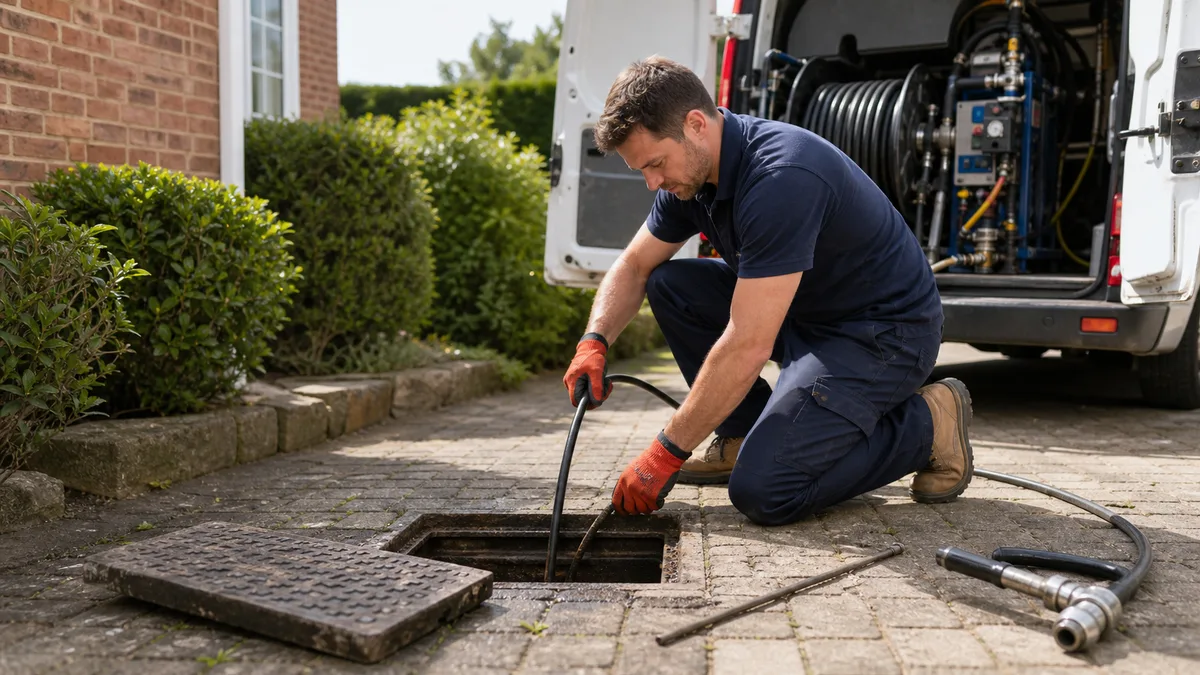
Blocked outside drain being cleared with professional equipment

Blocked Drains in Selkirk – Combined Sewer Diagnosis

Unlike generic plumbers, Drains Cleared specialises exclusively in blocked-drain recovery — our vans carry 4000psi jetters and CCTV as standard, not as an upsell. Serving TD7, TD8, TD9, TD10.
TD7TD8TD9TD10
0333 772 0123
We route to vetted local engineers covering TD7, TD8, TD9 and TD10 with a 60-minute response target for drain emergencies across Selkirk and the surrounding area.

Blocked Drains in Selkirk

Selkirk's combined sewer system is a blockage hotspot. Victorian and Edwardian properties (TD7–TD9) share foul and surface water pipes, so tree roots and silt accumulate unchecked by limescale. Soft water from Scottish Water means blockages form from pure debris, not mineral deposits. We clear and diagnose the underlying cause.

Selkirk's combined sewer system merges foul and surface water, creating blockage hotspots at tree-root ingress and silt traps. Soft water from Scottish Water means mineral deposits don't seal cracks, accelerating root penetration. CCTV diagnosis identifies blockage type and guides targeted clearing.

Drainage in Selkirk — what local engineers know

Scottish Borders Council manages Selkirk's drainage infrastructure. The combined sewer system (TD7, TD8, parts of TD9) dates to Victorian times and uses clay or cast-iron pipes vulnerable to root ingress and joint failure. Scottish Water's soft supply doesn't naturally seal minor cracks through mineral deposition; this benefits water quality but means drain joint failures don't self-heal. Autumn rainfall causes surcharge in combined systems, backing up foul water into properties and exacerbating blockages.

  • Soft water supply reduces limescale, but slightly acidic pH can accelerate corrosion of copper fittings and lead joints in older Selkirk properties
  • Combined sewerage infrastructure — common in older parts of Selkirk — means foul and surface water share the same pipe, increasing surcharge risk during heavy rainfall
  • Moderate flood risk in parts of Selkirk — drainage systems near low-lying areas can surcharge after prolonged rain, and sump pump maintenance is advisable
  • With 28% of properties built before 1920, salt-glazed clay drainage and lead-solder copper pipework are common — pipe collapse, root ingress and joint failure are recurring call-out drivers.

What happens when you call us in Selkirk

  1. 1 Immediate dispatch. We find the nearest available engineer covering TD7/TD8 and confirm the ETA before the call ends.
  2. 2 On-site diagnosis — no guessing. The engineer inspects using professional-grade equipment including CCTV where needed and quotes a fixed price before work starts.
  3. 3 Job complete, report issued. You receive a written completion report. All work is guaranteed — same fault returns within the guarantee period, we come back free.

About drainage in Selkirk

Local facts our engineers use when they arrive.

Population
10,000
Postcode districts
TD7TD8TD9TD10
Council
Scottish Borders
Water authority
Scottish Water
Flood risk
Medium — affected watercourses: River Tay, River Forth, River Earn
Property mix
Victorian 18%
Edwardian 10%
Interwar 24%
Postwar 30%
Modern 18%
Sewer type combined
Common local issues
Soft water supply reduces limescale, but slightly acidic pH can accelerate corrosion of copper fittings and lead joints in older Selkirk propertiesCombined sewerage infrastructure — common in older parts of Selkirk — means foul and surface water share the same pipe, increasing surcharge risk during heavy rainfallModerate flood risk in parts of Selkirk — drainage systems near low-lying areas can surcharge after prolonged rain, and sump pump maintenance is advisableWith 28% of properties built before 1920, salt-glazed clay drainage and lead-solder copper pipework are common — pipe collapse, root ingress and joint failure are recurring call-out drivers.

This information helps our engineers arrive prepared.

Illustrative example of typical work

Selkirk TD7 Terrace – Tree Root Blockage in Combined Sewer Clay Pipe

Area:
Selkirk
Service:
Blocked Drain Clearance

A Selkirk homeowner in the TD7 postcode experienced recurring autumn blockages. CCTV survey revealed tree roots from a neighbouring garden penetrating the clay soil pipe at a joint—a common failure in Selkirk's Victorian combined sewer. Soft water from Scottish Water had not calcified around the crack, allowing roots to grow through unchecked. We removed roots mechanically and installed a root barrier.

This describes typical work performed by engineers in our network. Names and specific details have been omitted to protect customer privacy.

Blocked Drains in Selkirk — FAQs

Why do Selkirk drains block more often than other UK towns?
Selkirk's combined sewer system means tree roots and silt accumulate in one shared pipe for foul and surface water. Soft water from Scottish Water doesn't seal cracks through mineral deposits, allowing roots to penetrate and colonise joint failures.
Can you clear my Selkirk blockage without digging?
Yes. We use rodding and high-pressure jetting. For tree roots, mechanical removal (without chemicals) is most effective in Selkirk's combined systems. CCTV helps us locate and target the exact blockage point to minimise damage.
Does Selkirk's combined sewer cause my drain to back up after rain?
Yes. In TD7, TD8, and parts of TD9, foul and surface water share one pipe. Heavy rain causes surcharge, backing water into properties. We can install a one-way valve or advise on council surface-drain separation schemes.
How quickly can you clear my blocked drain?
Most urban jobs are attended within 60 minutes, and the majority of blockages are cleared within the first hour on site.
What does it cost to unblock a drain?
Our standard blocked-drain callout starts at a fixed fee with no hidden extras. We quote before we start and only charge for the work we actually do.
Do you guarantee the work?
Yes. Every clearance comes with a written guarantee. If the same blockage returns within the guarantee period we return free of charge.
What causes most blocked drains?
The three biggest culprits are fats, oils and grease from kitchens; wet-wipes and sanitary items flushed down toilets; and root ingress from nearby trees into older clay pipework.

Blocked Drains near Selkirk

We cover towns within and around Selkirk. Click a town to see local engineer availability.

Ready to book in Selkirk?

We route to vetted local engineers covering TD7, TD8, TD9 and TD10 with a 60-minute response target for drain emergencies across Selkirk and the surrounding area.

0333 772 0123