Before the camera goes in: pre-survey jetting
A drain with a lot of debris may need cleaning first. If the pipe is full, the camera cannot see the walls. The engineer may use a water jet to clear the way.
This step is not always needed. Meanwhile, a clean pipe can go straight to survey. Ask the engineer if cleaning is included in the quote.
The camera equipment
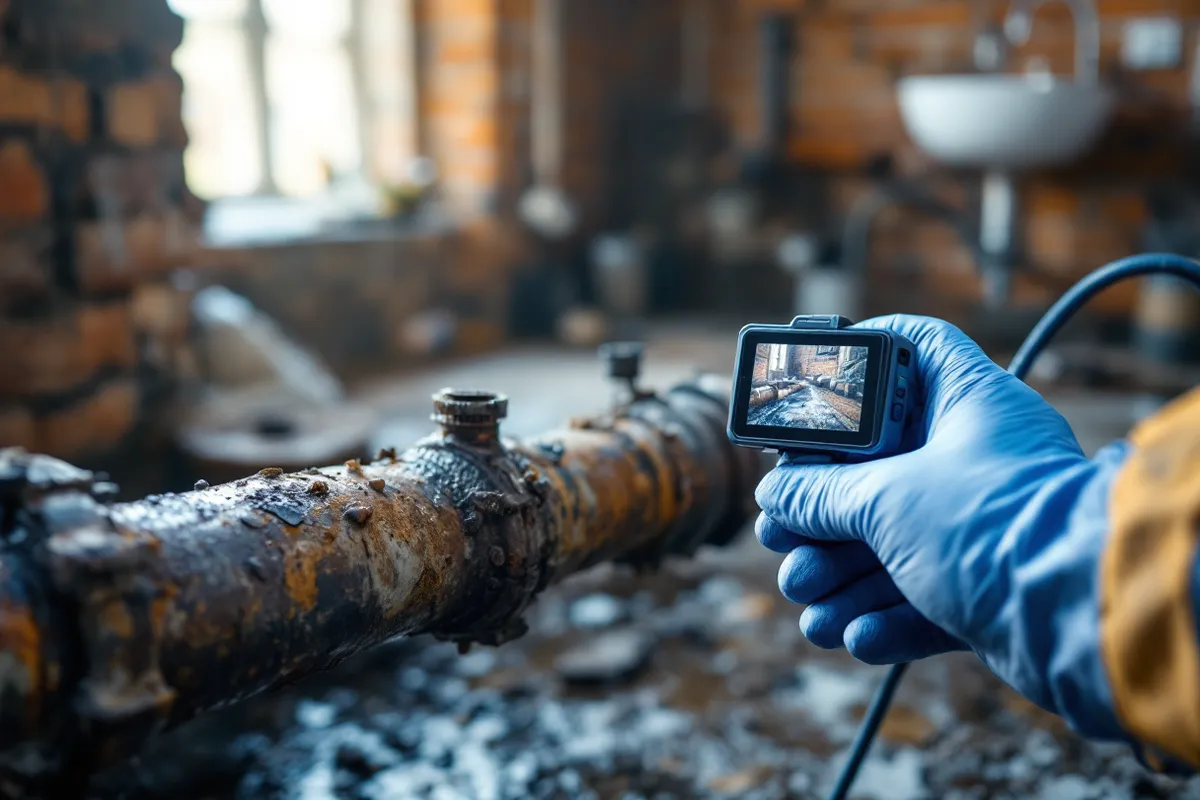
The camera sits on a flexible cable and has its own light. It is small enough to pass through most household drains. The engineer pushes it along the pipe and watches a screen.
Some cameras record the distance travelled. This helps to place each fault on the drain map. As a result, a repair team can find the exact spot.
What the engineer is looking for
The engineer looks for cracks, broken pipe, roots and blockages. They check the joints and see whether the pipe holds its shape. They also look for signs of past repairs.
Water level matters too. A pipe that holds standing water may have a dip or a poor fall. This can cause repeat blockages, since debris settles in the low spot.
Defect grading: the WRc system
Many reports grade each fault by how serious it is. The grades help you decide what to fix first. A small crack gets a low grade, while a collapse gets the highest.
Ask the engineer to explain the grading in plain words. Then you can see which faults need action and which only need watching.
Reading the report
A good report names each fault and shows where it sits. It should include still images from the footage. A drain plan often comes with it.
Check that the report covers all the drain runs you asked for. If a run was not reached, the report should say why. Keep the footage, since it is a useful record.
Questions to ask the surveyor
Ask what the survey covered and what it did not. Ask how the faults are graded and what they mean for you. Also ask what repair options exist, and which one they advise.
Ask for the price of each repair option in writing. This lets you compare quotes fairly. Our page on CCTV drain survey has more detail.
Acting on findings
Start with the faults that cause leaks or blockages. Then plan the rest. Some faults can be sealed or lined, while others need digging.
Do not ignore a minor defect forever, since it can get worse. Review the drain again after repairs. You can ask for a free quote if you want a local engineer to help.
Related guides and local help
If you want to know more, read Drain Excavation: What Is Involved and What Affects the Cost. You can also read CCTV Drain Survey Cost Guide: What Affects the Price and Drain Relining (CIPP): How It Works, When It Helps and Cost, because they cover closely related problems.
These guides help too: Chemical vs Mechanical Drain Unblocking: Which Works Best?, CCTV Drain Survey for Commercial Property: What to Expect, Blocked Drain Clearance Cost Guide: What Affects the Price, Why You Need a Drain Survey When Buying a House in the UK and Tree Roots in Drains: How They Get There and What to Do. Each one explains a related topic in plain English.
Need help near you? Read our CCTV drain survey page first, or see CCTV Survey in Darlington and CCTV Survey in Chester. You can also see Blocked Drains in Bridgwater, since every service page has a free quote form. We pass each request to a local drainage engineer.