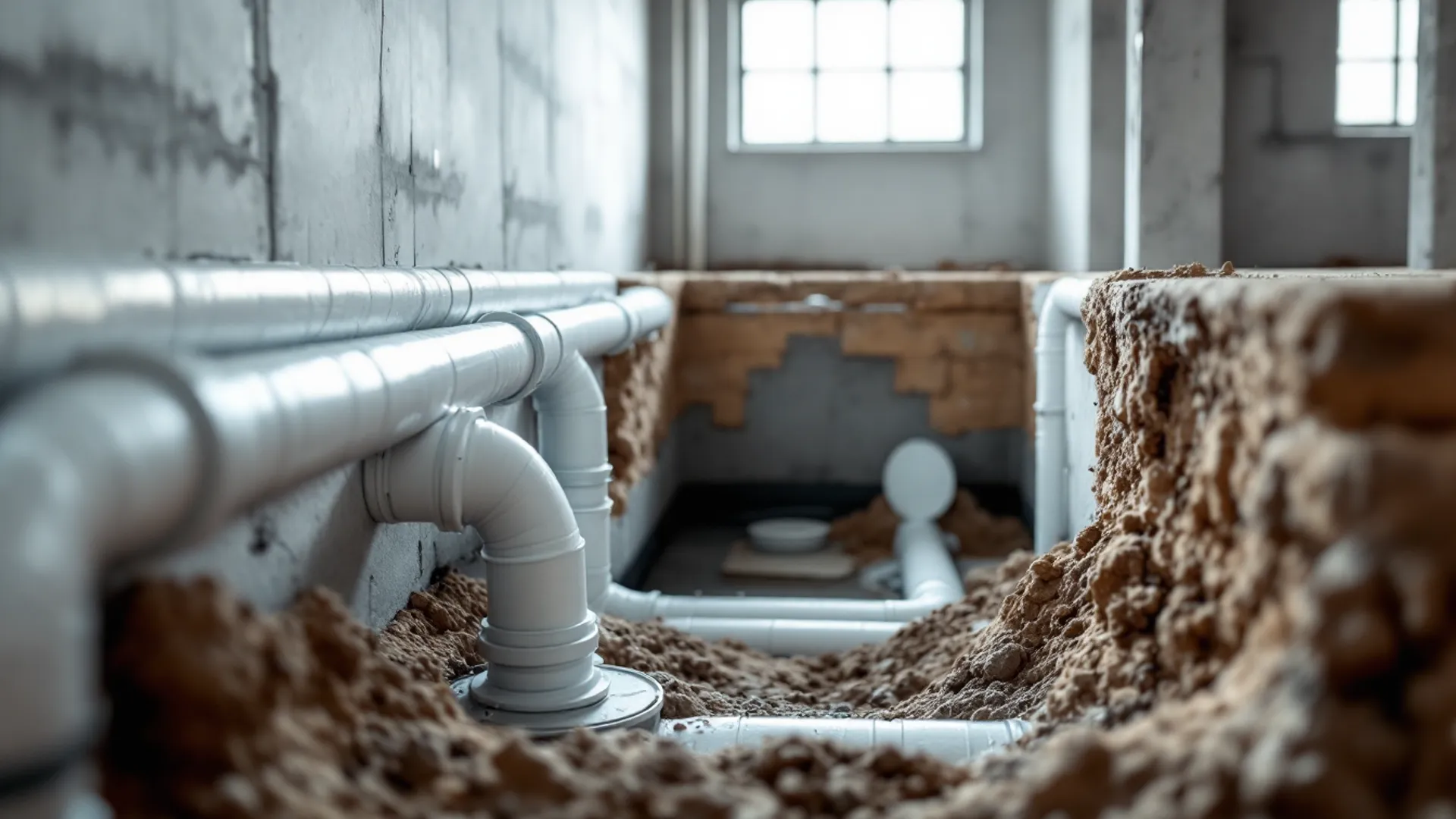
What drainage a new build should have
New homes usually have plastic pipes and separate foul and surface water drains, because that is the modern standard. Foul drains carry waste from toilets and sinks. Surface drains carry rainwater from roofs and paths.
Some developments also use sustainable drainage features, such as ponds or permeable paving. Ask the developer how the drainage works on your plot. Also ask who looks after shared features.
Common new build drainage defects
Faults can arise from poor workmanship, for example pipes laid with too little slope. Examples include pipes laid with too little slope, joints that leak and debris left in the pipe. Building rubble in drains is common.
Surface water can also pool if ground levels are wrong. Meanwhile, wrongly connected pipes can send rainwater to the foul drain. A camera survey can spot many of these faults.
Pre-completion checks
Before you complete, walk the plot and look at gullies, covers and gutters, since problems show up early. Check that water flows away from the house. Run taps and flush toilets in every room.
Ask for the drainage plans and any inspection certificates. If you are worried, you can order a drain survey. Raise problems in writing before you finish the purchase.
During the defects period (first 2 years)
Under the Consumer Code for Home Builders, the builder is responsible for putting right defects that appear in the first two years. Report each fault in writing and keep copies. Include photos and dates.
Check which code your builder follows, since it should be in your paperwork. Do not attempt repairs yourself first, because that may affect your claim.
After the defects period
After two years, many new homes rely on a warranty for serious structural faults, although terms vary. Warranty terms vary, so read yours. Most cover only certain defects.
Routine care is your job. Clear gullies, watch for slow drains and keep records. Ask your warranty provider what is covered if a major fault appears.
New build vs older property: drainage comparison
New builds usually have plastic pipes and fewer old joints, while older homes may have clay pipes. Older homes may have clay or other pipes that wear out. Roots and ground movement affect old pipes more.
Yet a new home can still hide faults, since builders make mistakes. A survey gives you peace of mind in either case.
Related guides and local help
If you want to know more, read Pitch Fibre Pipes: What They Are and What to Do About Them. You can also read Why You Need a Drain Survey When Buying a House in the UK and UK Property Drainage History: How Home Age Affects Risk, because they cover closely related problems.
These guides help too: CCTV Drain Survey for Commercial Property: What to Expect, Victorian and Edwardian Drainage: Common Problems to Expect, Drain Relining (CIPP): How It Works, When It Helps and Cost, When to Replace Drain Pipes: Signs, Lifespan and What to Do and Drain Excavation: What Is Involved and What Affects the Cost. Each one explains a related topic in plain English.
Need help near you? Read our CCTV drain survey page first, or see CCTV Survey in Abergavenny and CCTV Survey in Aberystwyth. You can also see Blocked Drains in Broughty Ferry, since every service page has a free quote form. We pass each request to a local drainage engineer.