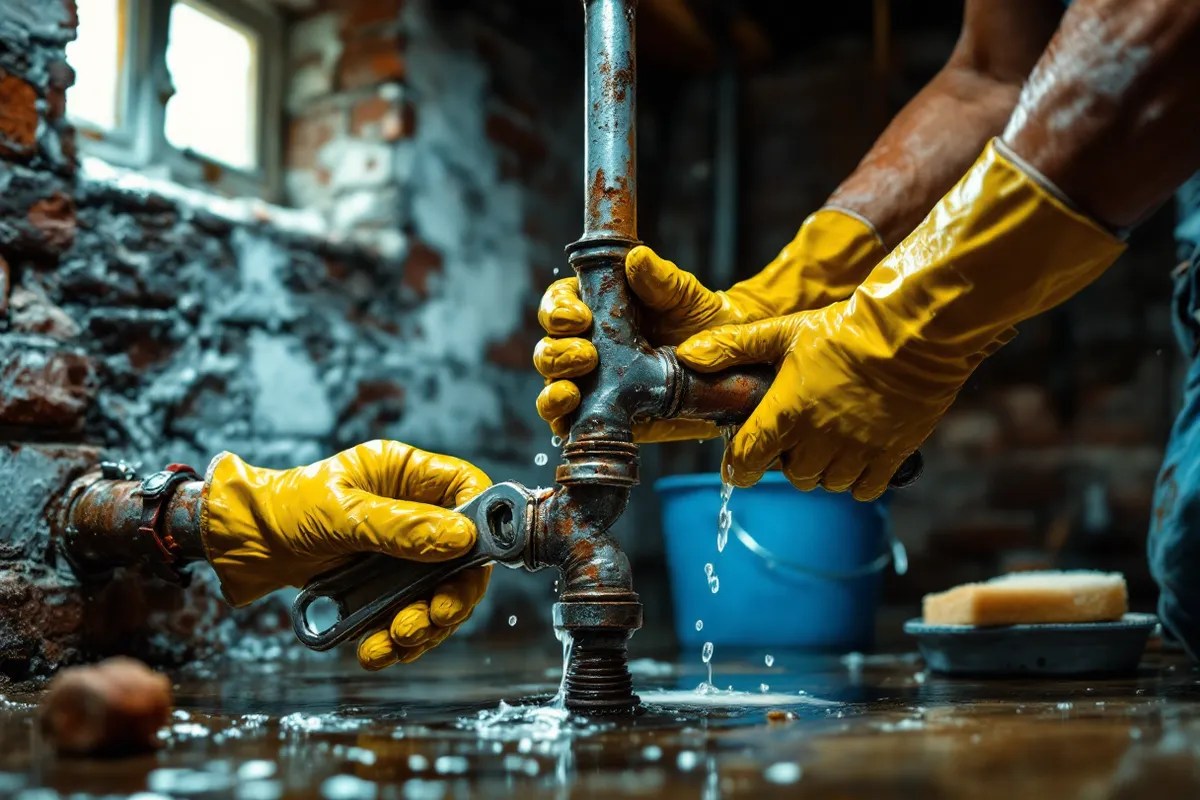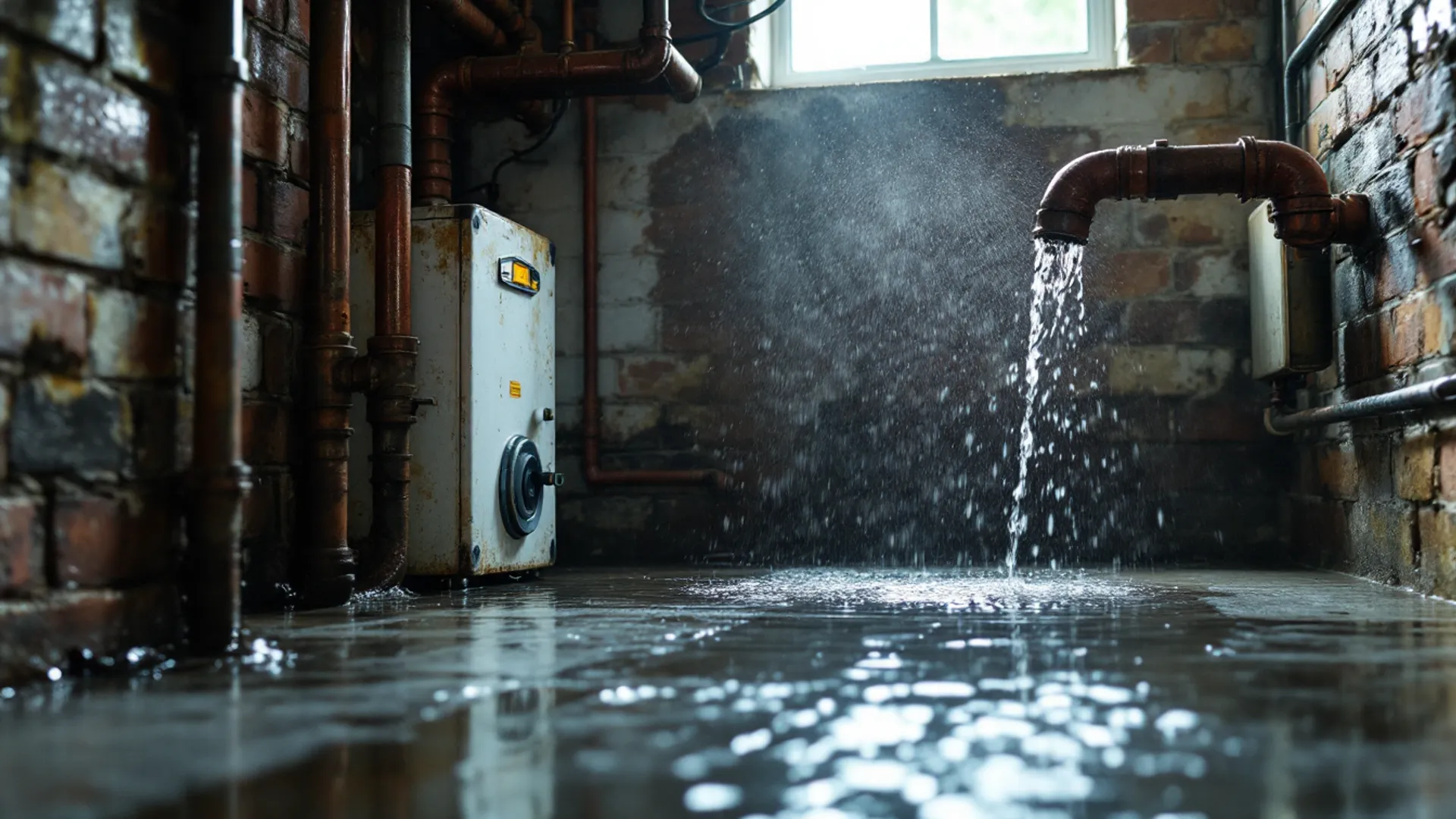
Safety first
Do not enter a flooded cellar until you know it is safe. Water and electricity are a dangerous mix, so keep away if sockets or wiring are wet. If you are unsure, call an electrician and wait outside.
Gas is another risk, so take care. If you smell gas, leave the property and call the National Gas Emergency Service on 0800 111 999. Floodwater may also contain sewage, so avoid contact and wash your hands well afterwards.
Identifying the source
Work out where the water comes from, since the source decides the fix. It may come from a burst pipe, a blocked drain, heavy rain or a high water table. The source decides the fix.
Clean water from a pipe looks clear, while sewage is dark and smells. Water that rises after rain points to drainage or groundwater. Because each cause needs a different response, take photos and notes.
Immediate response
If a pipe has burst, turn off the water at the stopcock. If sewage is backing up, stop using toilets and sinks. Switch off electrics only if you can reach the fuse board safely.
Move belongings to higher ground, because wet items spoil fast. Do not pump out a basement too fast after heavy flooding, since outside pressure can damage walls. Ask a professional how fast to empty it.
Calling for professional help
Call a plumber for a burst pipe and a drainage engineer for a blocked drain, since each has the right tools. They can find the cause and clear it. Tell them what you see and when it began.
You can ask for a free quote on our site, and we will pass your details to a local engineer. If the flooding is severe, contact your insurer and your local council too.
Common causes and their fixes
Blocked drains, failed sump pumps and leaking pipes are common causes, while poor drainage around the house can let water seep in. Poor drainage around the house can also let water seep in. Cracked walls and floors let groundwater in.
Fixes include clearing drains, repairing pipes, adding a sump pump and improving drainage outside. Each suits a different cause, so get advice before you spend money.
Drainage surveys after flooding
After a flood, a camera survey can show whether drains are damaged. It can find cracks, silt and shifted joints. The report also helps with insurance.
Our page on CCTV drain survey explains how a survey works. Early checks help, since hidden damage can cause another flood.
Prevention
Keep gullies and gutters clear so rain flows away from the house, because overflow soaks the ground. Make sure the ground slopes away from the walls. Keep air bricks clear, but do not let soil build up above them.
If you live in a flood-prone area, ask a professional about a sump pump or a non-return valve. A non-return valve stops sewage flowing backwards. Check these each year, because they only work if kept in good order.
Insurance
Tell your insurer as soon as you can. Take photos before you clear up and keep damaged items until they say otherwise. Read your policy to see what it covers.
If sewer flooding from a public sewer caused the damage, contact your water company. Ask them what help they offer, since policies differ.
Related guides and local help
If you want to know more, read Frozen Pipes: How to Prevent, Thaw and Cope After a Freeze. You can also read Plumbing Emergency? Here Is Exactly What to Do Right Now and Gas Safety: What Every UK Homeowner Needs to Know Today, because they cover closely related problems.
These guides help too: Emergency Plumber Costs: What Affects the Price and Tips, Preparing Your Home’s Plumbing for Winter: A UK Guide, CCTV Drain Survey: What to Expect and When You Need One, What to Do When a Pipe Bursts: A Step-by-Step UK Guide and Why Drains Smell Worse in Summer and How to Stop It. Each one explains a related topic in plain English.
Need help near you? Read our plumbing help page first, or see Emergency Plumber in Breaston and Emergency Plumber in Brechin. You can also see Plumbing Repairs in Dereham, since every service page has a free quote form. We pass each request to a local drainage engineer.