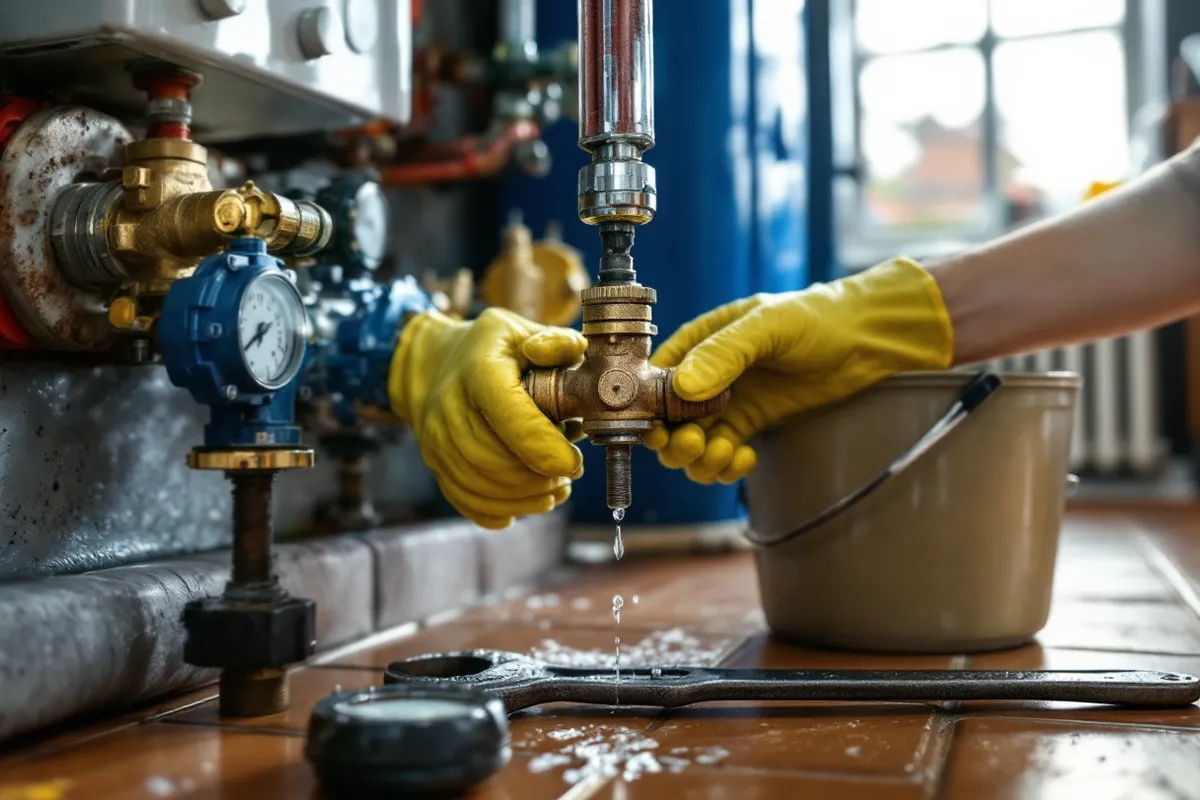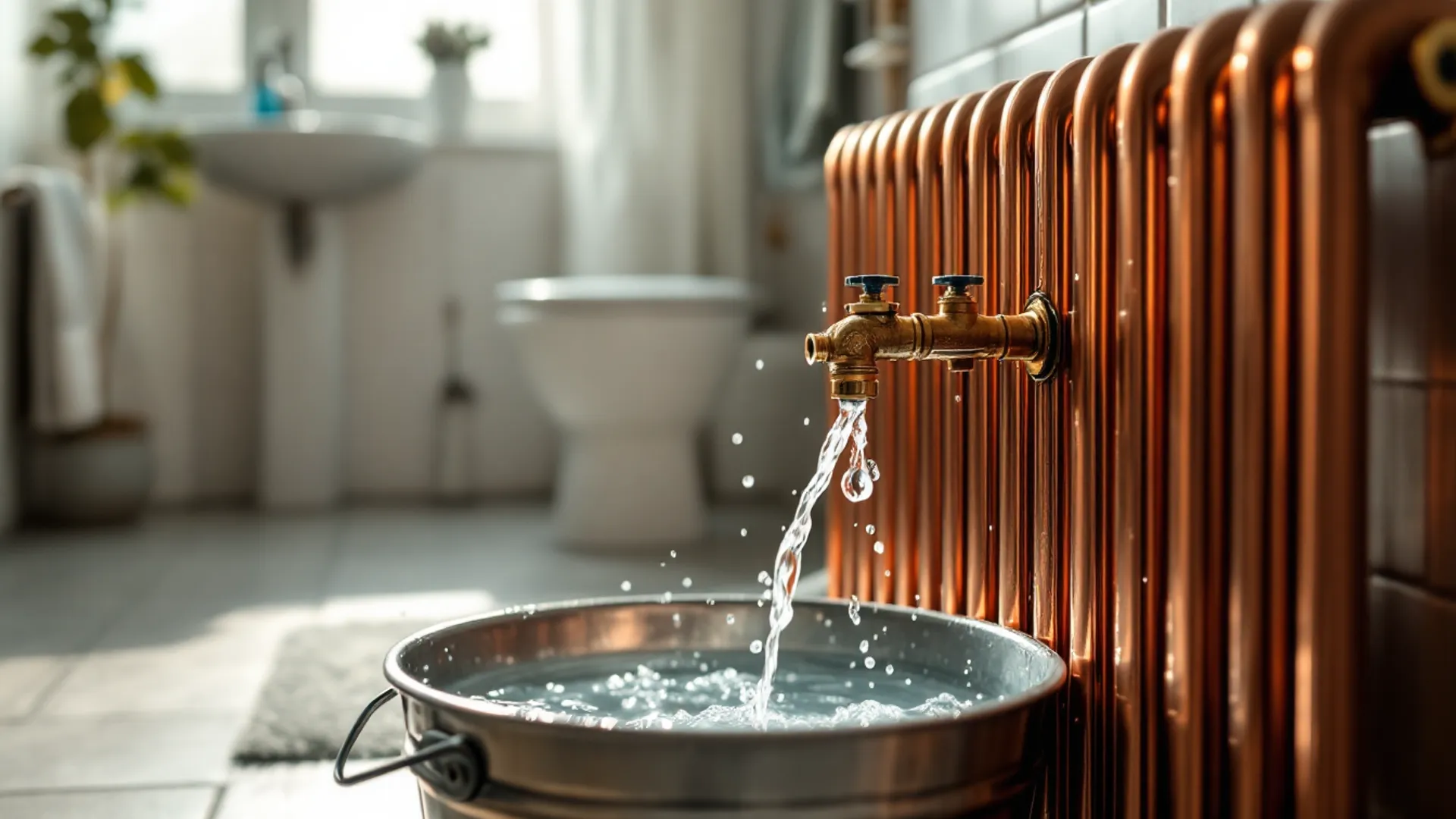
Draining vs flushing vs powerflushing
Draining empties water from the system, while flushing cleans it. Flushing runs clean water through it to remove loose dirt. A powerflush uses a pump to push water through at speed and clean out heavy sludge.
Each has a different aim, because each cleans to a different level. A simple drain-down is fine for repairs. Heavy sludge usually needs more than DIY.
How to drain a single radiator
Turn off the heating and let the radiator cool, because the water inside can be hot. Close the valves at both ends. Place a bowl under the lower valve and open it slowly.
Open the bleed valve at the top to let air in. Water will flow out. Close the valves when it stops, and refit the radiator if you removed it.
How to drain the whole heating system
First, switch off the boiler and let it cool. Find the drain-off point, usually at the lowest part of the system. Attach a hose and run it to a drain outside.
Open the drain-off valve, then open bleed valves to let air in. Take care, because the water can be dirty and hot. Check your boiler manual before you start.
What DIY flushing can achieve
DIY flushing can remove loose dirt and some sludge. It may help a mildly dirty system. However, it cannot clean packed sludge or scale inside the boiler.
It also takes care to refill the system, because air can get trapped. Many people find the job hard without the right tools.
When you need a professional powerflush
A powerflush suits systems with heavy sludge, cold radiators at the bottom or a noisy boiler, since DIY cannot shift it. It is often done when a new boiler is fitted. Our powerflush page explains the service.
Read our guide on what a powerflush is to see if it suits your system. A professional uses special equipment, so the job is faster and cleaner.
Safety limits for DIY work
Hot water can scald, and the system holds a lot of water, so take care. Take care with the boiler and electrics. Never open parts of the boiler.
If you have a gas boiler, only a Gas Safe registered engineer should work on gas parts. If you are unsure, stop and ask a professional.
After draining or flushing
Refill the system and bleed every radiator, because air gets in as the water returns. Check the boiler pressure and top it up. Then run the heating and check for leaks.
Add a corrosion inhibitor to protect the system, since fresh water brings oxygen. Our powerflush cost guide explains what affects the price, and you can learn more on our powerflush page.
Related guides and local help
If you want to know more, read New Boiler Guide: How to Choose the Right Boiler for You. You can also read How to Bleed a Radiator: A Simple Step-by-Step UK Guide and Powerflush Cost Guide: What Affects the Price You Pay, because they cover closely related problems.
These guides help too: Central Heating Not Working? A Full Step-by-Step Guide, Radiator Not Heating: A Diagnosis Guide for Every Fault Type, Boiler Service: What Happens, How Often and Why It Matters, 7 Signs You Need a Powerflush, Not Just a Boiler Service and Boiler Pressure: Normal Range, Low Fixes and High Pressure. Each one explains a related topic in plain English.
Need help near you? Read our powerflush page first, or see Powerflush in Arnold and Powerflush in Ashbourne. You can also see Plumbing Repairs in Camborne, since every service page has a free quote form. We pass each request to a local drainage engineer.