Why non-invasive detection matters
Digging up floors and walls is costly and messy, because it also takes time. Non-invasive methods find the leak first, so you only open the right spot. This limits damage and saves time.
It also helps you avoid guessing. Because a hidden leak can travel along pipes, the wet patch may be far from the source. Good tools point to the real location.
Acoustic correlation: the workhorse of leak detection
A leak makes a small noise as water escapes. Sensors on the pipe pick up the sound at two points. A device then compares the signals to work out where the leak sits.
This suits pipes under floors and in the ground, since the sound travels along the pipe. Traffic and other noise can interfere. A skilled operator knows how to handle that.
Thermal imaging: seeing heat
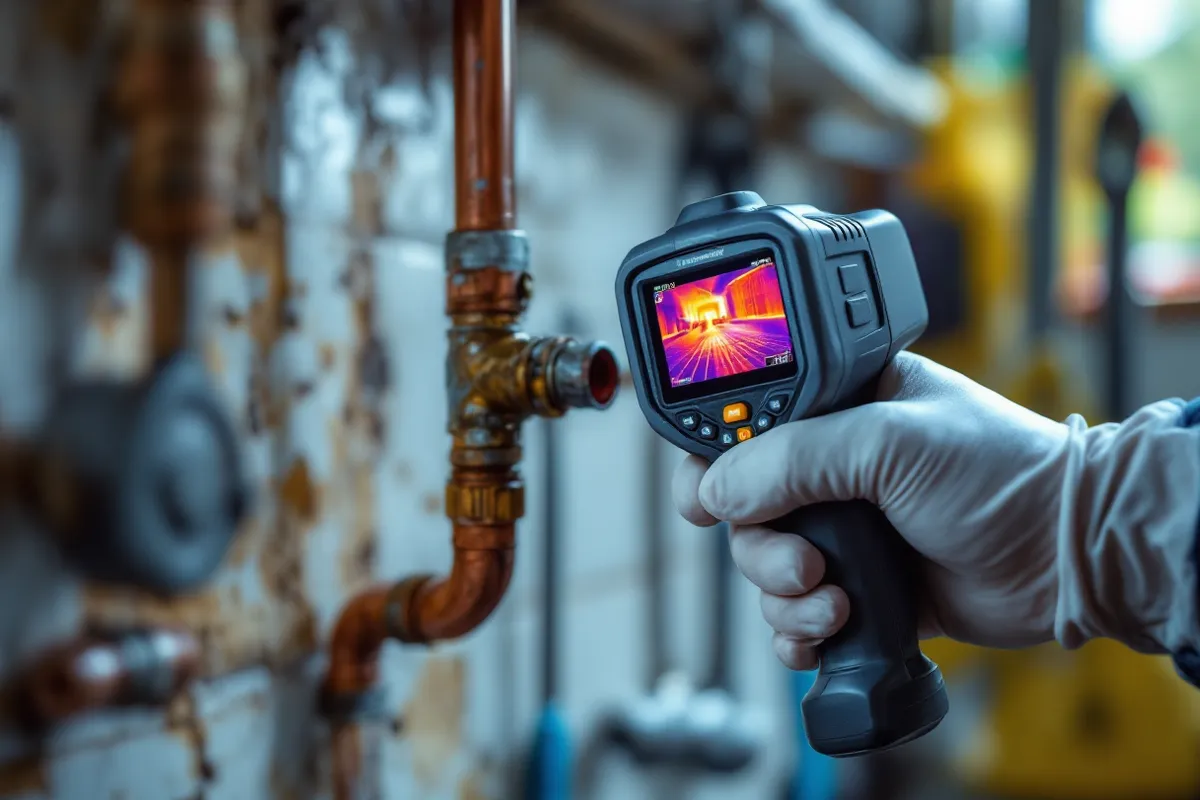
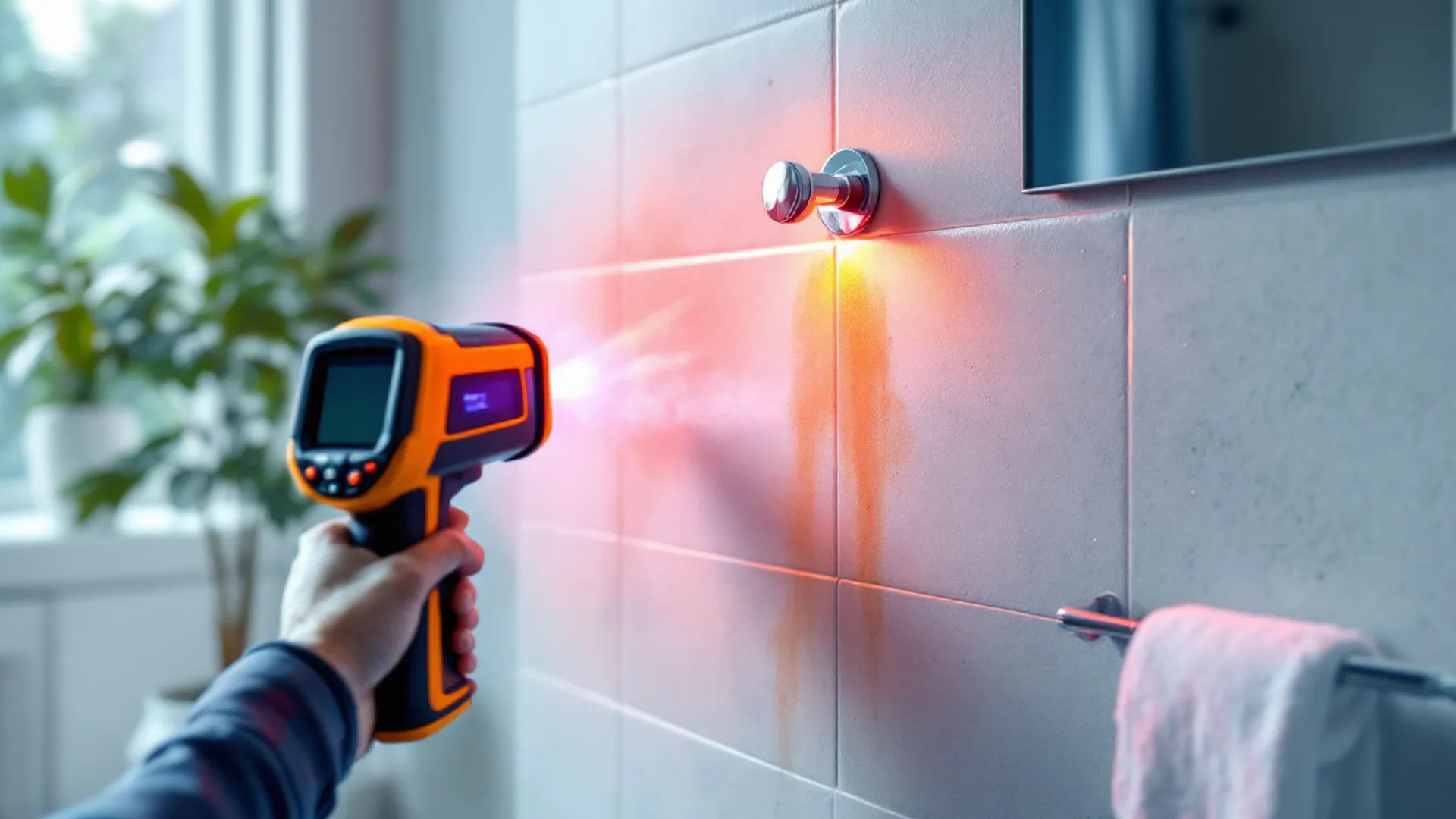
A thermal camera shows differences in surface temperature. A hot water leak can show as a warm patch, while a cold leak shows as a cool patch. The camera does not see through walls, but it shows what the surface is doing.
It works well for heating pipes and underfloor heating, since hot water shows clearly. Results depend on conditions, so an operator checks them against other signs. Moisture readings help confirm the finding.
Tracer gas: finding tiny leaks
For very small leaks, a harmless gas mix can be fed into the pipe. The gas escapes at the leak, and a sensor picks it up above the ground. This can find leaks that other methods miss.
The pipe must be isolated first, so the method takes more steps, yet it can find tiny leaks. It suits cases where a leak is slow or hard to hear. The surveyor will explain the process.
Moisture mapping: after the leak
Once the leak is fixed, moisture meters check how wet the structure is, because hidden damp causes mould. A map of readings shows where to dry out. This helps to prevent mould.
Drying takes time, because water soaks into plaster and timber. Ask for a follow-up check to make sure everything is dry.
What to expect from a leak detection survey
The surveyor will ask about the signs you have seen. They will check the meter and test the pipes. Then they will use the right method or mix of methods.
Afterwards you should receive a clear report of what they found. Our guide to how to find a water leak explains the steps you can take first.
Related guides and local help
If you want to know more, read Leak Detection Cost Guide: What Changes the Price Most. You can also read How to Find a Water Leak: Detection Methods and When to Call and Bath vs Shower: Water Use, Running Costs and Drain Impact, because they cover closely related problems.
These guides help too: What to Do When a Pipe Bursts: A Step-by-Step UK Guide, Hard Water and Your Plumbing: Effects, Costs and Solutions, Preparing Your Home’s Plumbing for Winter: A UK Guide, Hot Water Not Working: A Diagnosis Guide for UK Homes and Gas Safety: What Every UK Homeowner Needs to Know Today. Each one explains a related topic in plain English.
Need help near you? Read our plumbing help page first, or see Leak Detection in Bromley and Leak Detection in Bromsgrove. You can also see Plumbing Repairs in Dudley, since every service page has a free quote form. We pass each request to a local drainage engineer.