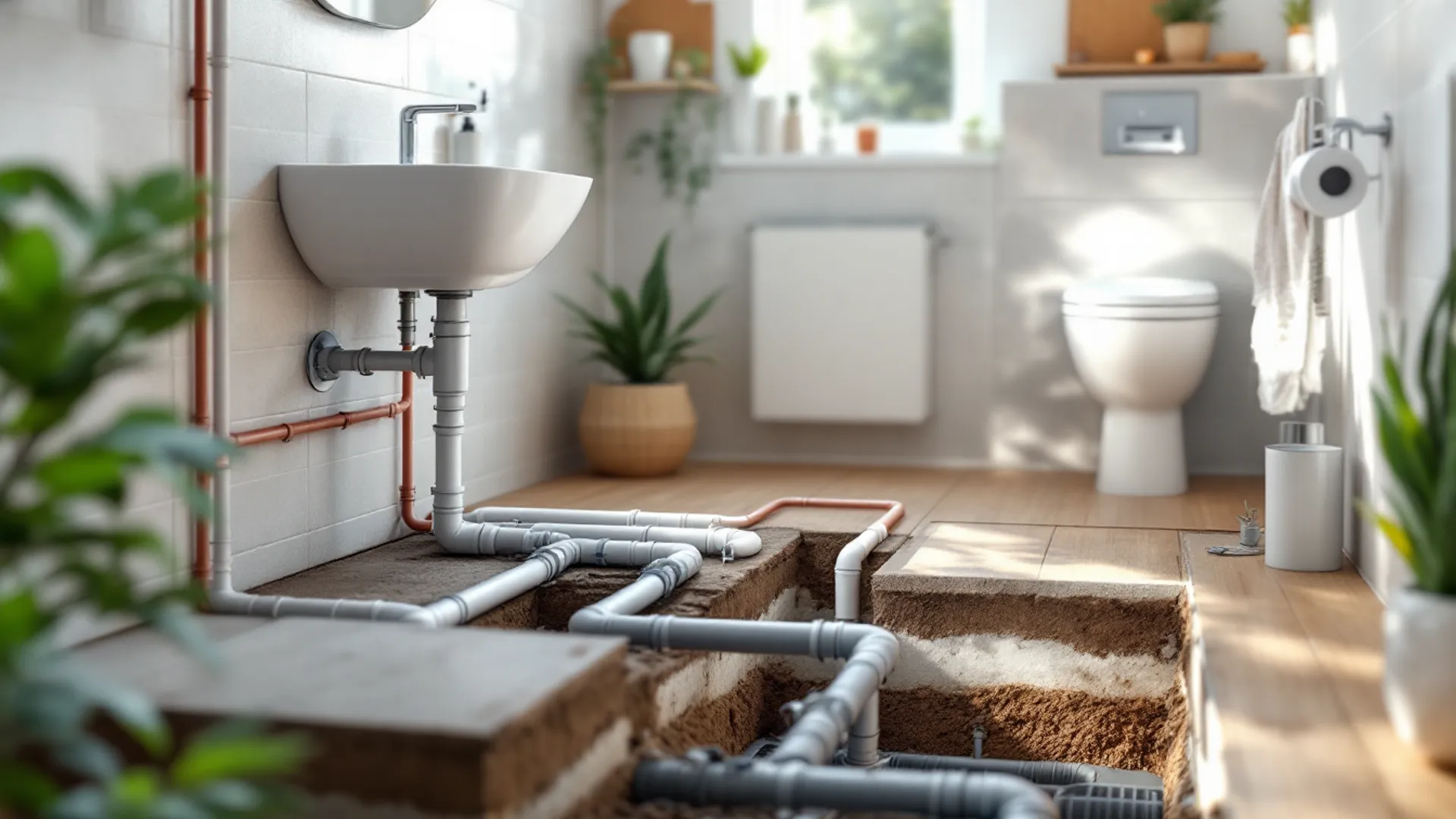
The drainage hierarchy: where the waste goes
Every fitting needs a waste pipe that carries water away. Toilets connect to the soil pipe, while basins, baths and showers connect to waste pipes. These join the main drain.
Plan the route before you choose the layout. A short, straight run with a steady slope works best, because water flows easily. Long or flat runs cause problems.
Soil stack: the limiting constraint
The soil stack is the large vertical pipe that takes toilet waste. It limits where you can place a new toilet. A toilet close to the stack is easier to fit.
Moving a toilet far from the stack needs more pipe and a good fall. Sometimes a macerator pump helps, although it is not always the best option. Ask a plumber what suits your home.
The building into the wall vs surface-mounted debate
You can hide pipes inside walls or fix them to the surface. Hidden pipes look neat, yet they are harder to reach. Surface pipes are easier to maintain and can be boxed in.
Whichever you choose, leave access for repairs. Make sure joints can be reached, because leaks are hard to find otherwise.
Wet room and shower room drainage specifics
A wet room needs a floor that slopes to the drain. The waterproofing must be done well, since leaks can damage the structure. The waste must cope with the flow of the shower.
Plan the trap and pipe size with your plumber. A poor slope can leave puddles. Because wet rooms are complex, use experienced fitters.
Where not to put a bathroom
Avoid places far from the main drain or the stack. A room with no easy route for pipes will cost more. Think about floor structure and access too.
Some spaces may have low ceilings below, which makes pipe runs hard. Meanwhile, check that a new bathroom does not sit over a drain you need to reach.
Building regulations notification
New bathrooms often involve drainage work that building control may want to know about. Check with your local building control team before you start. Part H of the Building Regulations covers drainage.
Keep any certificates and records. They help when you sell. For related advice, see our guide to building regulations for drainage.
Related guides and local help
If you want to know more, read Noisy Pipes: Water Hammer, Banging and What Causes It. You can also read Low Water Pressure: Causes, Diagnosis and Fixes in the UK and 5 Common Mistakes to Avoid When a Pipe Bursts at Home, because they cover closely related problems.
These guides help too: Lead Pipes: Health Risks, How to Spot Them and Replacement, 5 Plumbing Checks to Do Before You Leave on Holiday Trips, How to Read Your Water Meter and Use It to Spot Leaks, Plumbing a Kitchen Extension: What You Need to Know First and How to Find a Reliable Plumber: 10 Things You Should Check. Each one explains a related topic in plain English.
Need help near you? Read our plumbing help page first, or see Plumbing Repairs in Caistor and Plumbing Repairs in Calverton. You can also see Leak Detection in Edenbridge, since every service page has a free quote form. We pass each request to a local drainage engineer.