1. Insulate loft pipework and cold water tanks
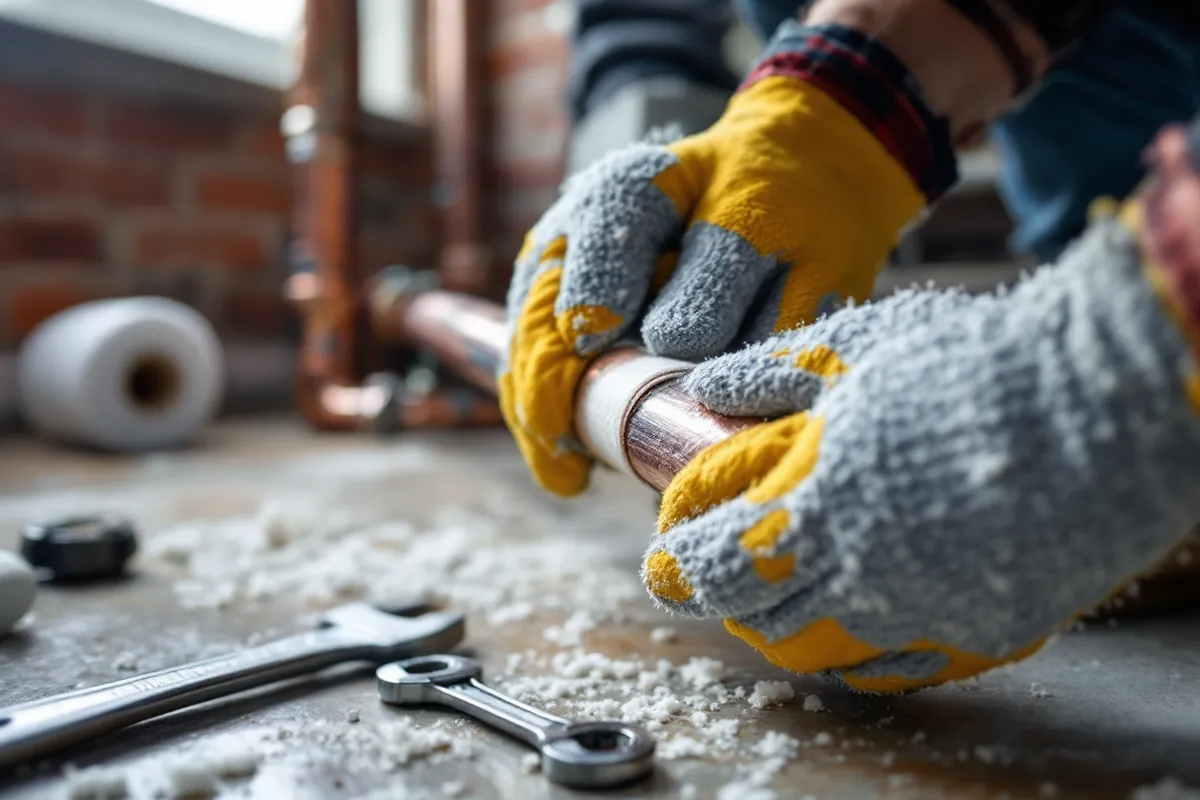
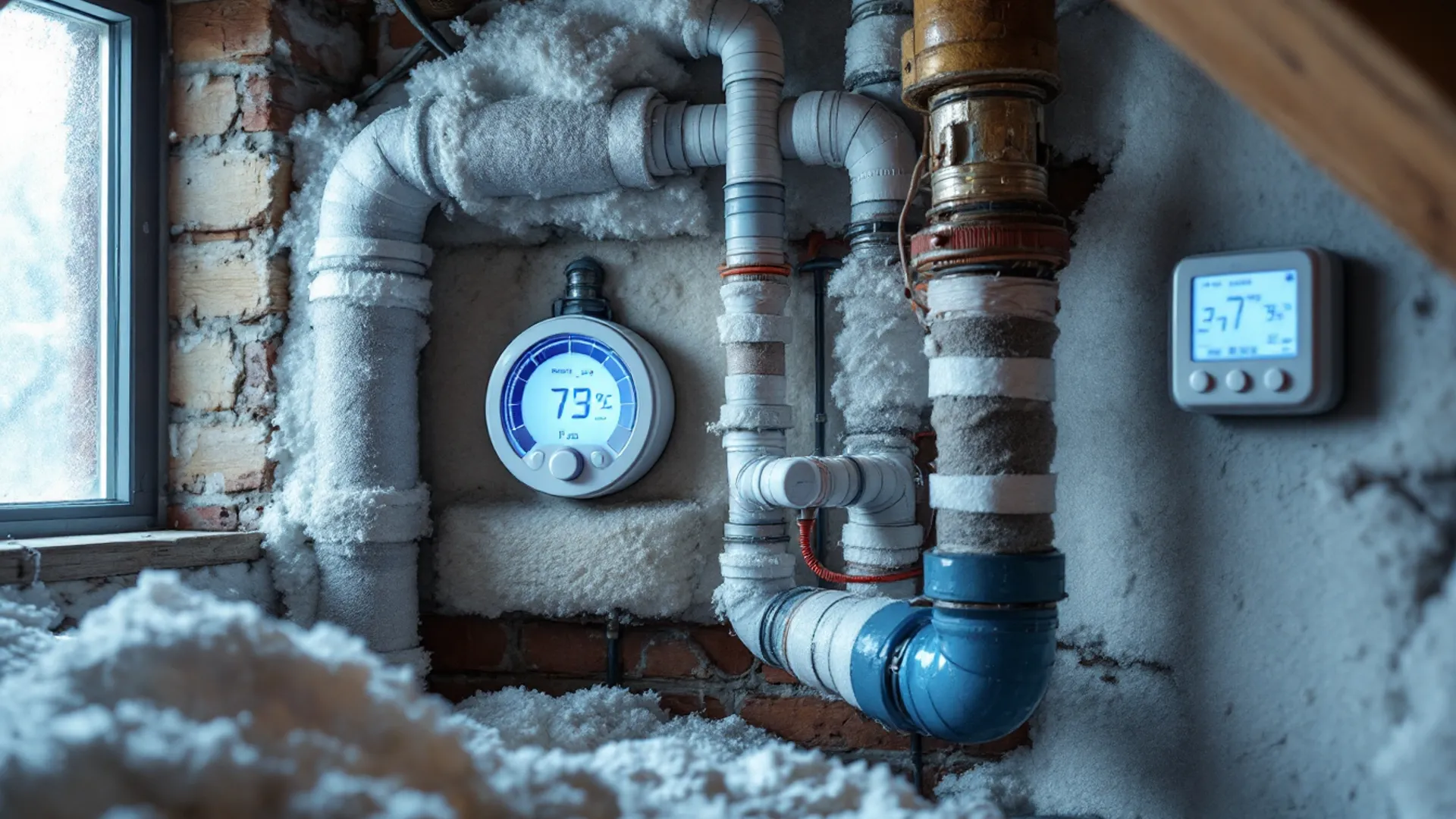
Pipes in the loft are the first to freeze, because the loft is cold. Wrap them in foam lagging, and cover the cold water tank. Make sure there are no gaps at bends and joints.
Check the lagging each autumn. Replace any that has worn or slipped. Pipes close to the roof felt need extra care, because they get the coldest air.
Insulation on the loft floor keeps the house warm, yet it also leaves the loft colder. For that reason, lagging the pipes matters.
2. Lag pipes in garages, outbuildings, and unheated spaces
Garages and sheds have little heat, so pipes there freeze easily. Pipes there freeze easily. Fit foam lagging and seal any gaps.
Check outside taps too. Fit covers and turn off their supply if you can. Drain the pipe so no water stays inside.
Water pipes under floors can freeze too, if cold air blows through gaps. Seal draughts around pipes where they leave the house. Even small gaps matter, since cold air moves fast.
3. Keep the heating on a frost setting when away
Set the heating to a low temperature when you leave home. This keeps pipes above freezing. Check the boiler pressure before you go, using our guide to boiler pressure.
Ask someone to look in on the house. Because frost can strike fast, a quick visit helps.
4. Drip cold taps in very cold weather
A slow drip keeps water moving, which makes freezing less likely, although it is no guarantee. It is not a perfect fix. Use it only in very cold spells.
Do not leave a tap running at full flow. That wastes water and may overload drains.
5. Know where your stopcock is
If a pipe bursts, you need to shut off the water fast. Find your stopcock now and check it turns. Our guide on what to do when a pipe bursts lists the steps.
Label the stopcock and tell everyone in the house. A stiff valve should be replaced.
6. Address existing vulnerabilities before the cold season
Look for pipes that run along outside walls or through cold voids, since they freeze first. Repair loose or damaged lagging. Fix dripping taps and leaks.
Use our annual plumbing maintenance checklist to spot weak points. Fix them in autumn, since repairs are harder in the cold.
If a pipe has already frozen
Turn off the water at the stopcock, because that limits any damage. Open the tap so water can flow when it thaws. Warm the pipe slowly with a hairdryer on low or a hot water bottle.
Never use a naked flame. If you see a split, call a plumber. See our emergency plumber page for help.
Related guides and local help
If you want to know more, read Scale Inhibitors for UK Homes: Do They Actually Work?. You can also read Plumbing Jargon Explained: A Homeowner’s Guide to Key Terms and Smart Home Plumbing Technology: What Is Worth Buying Now, because they cover closely related problems.
These guides help too: Plumbing a Kitchen Extension: What You Need to Know First, Understanding Your Water Bill: Metered vs Rateable Value, 5 Plumbing Checks to Do Before You Leave on Holiday Trips, Water Efficiency in UK Homes: Practical Measures That Work and 5 Common Mistakes to Avoid When a Pipe Bursts at Home. Each one explains a related topic in plain English.
Need help near you? Read our plumbing help page first, or see Plumbing Repairs in Castleford and Plumbing Repairs in Catcliffe. You can also see Leak Detection in Evesham, since every service page has a free quote form. We pass each request to a local drainage engineer.