Drains Cleared
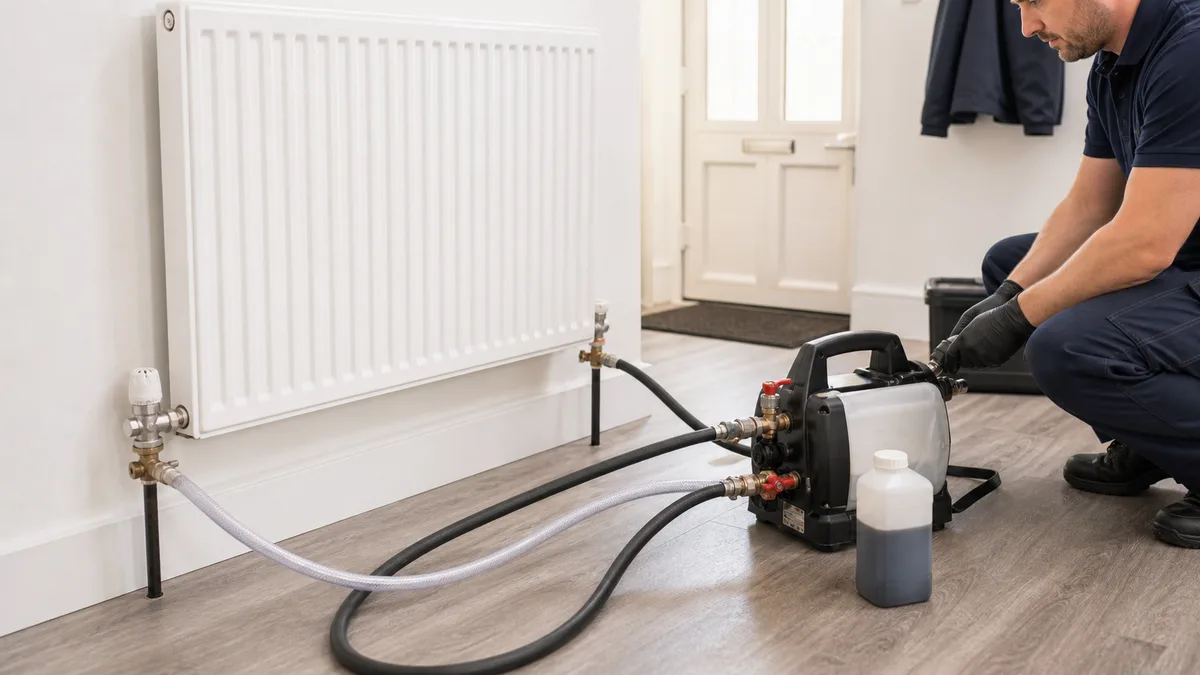
Central heating powerflush machine connected to pipework

Central Heating Powerflush in Tunbridge Wells

Not every cold radiator needs a powerflush. Ask the engineer what they think the cause is before they quote, because a stuck valve or trapped air gives similar signs. Serving TN1, TN2, TN3, TN4.
TN1TN2TN3TN4
We cover TN1, TN2, TN3 and TN4 and nearby areas around Tunbridge Wells. Send a free quote request and we will pass it to a local drainage engineer.

Powerflush in Tunbridge Wells

If you need powerflush in Tunbridge Wells, you can ask for a free quote on this page. We pass your request to a local drainage engineer. Because every property is different, the engineer should look at the fault before any work starts.

A powerflush pushes water through a central heating system to shift sludge, rust and scale. It can help when radiators stay cold at the bottom, the boiler is noisy or the water runs black. However, a stuck valve or trapped air can look the same. Ask the engineer to check the system first and explain if a flush will help.

Drains in Tunbridge Wells

Tunbridge Wells covers the TN1, TN2, TN3, TN4 postcodes, and Southern Water is the water company for the area. The local council is Tunbridge Wells. That matters, since the water company and the council look after different pipes.

Most drain faults start small. For example, fat, wipes and tree roots build up slowly, and then a pipe blocks in one go. Separate sewers keep foul water and rain in different pipes. As a result, a wrongly connected pipe can cause faults that are hard to spot.

Local drainage issues

  • Hard water supply causes limescale accumulation in boilers, radiators and soil pipe joints — powerflush and descaling demand is high across Tunbridge Wells
  • Separate sewer system across most of Tunbridge Wells: misconnections (e.g. washing machines plumbed into surface water drains) are a known local issue and can result in environmental enforcement action
  • Coastal salt-laden air in Tunbridge Wells accelerates corrosion of external soil stacks, pipe brackets and galvanised fittings on exposed elevations
  • With a significant share of properties built before 1920, salt-glazed clay drainage and lead-solder copper pipework are common — pipe collapse, root ingress and joint failure are recurring call-out drivers.
  • Parts of the Tunbridge Wells area fall within Environment Agency flood alert areas along the River Medway corridor — sewer surcharge during prolonged rainfall is a known risk; non-return valves are worth considering.

What happens when you send a request

  1. 1 You tell us what is wrong. Fill in the short form with your name, phone number, postcode and the problem.
  2. 2 We pass it on. Your details go to a local drainage engineer who covers TN1/TN2.
  3. 3 The engineer gets in touch. You can talk through the work and the cost with them before you decide.

Who looks after drains in Tunbridge Wells?

Drains in Tunbridge Wells can be the homeowner's job or someone else's. In general, a pipe that only serves your home is yours up to your boundary. However, a shared pipe or a public sewer usually belongs to Southern Water.

Road gullies and highway drains are usually the council's job. In Tunbridge Wells, that means Tunbridge Wells. If you are not sure who owns a pipe, ask Southern Water first, because they can often tell you from their records.

Powerflush prices in Tunbridge Wells

We cannot give a price on this page, because the cost depends on the job. Access, pipe type and the size of the fault all matter. Still, a free quote request costs you nothing, and you can compare the answer with other quotes.

Want to learn more first? Read What Is a Powerflush and Does Your Boiler Need One Now?. You can also read 7 Signs You Need a Powerflush, Not Just a Boiler Service, because both explain the basics in plain English.

In short, powerflush in Tunbridge Wells starts with a free quote request. We then pass your details to a local engineer. They will contact you to talk about the work, so keep your phone close.

About drainage in Tunbridge Wells

Local facts that may help when you talk to an engineer.

Population
10,000
Postcode districts
TN1TN2TN3TN4
Council
Tunbridge Wells
Water authority
Southern Water
Flood risk
Medium — affected watercourses: River Medway, Teise, River Rother
Property mix
Victorian Notable share
Edwardian Notable share
Interwar Notable share
Postwar Large share
Modern Notable share
Sewer type separate
Common local issues
Hard water supply causes limescale accumulation in boilers, radiators and soil pipe joints — powerflush and descaling demand is high across Tunbridge WellsSeparate sewer system across most of Tunbridge Wells: misconnections (e.g. washing machines plumbed into surface water drains) are a known local issue and can result in environmental enforcement actionCoastal salt-laden air in Tunbridge Wells accelerates corrosion of external soil stacks, pipe brackets and galvanised fittings on exposed elevationsWith a significant share of properties built before 1920, salt-glazed clay drainage and lead-solder copper pipework are common — pipe collapse, root ingress and joint failure are recurring call-out drivers.Parts of the Tunbridge Wells area fall within Environment Agency flood alert areas along the River Medway corridor — sewer surcharge during prolonged rainfall is a known risk; non-return valves are worth considering.

Use these facts as a guide only. They may not match your street.

Powerflush in Tunbridge Wells — FAQs

Who is the water company in Tunbridge Wells?
Tunbridge Wells is served by Southern Water. The local council is Tunbridge Wells. Both look after different parts of the drainage network.
What drain problems are common in Tunbridge Wells?
Hard water supply causes limescale accumulation in boilers, radiators and soil pipe joints — powerflush and descaling demand is high across Tunbridge Wells. Separate sewer system across most of Tunbridge Wells: misconnections (e.g. washing machines plumbed into surface water drains) are a known local issue and can result in environmental enforcement action.
How do I know if I need a powerflush?
Cold patches at the bottom of radiators, black or dark water when you bleed them and poor circulation are common signs of sludge. A noisy boiler can also point to sludge or scale, although other faults cause it too. An engineer can check if a flush will help.
What does a powerflush involve?
A machine pushes water through the system at speed to shake loose sludge and rust. The engineer should explain each step, including what they add to the water afterwards to slow new rust. Ask for the details before you agree.
How long does a powerflush take?
The time depends on the number of radiators, the pipework and how much sludge there is. Ask for an estimate when you request the quote.
Will it fix cold spots on radiators?
Sludge is a common cause of cold patches at the bottom of radiators, so a flush can help. However, trapped air, a stuck valve or poor balancing cause similar signs. Ask the engineer to rule these out first.

Powerflush near Tunbridge Wells

We cover towns within and around Tunbridge Wells. Click a town to see local engineer availability.

Tunbridge Wells service area

We cover TN1, TN2, TN3 and TN4 and nearby areas around Tunbridge Wells. Send a free quote request and we will pass it to a local drainage engineer. Nearby towns include Tonbridge, Ticehurst, Wadhurst, Crowborough, Staplehurst.

View Tunbridge Wells on Google Maps

Ready to book in Tunbridge Wells?

We cover TN1, TN2, TN3 and TN4 and nearby areas around Tunbridge Wells. Send a free quote request and we will pass it to a local drainage engineer.

Get your free quote