When to run this check
Pick a calm weekend in early autumn. The weather is still mild, so outdoor jobs are easy. You also catch problems before the cold weather arrives.
Spring is a good second choice, although one thorough check a year is enough. Just keep an eye on things in between.
Section 1: Water supply
Find your mains stopcock and turn it off and on again. If it is stiff, a little penetrating oil can help. A stopcock that will not turn is a real problem in an emergency, so ask a plumber to replace it.
Next, read your water meter if you have one. Turn off every tap and appliance, then check that the dial stays still. If it moves, you may have a hidden leak.
Look under the kitchen sink for drips, stains or damp. Check the valves that feed the washing machine and dishwasher as well. Small leaks often start at joints, because the seals wear over time.
Section 2: Drainage
Run each sink, bath and shower for a minute and watch how fast the water leaves. A slow drain is an early warning. For example, a basin that takes a long time to empty usually has hair or soap in the trap.
Lift the covers over your shower, bath and basin drains and clear any hair. Wear gloves and use a simple hair tool. This takes a few minutes and stops most bathroom blockages.
Outside, clear leaves and silt from each gully grate. If you have an inspection chamber, lift the cover with care and look for standing water. Water that stays there when nobody is using the plumbing may point to a partial blockage.
Section 3: Central heating
Check the boiler pressure gauge. Many boilers sit between 1 and 1.5 bar when cold, but check your manual for your model. If the reading is low, follow the maker’s steps to top it up.
Bleed any radiator that is cold at the top while the heating is on. Also check when the boiler last had a service. Boiler makers often ask for a yearly service, so check your warranty terms.
If your boiler has a magnetic filter, ask whoever services the boiler to show you how to clean it. Take care, since the filter holds hot, dirty water.
Section 4: Above-ground plumbing
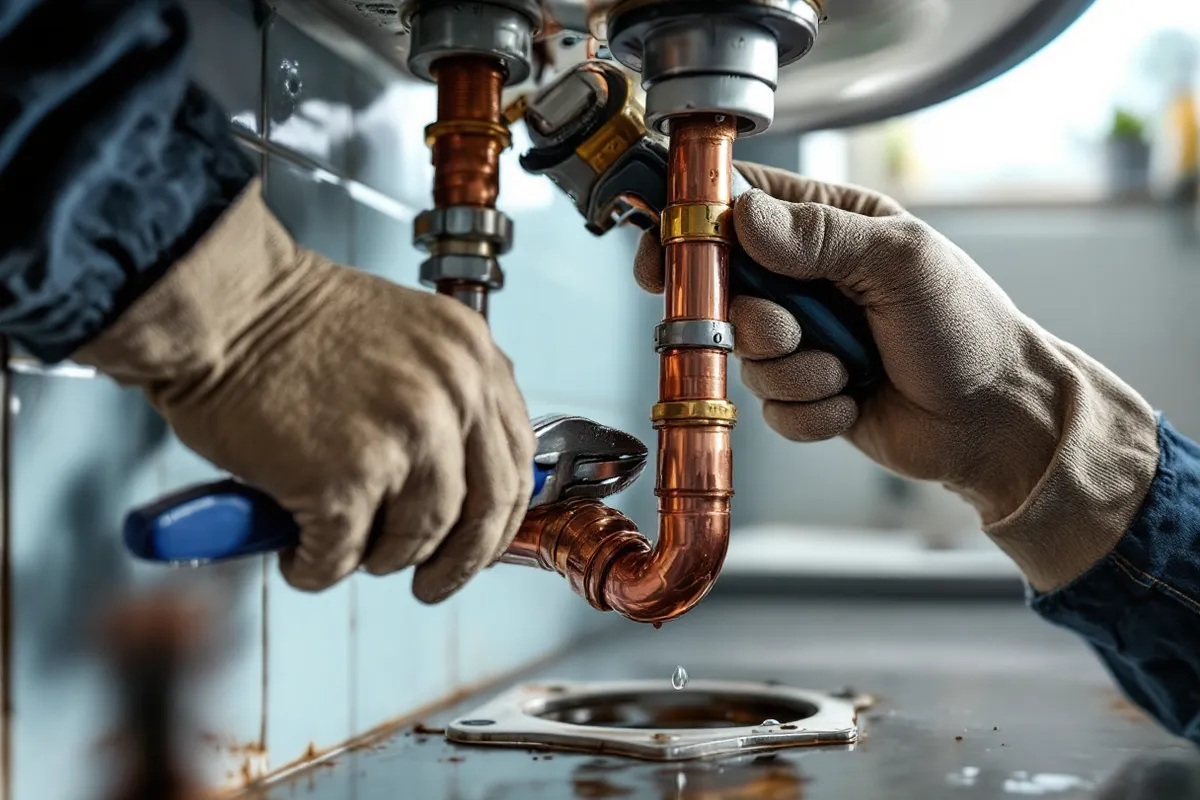
Look at the pipes and waste connections under every sink and behind the bath panel. Stains or damp marks show where water has escaped. Press gently on the panel edges too, since soft or swollen board means a slow leak.
Test the small valves on toilet cisterns and basin supplies. They should turn smoothly. A valve that sticks now will not help you in an emergency.
Lift the cistern lid and watch the fill valve. The water should stop below the overflow pipe. If it keeps running, the valve needs replacing, and a dripping tap wastes water because the washer or cartridge has worn out.
Section 5: External
Walk around the house and look at the downpipes, soil pipes and gutters. Look for cracks, loose brackets and open joints. After rain, staining on the wall below a gutter shows an overflow.
Check that air bricks are clear of soil and plants. Blocked air bricks can cause damp under the floor. Finally, note where your stopcock and any external meter box sit so you can find them fast.
When to call a professional
Some findings need an expert. A meter that moves with everything off suggests a hidden leak, so call a leak detection specialist. Slow drains that return after you clear them need a drainage engineer, while a boiler that keeps losing pressure needs a heating engineer.
If you smell gas, do not use this checklist. Call the National Gas Emergency Service on 0800 111 999 straight away. If you need a hand with a drain, you can request a free quote and we will pass your details to a local drainage engineer.
Related guides and local help
If you want to know more, read Commercial Drain Maintenance: A Practical Guide for Owners. You can also read What Is a Powerflush and Does Your Boiler Need One Now? and DIY Drain Maintenance: What to Do and What to Leave to Pros, because they cover closely related problems.
These guides help too: Underfloor Heating Problems: A Diagnosis and Repair Guide, Building Regulations for Drainage: What You Need to Know, 7 Signs You Need a Powerflush, Not Just a Boiler Service, Drain Maintenance Contracts: What They Cover, Who Needs One and Radiator Not Heating: A Diagnosis Guide for Every Fault Type. Each one explains a related topic in plain English.
Need help near you? Read our drain jetting page first, or see Drain Jetting in Bangor and Drain Jetting in Barking. You can also see Blocked Drains in Chester-le-Street, since every service page has a free quote form. We pass each request to a local drainage engineer.