The three types of sink blockage
Most sink blockages fall into three groups. The first is in the trap under the sink. The second is in the waste pipe that runs from the trap, and the third is in the underground drain.
Each type needs a different fix, because the cause sits in a different place. For that reason, it helps to work out which one you have before you start.
How to tell which type you have
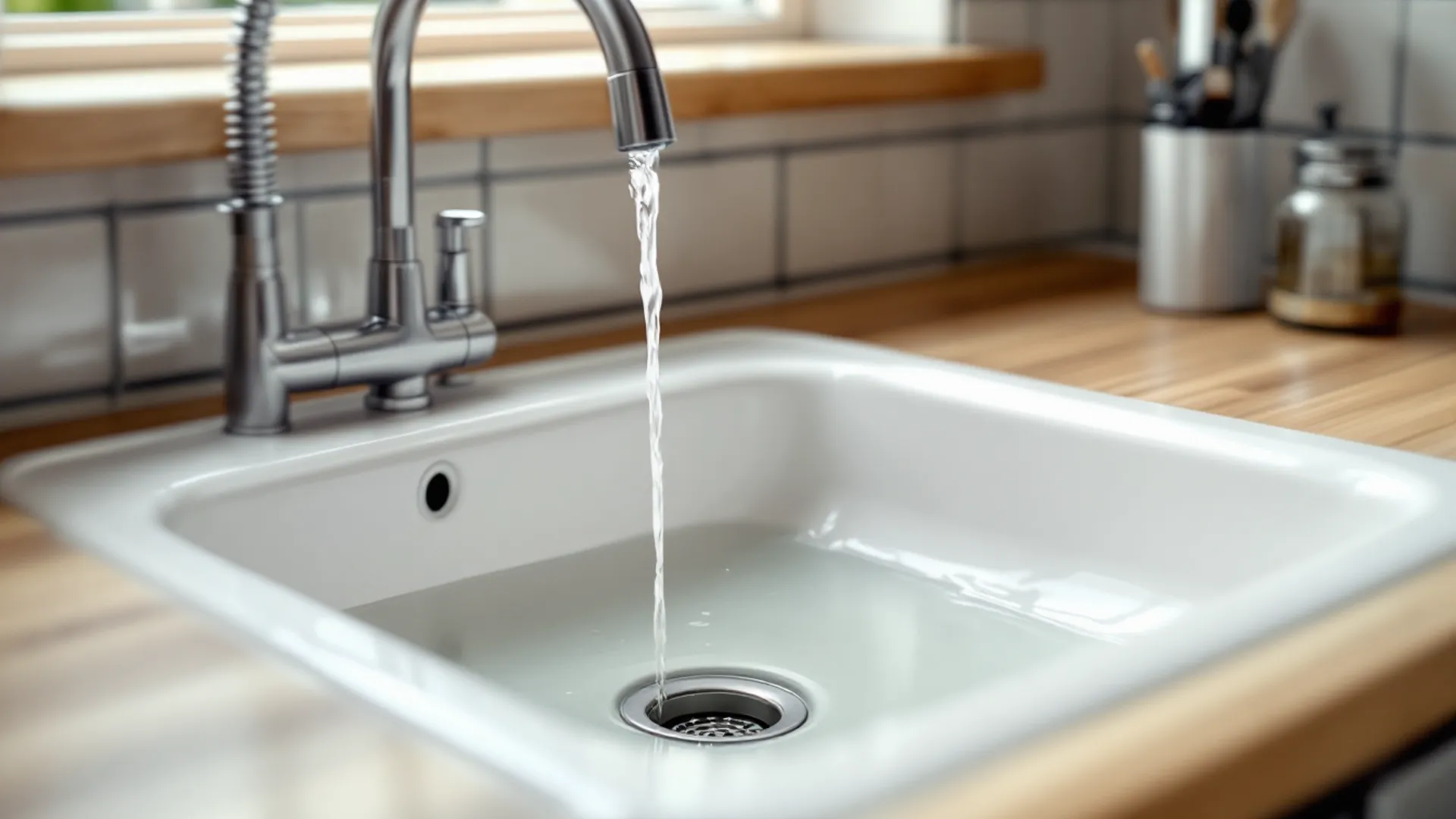
Watch what happens when you run the tap. If only that sink is slow, the problem is likely in the trap or waste pipe. However, if other fittings are slow too, the blockage is probably further along.
Also check outside. A gully that overflows or an inspection chamber that fills points to the underground drain. Gurgling noises are a further clue.
Clearing a trap blockage (Type 1)
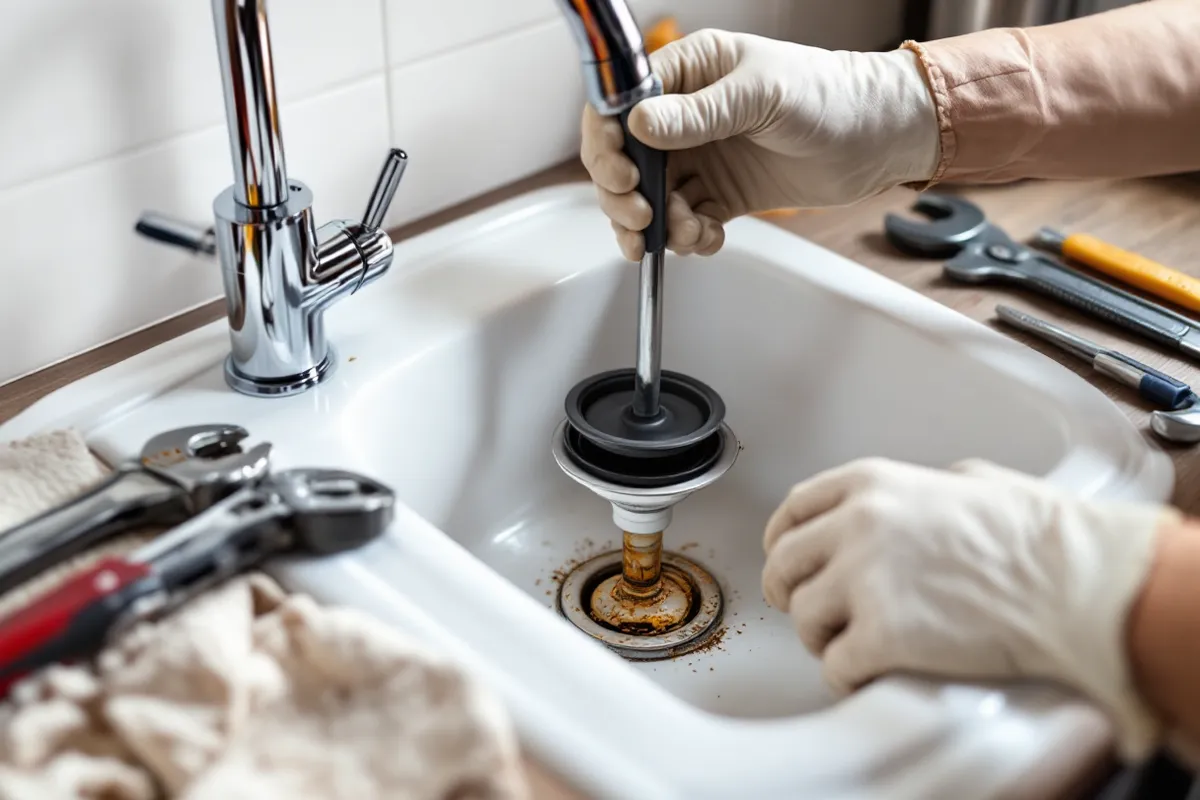
Place a bucket under the trap. Unscrew the trap by hand, or with a small wrench if it is tight. Empty it and clean out the grease and food.
Rinse the parts and refit them. Make sure the seals sit flat, because a poor seal leaks. Run the tap and check the joints.
Clearing a waste pipe blockage (Type 2)
If the trap is clear but the sink is still slow, the blockage sits in the waste pipe. Try a sink plunger first, since it is cheap and quick. Cover the overflow with a wet cloth so the pressure goes down the pipe.
If that fails, a small hand auger can reach further. Feed it in gently and turn the handle. Pull it out slowly and clean it. Go gently, since force can damage old plastic joints.
Underground drain blockage (Type 3)
A blockage in the underground drain needs stronger equipment. You may see water backing up in a gully or chamber. This is not a job for a plunger.
A drainage engineer can clear the drain with rods or a high-pressure water jet. They can also check the pipe with a camera. You can request a free quote if you want help finding a local engineer.
Prevention by sink type
Kitchen sinks block with grease, food and coffee grounds, while basins mostly suffer from hair. Scrape plates into the bin and wipe pans with kitchen paper before washing. Never pour fat down the sink, since it cools and sticks inside the pipe.
Bathroom basins block with hair, toothpaste and soap, yet a small strainer over the plughole helps a lot. Clean the trap every few months.
When to call a professional
Call a professional if more than one fitting is slow, or if the blockage returns after you clear it. The same goes for bad smells, leaks, or water coming up from a drain. These signs suggest a problem you cannot fix with a plunger.
Related guides and local help
If you want to know more, read 8 Common Causes of Blocked Outside Drains and What to Do. You can also read Blocked Drain Emergency: What to Do Right Now in the UK and Drain Jetting vs Rodding: Which Method Is Right for You?, because they cover closely related problems.
These guides help too: Blocked Bath Drain: Causes, Quick Fixes and Prevention Tips, Drain Maintenance: How to Keep Your Drains Clear All Year, Bathroom Drain Problems: Hair, Soap Scum and Real Fixes, How to Unblock a Drain: A Simple Step-by-Step UK Guide and Water Softener Guide: How They Work, Costs and Installation. Each one explains a related topic in plain English.
Need help near you? Read our blocked drain guide first, or see Blocked Drains in Leeds and Blocked Drains in Liverpool. You can also see Blocked Toilets in Bexhill-on-Sea, since every service page has a free quote form. We pass each request to a local drainage engineer.