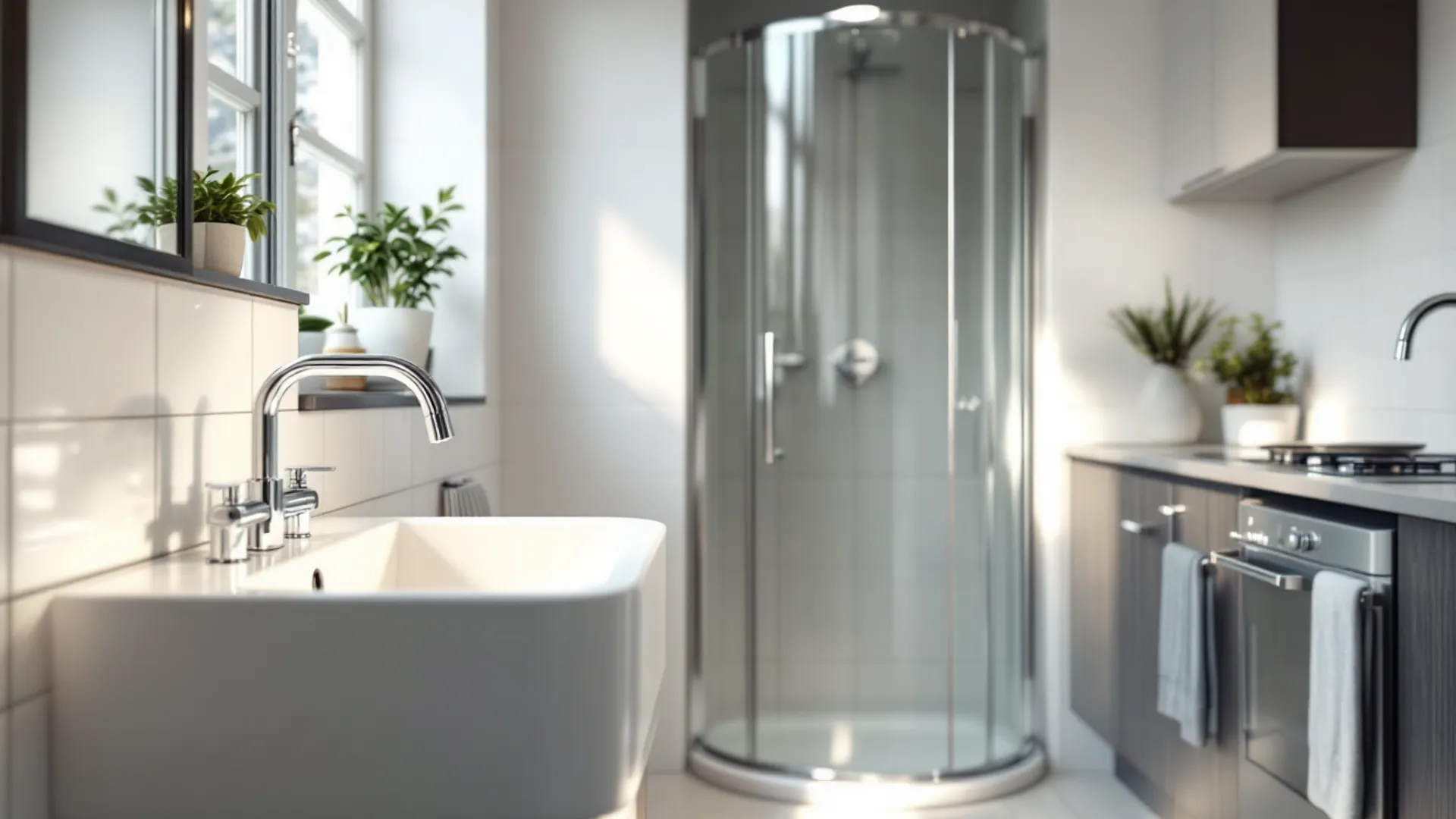
1. Blocked or slow bathroom drains
Run every shower, bath and basin and watch the flow. Slow drains are an early warning, because they often come before a full blockage. Clear hair and soap, because they cause most bathroom blockages.
If a drain stays slow, call an engineer. Our page on drain jetting explains one way to clear stubborn blockages.
2. Toilet flush performance
Flush each toilet and check it refills and stops. A weak flush or a running cistern should be fixed. Look for leaks around the base, too.
Busy shared houses wear toilets quickly, since many people use them. A small repair now is easier than a failure later.
3. Hot water supply adequacy
Test that hot water reaches each tap and shower, because tenants notice quickly. Check the water runs hot in a reasonable time. If several people use the water at once, check that supply keeps up.
A boiler or cylinder that struggles may need a heating engineer. Meanwhile, note any problems and fix them before the inspection.
4. Cold water hygiene and Legionella risk
Landlords have a duty to assess the risk from Legionella in rented homes. The HSE explains the duty and the simple steps to control the risk. Unused taps and showers should be run regularly, because standing water can grow bacteria.
Keep a record of your assessment and any actions. You do not usually need a test certificate. Ask a competent person if you are unsure.
5. Visible pipe condition
Look at exposed pipes for corrosion, leaks and loose fixings, since small faults grow. Check the waste pipes under sinks and behind baths. Stains often point to a slow leak.
Repair or replace damaged pipes. Our page on CCTV drain survey shows how to check hidden drains.
6. Shared kitchen waste pipe capacity
A shared kitchen puts a lot of waste into one pipe. Grease and food scraps build up quickly. Ask tenants to use sink strainers and bin their fat.
If the kitchen sink often blocks, the pipe may need cleaning. A drain jetting service can clear the grease.
7. Drainage outside the property
Check gullies, covers and inspection chambers, because outside faults reach inside. Clear leaves and debris. Look for standing water, which may point to a blocked drain.
An outside blockage can back up into the house. A camera check can show the condition of the pipes. See our CCTV drain survey page for more.
8. Bathroom ventilation adequacy
Check that extractor fans work and vents are clear, because damp spreads fast. Poor ventilation causes damp and mould. Damp can also damage plumbing and walls.
Clean the fan covers and test that they pull air. Fix any fan that is noisy or weak.
9. Documentation for drainage work
Keep invoices, reports and certificates for any drainage or plumbing work, since inspectors ask. They show that you maintain the house. An inspector may ask to see them.
Store them in one folder. Include camera survey reports and drain cleaning records. A CCTV drain survey report is useful evidence.
10. Drainage for recent conversions or extensions
If you have converted or extended the house, check that the drains cope, since new rooms add load. New bathrooms and kitchens add load. Make sure the work met the rules at the time.
Keep any building control papers. If they are missing, ask your council how to get copies. A survey can show what is in the ground.
Pre-inspection drainage service
A pre-inspection check can find faults early, so repairs happen on your terms. In England, a property needs a mandatory HMO licence if five or more people from two or more households live there. Your local council may also run extra schemes. If you want a local engineer to help, you can request a free quote and we will pass your details on.
Related guides and local help
If you want to know more, read HMO Plumbing and Drainage: Requirements and Best Practice. You can also read Gutters and Downpipes: A Simple Care Guide for UK Homes and 6 Things That Can Void Your Home Insurance Drainage Claim, because they cover closely related problems.
These guides help too: Garden Drainage Solutions: How to Fix a Waterlogged Garden, Home Insurance and Drainage: What Is Covered and What Is Not, Flood Risk and Drainage: What Property Owners Should Know, Landlord Drainage Responsibilities: What UK Landlords Do and Seasonal Drainage and Plumbing Guide: What to Do Each Season. Each one explains a related topic in plain English.
Need help near you? Read our drain jetting page first, or see Drain Jetting in Berwick-upon-Tweed and Drain Jetting in Bestwood. You can also see Blocked Drains in Coleraine, since every service page has a free quote form. We pass each request to a local drainage engineer.