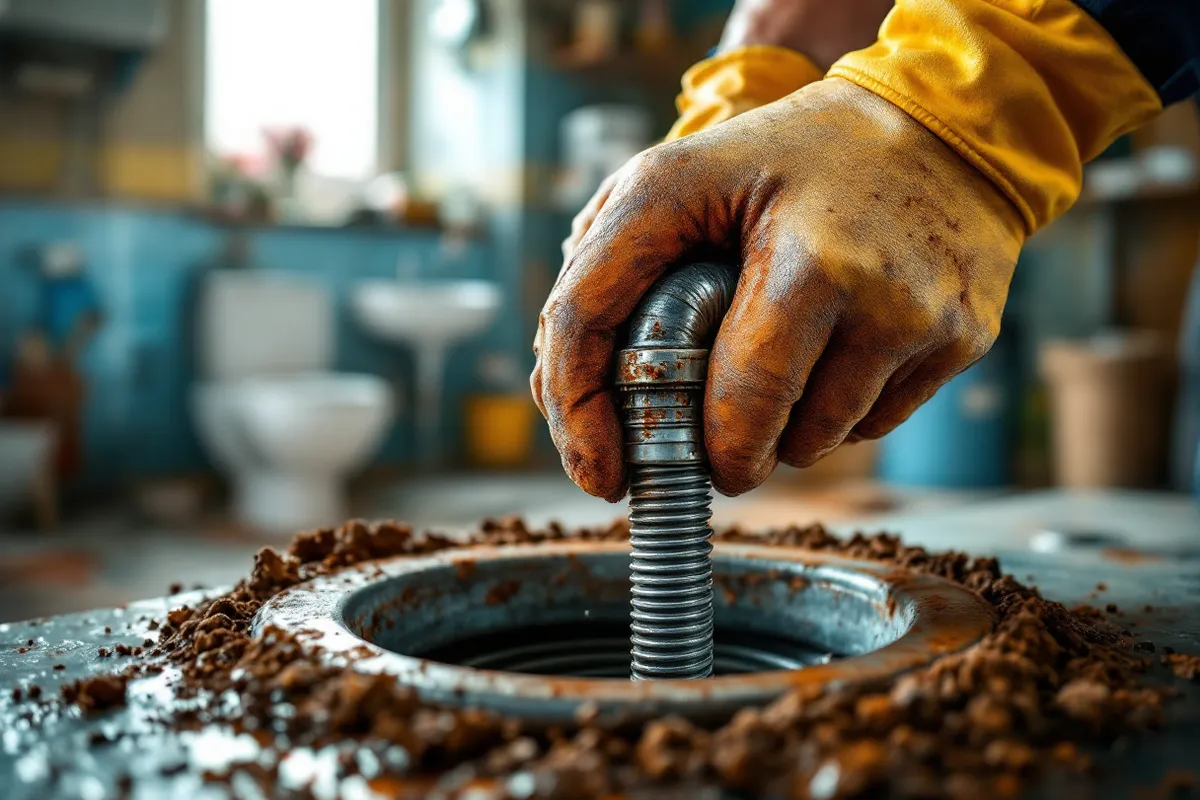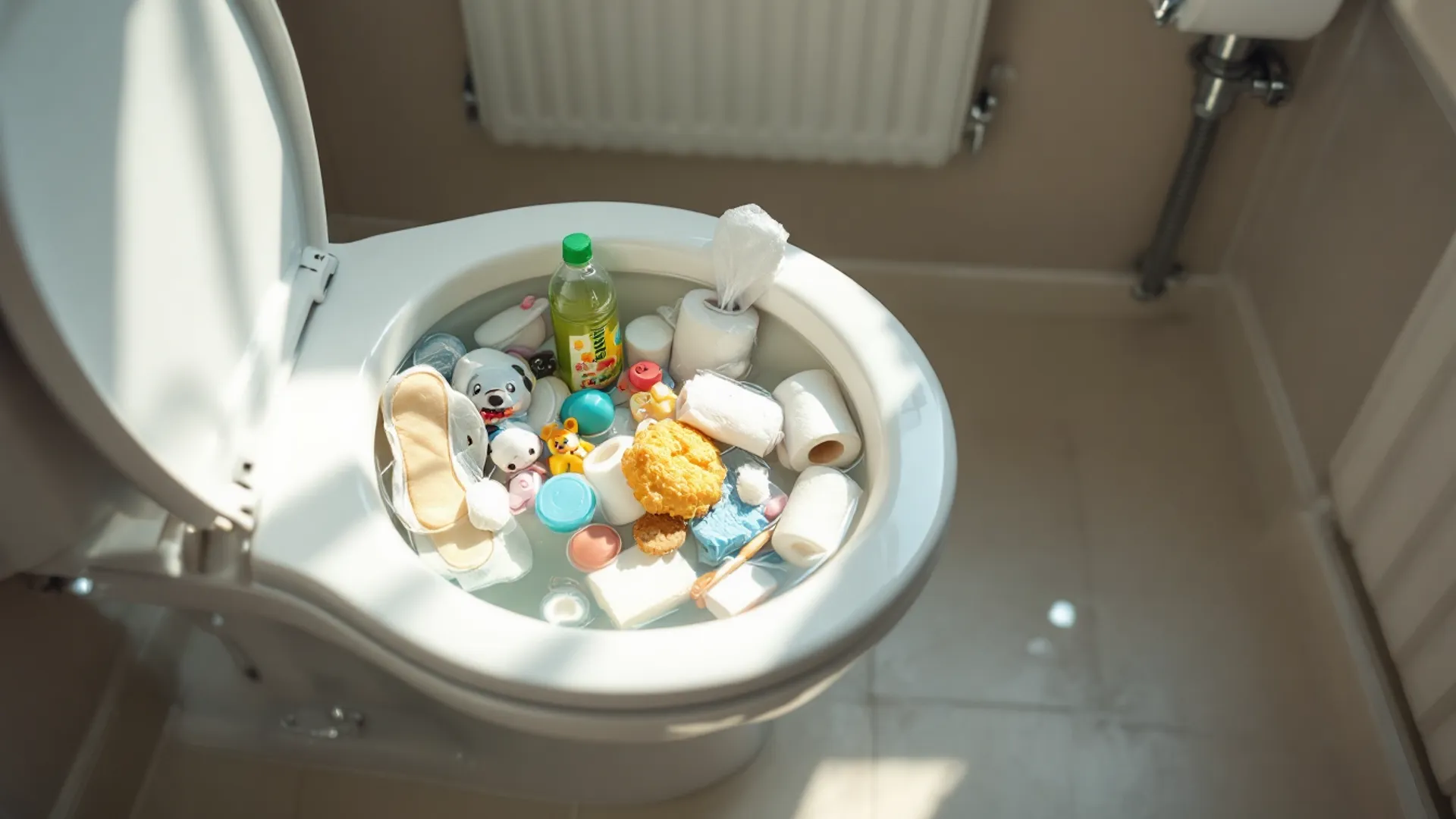
1. Wet wipes (including “flushable” ones)
Wipes do not break down like toilet paper. They tangle with fat and other waste and form solid masses. Even wipes sold as flushable can cause blockages.
Put all wipes in the bin. Water companies ask people to bin wipes, because they are a major cause of sewer blockages.
2. Sanitary products
Pads, tampons and applicators do not dissolve, so they catch in pipes. They swell and catch in pipes. Bin them in a small bag instead.
A small bin with a lid in the bathroom makes this easy. Our page on bathroom blockages explains common problems.
3. Cotton wool and cotton buds
Cotton buds and wool seem small, yet they snag on rough pipe walls. They gather other waste around them. Over time they help form a plug.
Bin them instead. Because they are light, they also float and cause trouble in sewage works.
4. Nappies and incontinence pads
These products swell with water and are far too bulky for a pipe, so they block it. They cause stubborn blockages. Put them in the bin.
Do not flush them even in small pieces. A blocked pipe can lead to a messy and costly call-out.
5. Cooking fat and grease
Fat is liquid when hot, yet it sets when it cools. It then sticks to pipe walls and builds up. Pouring fat down the toilet does the same as pouring it down the sink.
Pour it into a container, let it set and put it in the bin. Our page on drain jetting explains how engineers remove build-up.
6. Medication
Do not flush tablets or liquids, because they can harm the water environment. They can harm the water environment. Take unused medicines back to a pharmacy. Ask your pharmacist how to dispose of them safely, since rules cover some products.
7. Paper towels, kitchen roll, and tissues
These are stronger than toilet paper, so they do not break up as fast. They gather in pipes and cause blockages. Bin them.
Only toilet paper is made to break down in water. If you are unsure, do not flush it.
What to do if you’ve already flushed something you shouldn’t have
Stop flushing and do not try to push it through, because that can pack it tighter. Use a plunger gently if the water rises. If it does not clear, call a plumber.
Our page on drain cleaning and unblocking explains how blockages are cleared. You can also request a free quote and we will pass your details on.
Related guides and local help
If you want to know more, read Tree Roots in Drains: How They Get There and What to Do. You can also read 10 Signs Your Drain Needs a Professional, Not Just a Plunger and Blocked Drain Clearance Cost Guide: What Affects the Price, because they cover closely related problems.
These guides help too: Shower Not Draining: What You Need to Know to Fix It, Chemical vs Mechanical Drain Unblocking: Which Works Best?, Sewer Smell in the House: Causes and How to Fix Each One, CCTV Drain Survey Cost Guide: What Affects the Price and 10 Plumbing Myths That Cost UK Homeowners Serious Money. Each one explains a related topic in plain English.
Need help near you? Read our blocked drain guide first, or see Blocked Drains in Poole and Blocked Drains in Dundee. You can also see Blocked Toilets in Bourne, since every service page has a free quote form. We pass each request to a local drainage engineer.