Plumbing emergencies feel random but most have early warning signs that a systematic annual check catches. This checklist takes 90 minutes to complete once a year and prevents the majority of household plumbing and drainage failures.
When to run this check
Best timing: Early October — before the first freeze risk and after the summer, catching any heat-season deterioration while there’s still warm enough weather to work outside comfortably. Second-best: February, when the worst of winter is past.
Section 1: Water supply (20 minutes)
✓ Locate and test the mains stopcock However, turn it off and on again. If it’s stiff, apply a little penetrating oil and work it gently. A seized stopcock in an emergency is a serious problem — replace it if it won’t turn.
✓ Check the water meter Additionally, note the reading. Turn off everything that uses water and check the meter doesn’t advance. If it moves, you have a hidden leak.
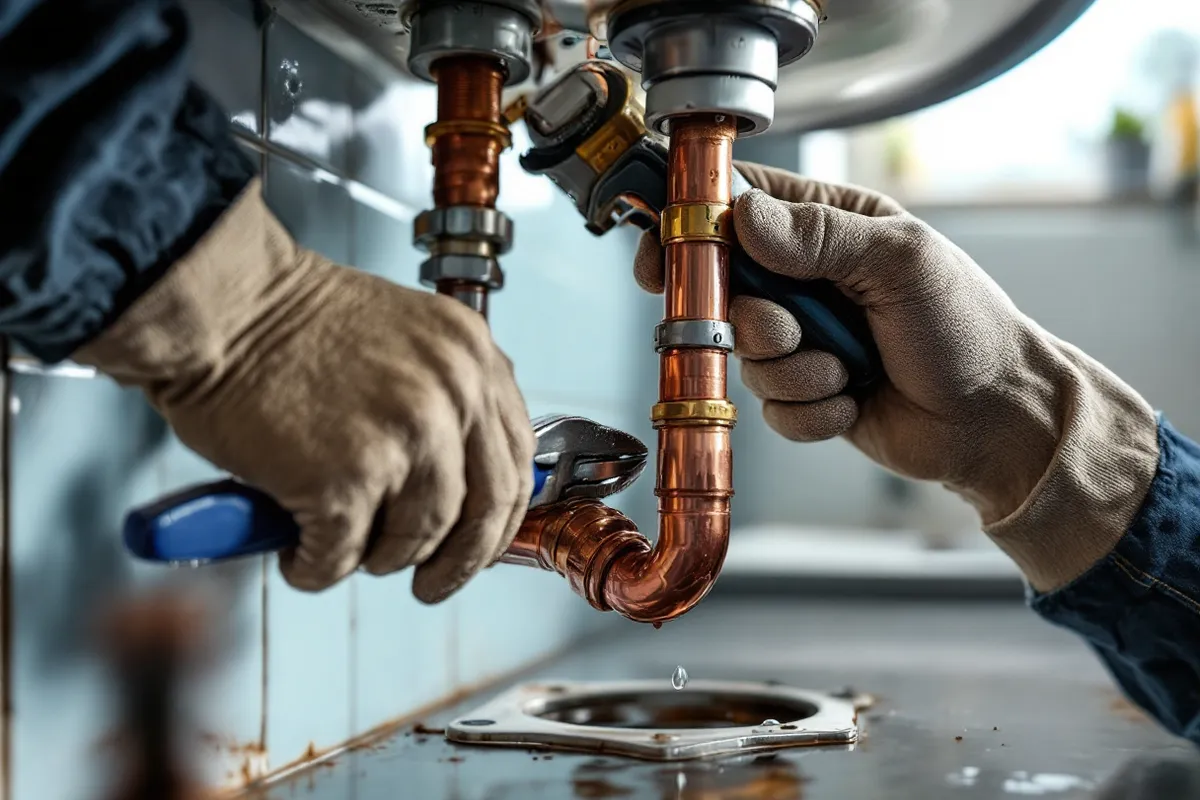
✓ Check for leaks under kitchen sink Specifically, open the sink cabinet and inspect the trap connections and supply pipes for any drips, staining, or dampness. Check the isolation valves on the washing machine and dishwasher feeds.
✓ Check outside tap isolation For example, locate the inside isolation valve for the outside tap. In October: close it, then open the outside tap to drain the pipe. Leave the outside tap open overwinter (so if any freezing occurs, water has a pressure-relief route).
✓ Check attic cold water tank (if present) As a result, lift the lid, shine a torch in. Is the water level correct? Is the ball valve functioning (not stuck open or closed)? Any contamination?
Once the supply side is confirmed sound, move on to drainage — where blockages develop slowly and are easiest to catch at this stage.
Section 2: Drainage (30 minutes)
✓ Test all waste outlets Meanwhile, run each sink, bath, and shower to full flow. Do they drain freely or slowly? Time a slow drain — if it takes more than 30 seconds to clear a full basin, it needs attention before it blocks completely.
✓ Clear bathroom drain traps Furthermore, remove drain covers in shower, bath and basin. Use the hair removal tool in each. Even if flow seems fine, removing accumulated hair prevents future blockage.
✓ Clear gully pots In particular, with gloves, lift each outdoor gully grate and remove accumulated debris. Check the gully trap is clear.
✓ Inspect inspection chambers Consequently, lift each manhole/chamber cover. The chamber should be free of standing water when no water is being run in the house. If you find standing water, the drain may be partially blocked. Check the cover is sound and level.
✓ Downpipes and gutters Similarly, pour a bucket of water into the nearest downpipe connection point and watch it drain. Check gutters are clear by walking around the property and looking for any debris or evidence of overflow (staining on the wall below).
With drainage checked, turn your attention to the heating system — particularly important before the cold season arrives.
Section 3: Central heating (20 minutes)
✓ Boiler pressure Moreover, check the gauge — should be 1–1.5 bar when cold. If below 1 bar, repressurise.
✓ Boiler service due date However, when was the boiler last serviced? Annual servicing is required by most warranties. Book now if overdue.
✓ Bleed all radiators Additionally, work through all radiators with the heating on and at temperature, bleeding any that have cold patches at the top.
✓ Inhibitor level Specifically, if you have a test kit, test the inhibitor concentration. Top up via the filling loop if below specification.
✓ Check magnetic filter For example, if your boiler has a magnetic filter, clean it. Remove it (there should be a drain point — close the valves either side first), wipe the magnetic insert clean (you’ll see black sludge), and refit. Quarterly is ideal but annual is minimum.
✓ Flue terminal check As a result, from outside, check the boiler flue terminal (where combustion gases exit the building). Should be clear of nesting material, vegetation, or damage.
Next, work through the internal plumbing fixtures — small leaks here are easy to miss until they’ve caused damage.
Section 4: Above-ground plumbing (15 minutes)
✓ Check under all sinks and bath panels Meanwhile, inspect the trap and waste connections for drips or staining. Check the bath panel hasn’t concealed any leak (look for discolouration of the panel base).
✓ Test isolation valves Furthermore, turn the isolation valves on the toilet cistern, sink taps, and basin supplies. They should operate smoothly. A valve that won’t turn should be replaced before it’s needed in an emergency.
✓ Check toilet cistern In particular, remove the cistern lid and observe. The ball valve should be closed (water level 20–25mm below the overflow pipe inlet). If it’s running continuously or at the overflow level, the valve needs replacement.
✓ Tap washers Consequently, any tap that drips when closed has a worn washer (or a failed ceramic disc on quarter-turn taps). Replace before the drip becomes a continuous waste — a dripping tap can lose 1,000 litres a month.
Finally, step outside and check the visible external elements — problems here are often spotted only when they’ve been ignored through several seasons.
Section 5: External (15 minutes)
✓ Check soil pipe condition Similarly, walk around the property and visually check any exposed soil pipes and downpipes. Any cracks, loose fixings, or joint separations?
✓ Check air bricks Moreover, air bricks in the external walls should be clear and unobstructed. Blocked air bricks cause underfloor condensation and timber rot. Clear any blockages.
✓ Mark the stopcock and meter location However, if you haven’t already, mark the pavement meter box with a white mark (a small nail varnish dot on the edge of the cover) so you can find it quickly in an emergency. Photograph the internal stopcock location on your phone.
When to call a professional
Additionally, after your check, if you’ve found:
- Meter advancing with everything off → hidden leak → call a leak detection specialist
- Slow drains that don’t clear with DIY tools → call a drainage engineer
- Boiler pressure dropping repeatedly → call a heating engineer
- Discolouration or dampness in unexpected places → call a plumber to investigate
- Gas smell anywhere → call Gas Emergency Service immediately (0800 111 999) — do not use this checklist, call emergency services
Specifically, this checklist identifies problems at the monitoring stage; the professional fixes them at the minor-repair stage rather than the major-emergency stage.