Bathroom drain blockages are the most common drainage problem in UK homes. And the most straightforward to clear if you act at the right stage. The combination of hair (which doesn’t dissolve) and soap scum (which binds it into a dense plug) is remarkably effective at blocking a bath or shower outlet. The good news is that most bathroom blockages cleared easily in 10 minutes with the right tool. However, leaving a slow-draining bath or shower unattended for weeks allows the plug to compact and push further into the pipe, turning a 10-minute job into a professional call-out.
Why bathroom drains block
Hair However, is the primary cause. The average person sheds 50–100 hairs per day, and a significant proportion of these end up in the shower or bath. Hair doesn’t decompose in water — it accumulates on any rough surface or on itself, forming a mesh that catches more hair.
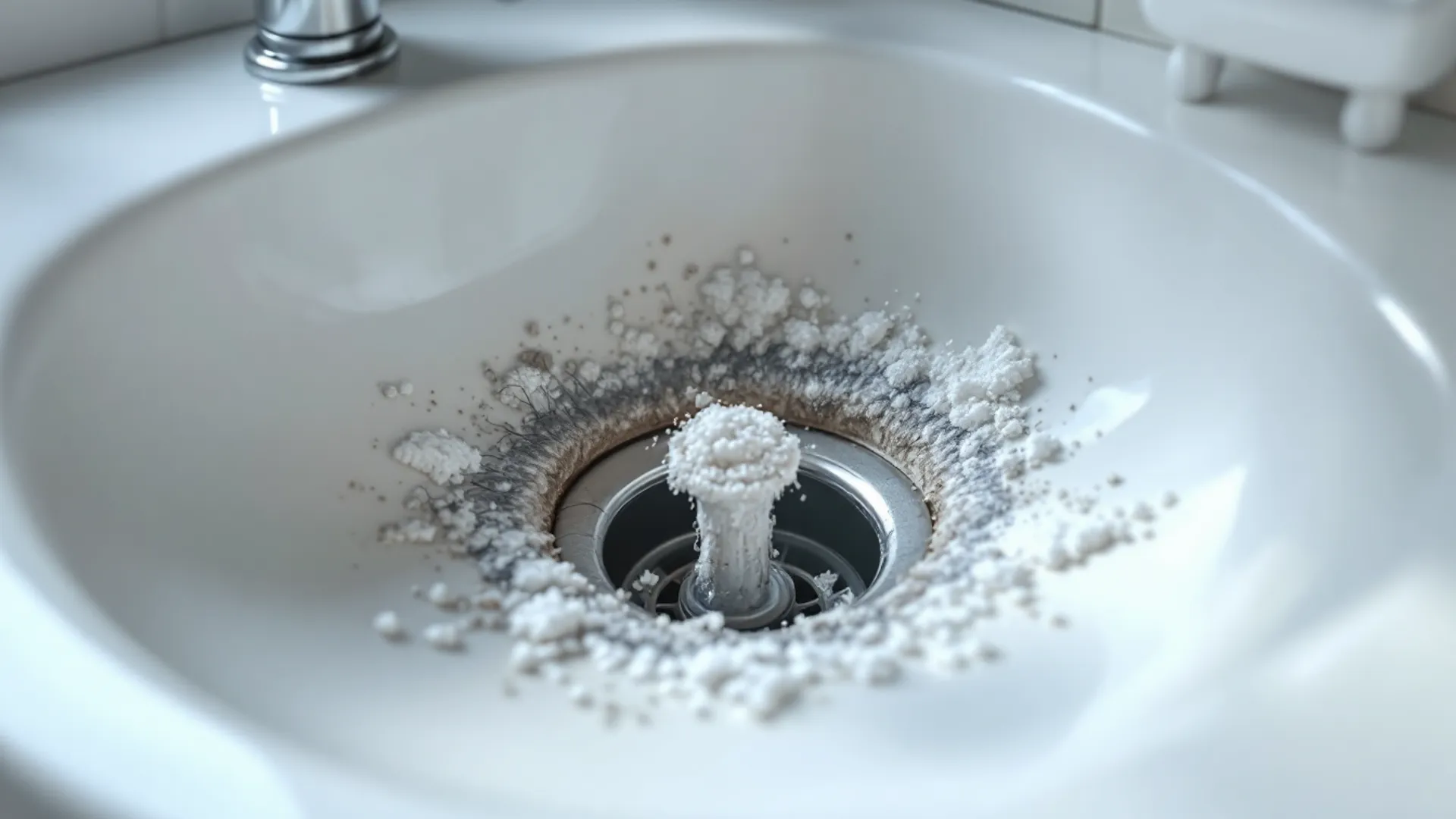
Soap scum Additionally, binds the hair together. Traditional soap (particularly bar soap rather than liquid body wash) forms a scum with the minerals in hard water. This coats the hair plug, hardens it, and makes it adhere to the drain walls and the waste trap.
Conditioner and body cream residue Specifically, also contributes — these products are oily and leave a coating on the drain.
For example, the blockage typically forms in one of two places:
- The trap (U-bend) under the bath or shower tray — where accumulated debris is closest to the outlet
- The pipe between the trap and the outside wall — where the accumulated hair plug has been pushed past the trap
The most effective tools
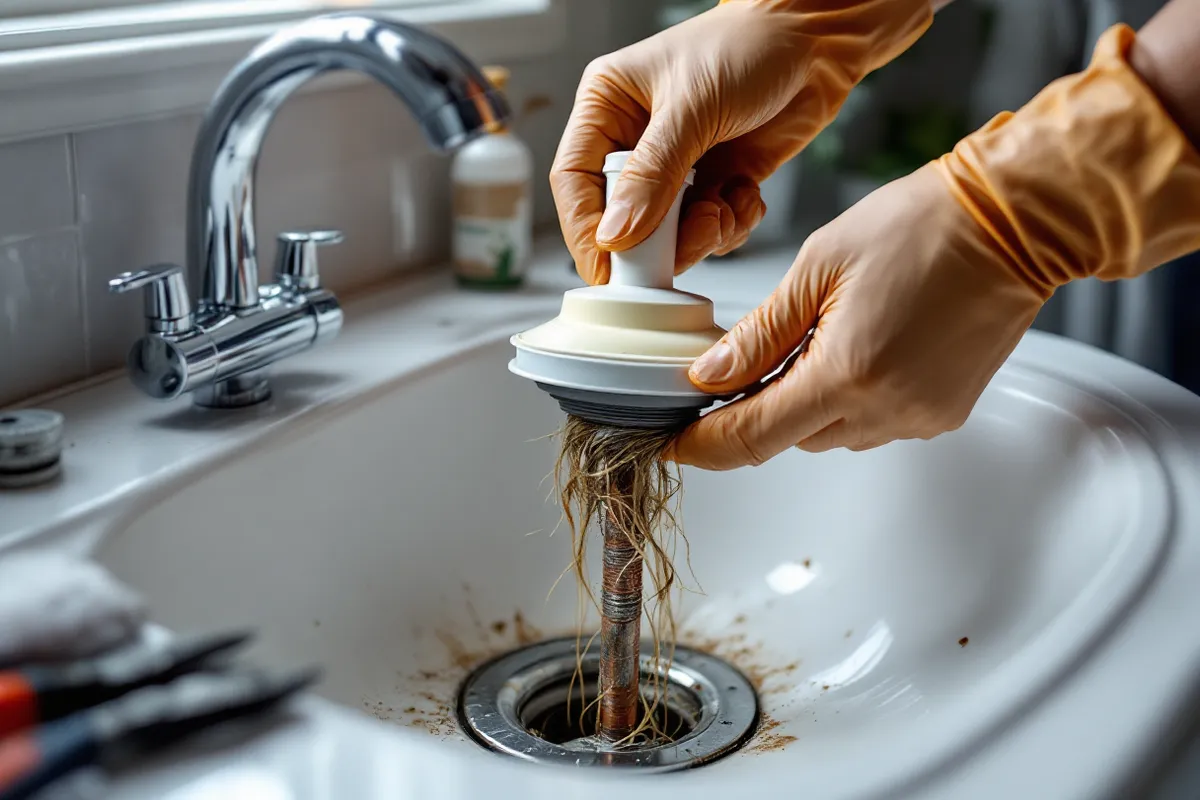
A hair removal tool (drain snake): As a result, the single most effective tool for bathroom blockage is a cheap flexible plastic drain snake with a barbed hook end (sometimes called a Zip-It or hair removal tool, widely available). Insert it into the drain, twist and pull — it catches and removes hair plugs that no amount of chemicals will dissolve.
Meanwhile, if you can see or reach the waste grate or plug: lift the grate, insert the tool, and rotate it. Pull it out slowly — you’ll typically retrieve a surprisingly large hair plug.
Plunger: Works for bath and shower drains that have some flow. Create a good seal, push and pull firmly. Less effective than the snake for dense hair plugs because it can’t engage with the material.
Step-by-step: clearing a bath or shower drain
-
Remove the waste cover — bath waste covers lift off (some have a centre screw). Shower drain covers lift or pry off. Remove and clean any visible debris.
-
Use the hair removal tool first — insert it 10–15cm into the waste, twist, and pull. You may feel resistance as it catches the hair plug. Pull firmly and slowly. Expect to retrieve a significant amount of hair, soap-coated debris.
-
Repeat until no more material comes out on the tool.
-
Run hot water — run the shower or tap at full flow. If it drains normally, you’re done. If it drains slowly, the partial blockage is further into the pipe.
-
Plunge if flow is still slow — create a good seal and 10–15 firm plunges.
-
Pour a biological drain cleaner as follow-up maintenance — enzyme cleaners continue digesting residual organic matter for several days after application.
Chemical treatments: what works and what doesn’t
Biological/enzyme cleaners (e.g., Bio-Drain, Buster Hair Power Gel): Furthermore, work on the organic component of bathroom blockages (soap, skin cells, body oil). Not effective at dissolving hair itself, but can loosen and partially digest the binding agent, making the hair plug easier to remove mechanically.
Caustic soda (sodium hydroxide) products: Marketed as effective drain cleaners. Caustic soda dissolves protein-based materials (hair is protein). However: it’s hazardous to handle, can damage chrome fittings if splashed, and the required dwell time (several hours) means it’s only appropriate when the drain is completely clear of standing water. For partially blocked drains, it works but must be used carefully.
Bleach: In particular, ineffective for hair blockages. Bleach is an oxidiser, not a solvent — it doesn’t dissolve hair and is simply diluted and washed away. That said, it does have a role as a disinfectant after the blockage has been cleared mechanically.
Drain rods: Consequently, appropriate for the underground section of a blocked bathroom drain, but rarely needed for the above-ground trap and waste pipe.
When a bathroom blockage needs a professional
Similarly, most bathroom blockages clear with the above methods. Call a plumber or drainage engineer if:
The trap is completely blocked and inaccessible. Moreover, bath traps are accessible (via the bath panel), but shower trays built on screed with no access hatch can’t be unblocked from above — the pipe runs may need to be accessed from outside or through an adjacent wall.
The blockage has pushed into the underground section. However, if clearing the trap gives partial improvement but flow remains poor, the plug has moved into the underground drain run. Jetting from an outside inspection chamber clears this.
Multiple bathroom outlets are slow simultaneously. Additionally, a bath, shower and basin all draining slowly at the same time points to a blockage downstream of where the individual waste pipes join. This is in the underground drain, not in any individual outlet.
The shower drain keeps blocking quickly. Specifically, if you clear it and it blocks again within weeks, there may be a structural issue in the pipe — a sagging section, a displaced joint, or a partial collapse — that’s catching debris. CCTV confirms this. Beyond that, knowing whether a structural fault is present determines whether a repair or a replacement section of pipework is the right long-term fix.
Prevention
Drain hair catchers: For example, flat mesh inserts that sit over the drain and catch hair before it enters the pipe. Empty them after every shower — takes 10 seconds. The most effective preventive measure available.
Weekly hot water flush: As a result, pour a full kettle of hot water down each bathroom drain weekly to soften and flush any soap scum before it hardens.
Monthly biological cleaner: Meanwhile, enzyme treatment maintains the drain by digesting organic matter continuously.
Annual check: Furthermore, remove the waste cover, clear any debris with the hair removal tool even if the drain seems to flow fine. Early removal of accumulating hair prevents it compacting into a dense plug.