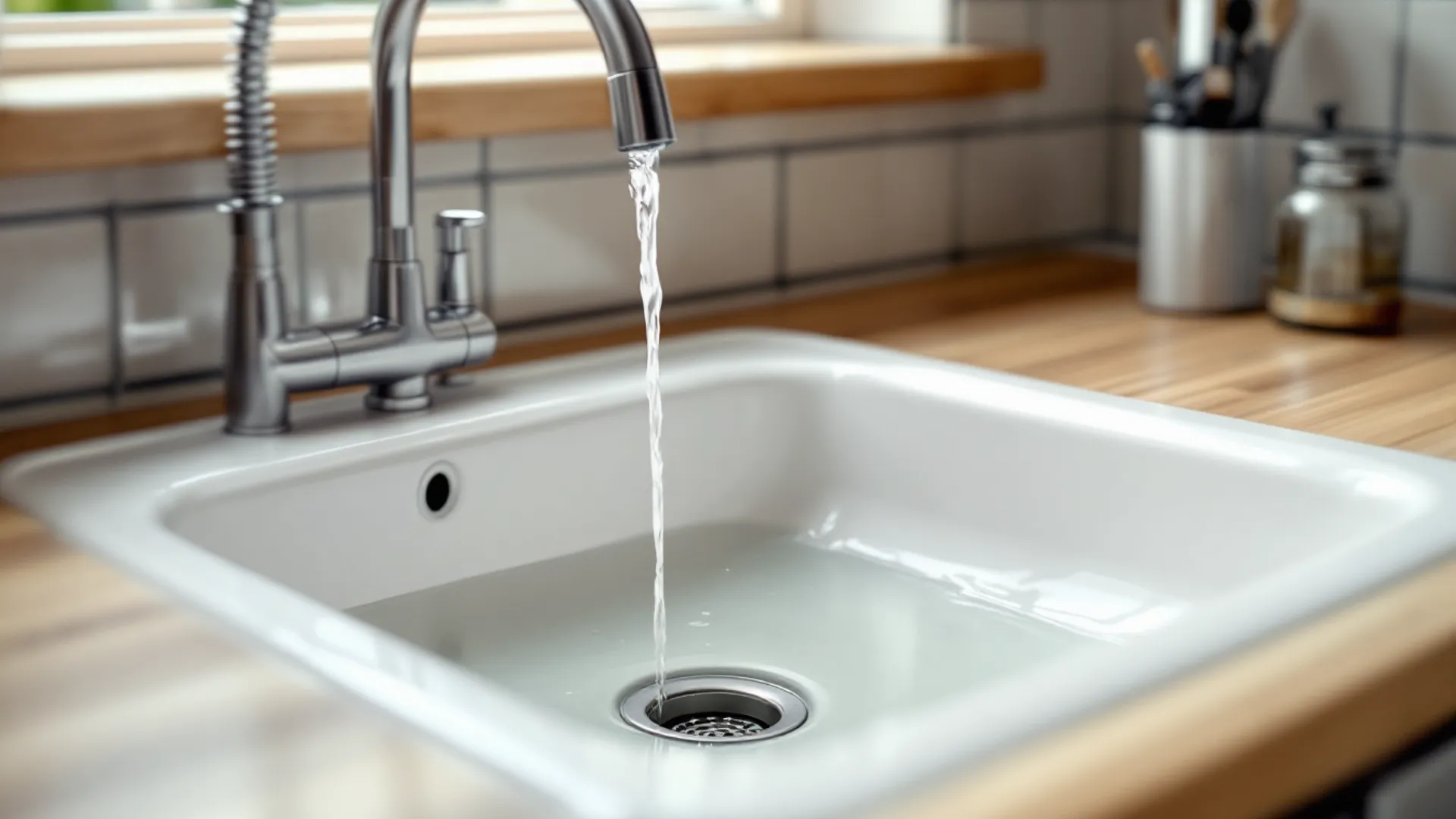
A blocked sink needs sorting quickly. A standing sink is the most commonly reported plumbing complaint in UK homes and is usually fixable in under 20 minutes with the right approach. The key is diagnosing which type of blockage you have before doing anything. Reaching for a plunger or chemical cleaner without this diagnosis often wastes time and money on the wrong fix.
The three types of sink blockage
Type 1: Trap blockage. However, a clog has built up in the U-bend under the sink. Common in kitchen sinks (grease and food) and bathroom basins (hair, soap, toothpaste). The water drains very slowly or not at all; the blockage is within arm’s reach.
Type 2: Waste pipe blockage. Additionally, something has blocked the pipe between the trap and the outside drain. The trap itself is clear. The blockage may be further in the pipe — from 30cm to 3 metres away.
Type 3: Underground drain blockage. Specifically, the blockage is in the underground section beyond where the waste pipe exits the building. Clearing the trap and waste pipe won’t help — the blockage is outside.
How to tell which type you have
Check if other fixtures are affected. For example, if only one sink has a blockage, it’s a trap or waste pipe issue. If the bath, shower, or another sink on the same floor is also slow, it’s probably the shared waste connection or the underground drain.
Unblock the trap and see if flow returns. If clearing the trap restores full flow, it was a Type 1 blockage. If the sink is still slow or blocked after the trap is clear, it’s Type 2 or Type 3.
Check the outside inspection chamber. As a result, lift the chamber cover and look. Is there standing water? If yes, the blockage is downstream of the chamber — Type 3, underground. If the chamber is clear, the blockage is between the sink and the chamber — Type 2, waste pipe.
Clearing a trap blockage (Type 1)
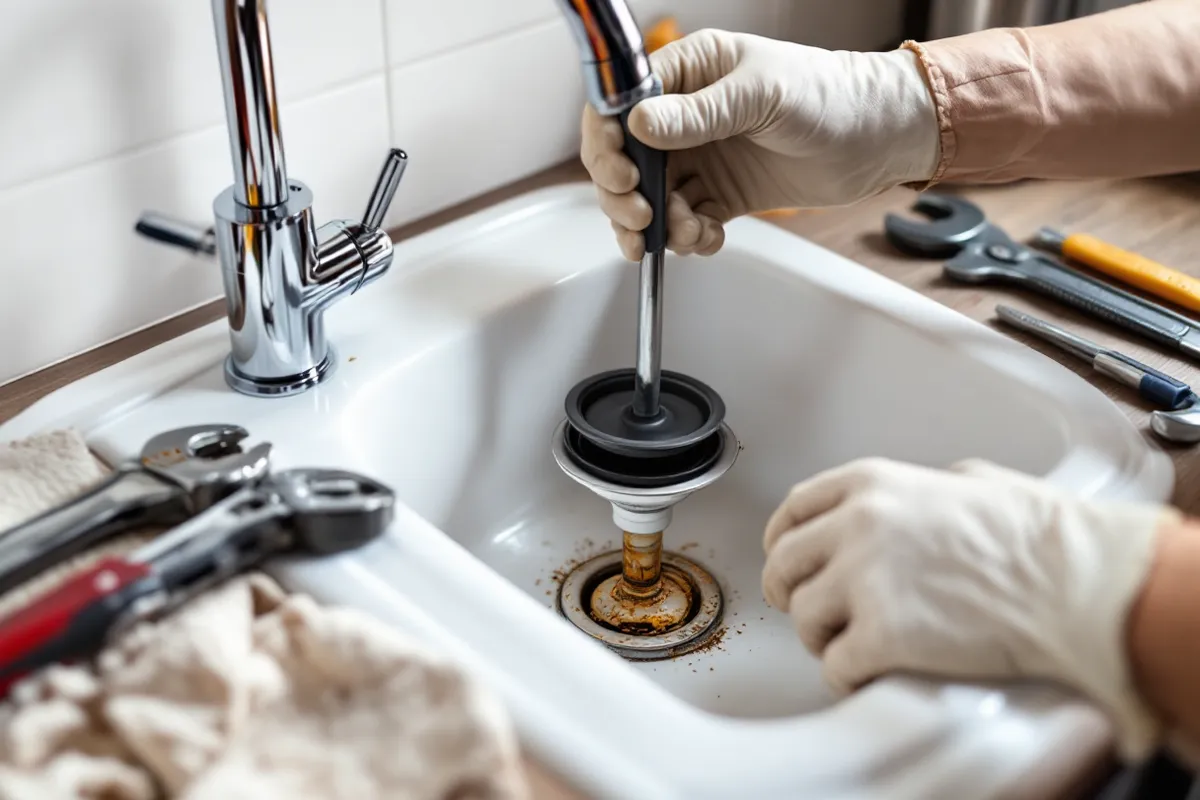
The plunger first: Meanwhile, 1. Block the overflow hole with a wet cloth (or get someone to hold their hand over it) 2. Ensure there’s water in the bowl for the plunger to push 3. Create a seal over the plughole with the plunger cup 4. Push and pull firmly 10–15 times 5. Release the plunger and see if the water drains
Furthermore, if the plunger clears it, run hot water for 2 minutes to flush any residual debris.
If the plunger doesn’t work — access the trap: In particular, under most sinks, the trap has a removable section (a white or chrome U-shaped pipe with a screw-off base plug or push-fit joints). Place a bucket under the trap, unscrew the access plug or disassemble the trap, and clean out the blockage. Reassemble with the sealing washer correctly seated.
Consequently, for a kitchen trap packed with solidified grease: scrape it out, wash the trap in hot water, and reassemble. Follow up with boiling water down the drain and a weekly enzyme treatment to prevent recurrence.
Clearing a waste pipe blockage (Type 2)
Drain snake (flexible auger): Insert a drain snake into the drain after removing the trap. Feed it 30–60cm into the pipe, working it back and forth to break up or retrieve the blockage. For kitchen waste pipes, rotating the snake while feeding it cuts through grease deposits.
High-pressure flush: Similarly, with the trap removed, connect a garden hose to the waste pipe end (using a rubber connector or by holding it firmly against the pipe) and run full pressure. This can push a blockage through to the outside drain.
Professional jetting: Moreover, if a snake and hose flush don’t clear it, the blockage is either compacted (years of grease) or further than 2–3m into the pipe. A drainage engineer with a jetting rig can clear any waste pipe blockage from the outside access point.
Underground drain blockage (Type 3)
However, this is not a DIY clearance. The blockage is in the buried pipe between where the waste exits the building and the inspection chamber, or beyond the chamber in the main drain run. In practice, without jetting equipment you cannot reach or break up a blockage at this depth. Attempting to rod it from inside can compact the obstruction further.
Additionally, signs you’re dealing with a Type 3:
- Multiple fixtures on the ground floor (or in the same part of the house) draining slowly or not at all
- Inspection chamber has standing water in it
- Clearing the trap and waste pipe hasn’t restored flow
Call a drainage engineer. They’ll jet from the inspection chamber, clear the blockage, and camera the drain to identify whether there’s a structural reason for the blockage (displaced joint, root ingress) that will cause it to recur. As a result, you get both an immediate fix and a clear picture of whether a longer-term repair is needed.
Prevention by sink type
Kitchen sink: Specifically, - Never pour fat, oil or grease down the drain
- Use a mesh strainer to catch food particles
- Weekly: pour a full kettle of hot water down the drain
- Monthly: enzyme drain treatment
Bathroom basin: For example, - Monthly: remove drain cover, use hair removal tool, clear any accumulation
- Weekly: run hot water for 30 seconds
- Monthly: enzyme treatment
Utility sink (washing machine outlet): As a result, - Check the washing machine filter monthly and clean it — a blocked filter pushes fine particles into the drain
- Use a full drum of cleaning cycle monthly to clean the machine interior and hose
When to call a professional
Meanwhile, call a drainage engineer (not just a plumber) when:
- The blockage is in the underground drain (confirmed by a full inspection chamber)
- You’ve cleared the trap and waste pipe and flow hasn’t returned
- The same sink blocks repeatedly — indicates a structural issue or persistent build-up that needs jetting to remove fully