Boiler pressure is one of the first things to check when heating isn’t working — and one of the most misunderstood. Too low and the system can’t circulate; too high and the pressure relief valve releases water, sometimes alarmingly. Understanding what’s normal, what causes deviations, and when you need a plumber saves both money and worry.
What is boiler pressure?
However, sealed central heating systems (most modern homes have these) maintain a pressurised circuit of water between the boiler and the radiators. This pressure is necessary to circulate water through the system. It’s different from mains water pressure. The heating circuit is a closed loop. Its pressure comes from the water sealed inside and any additional pressurisation added via the filling loop.
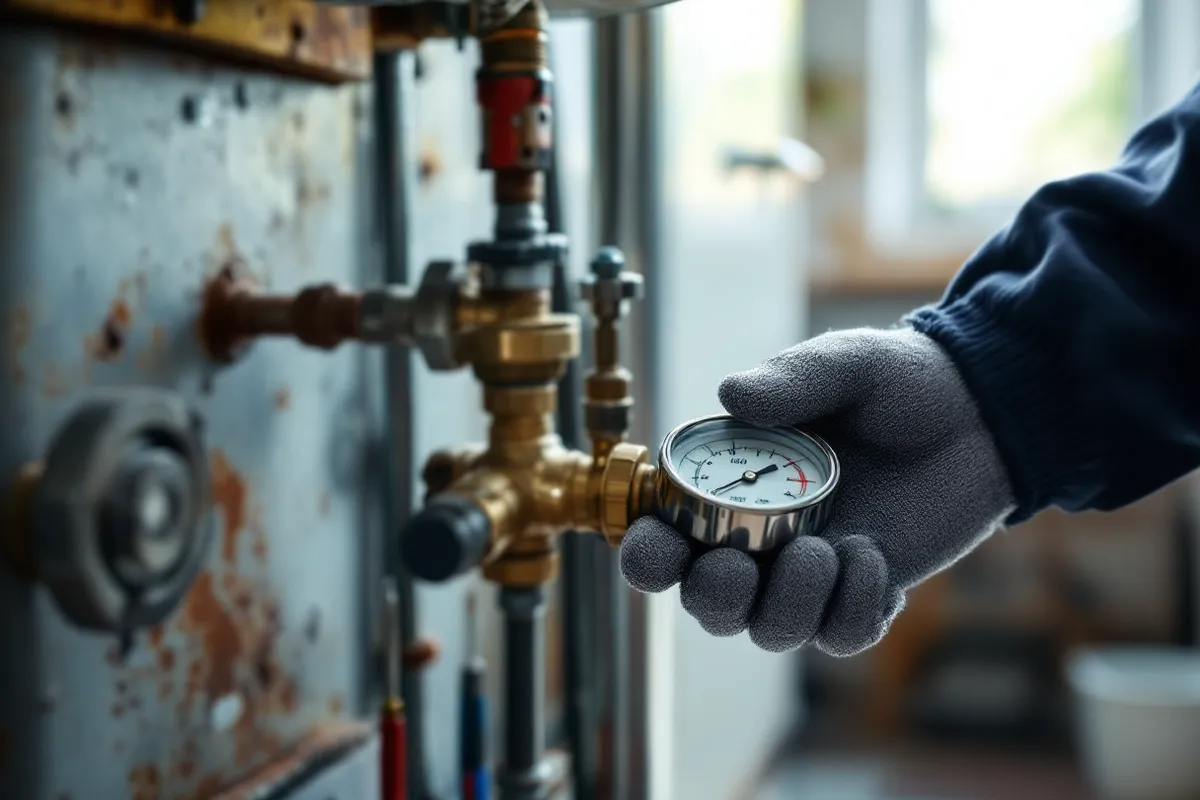
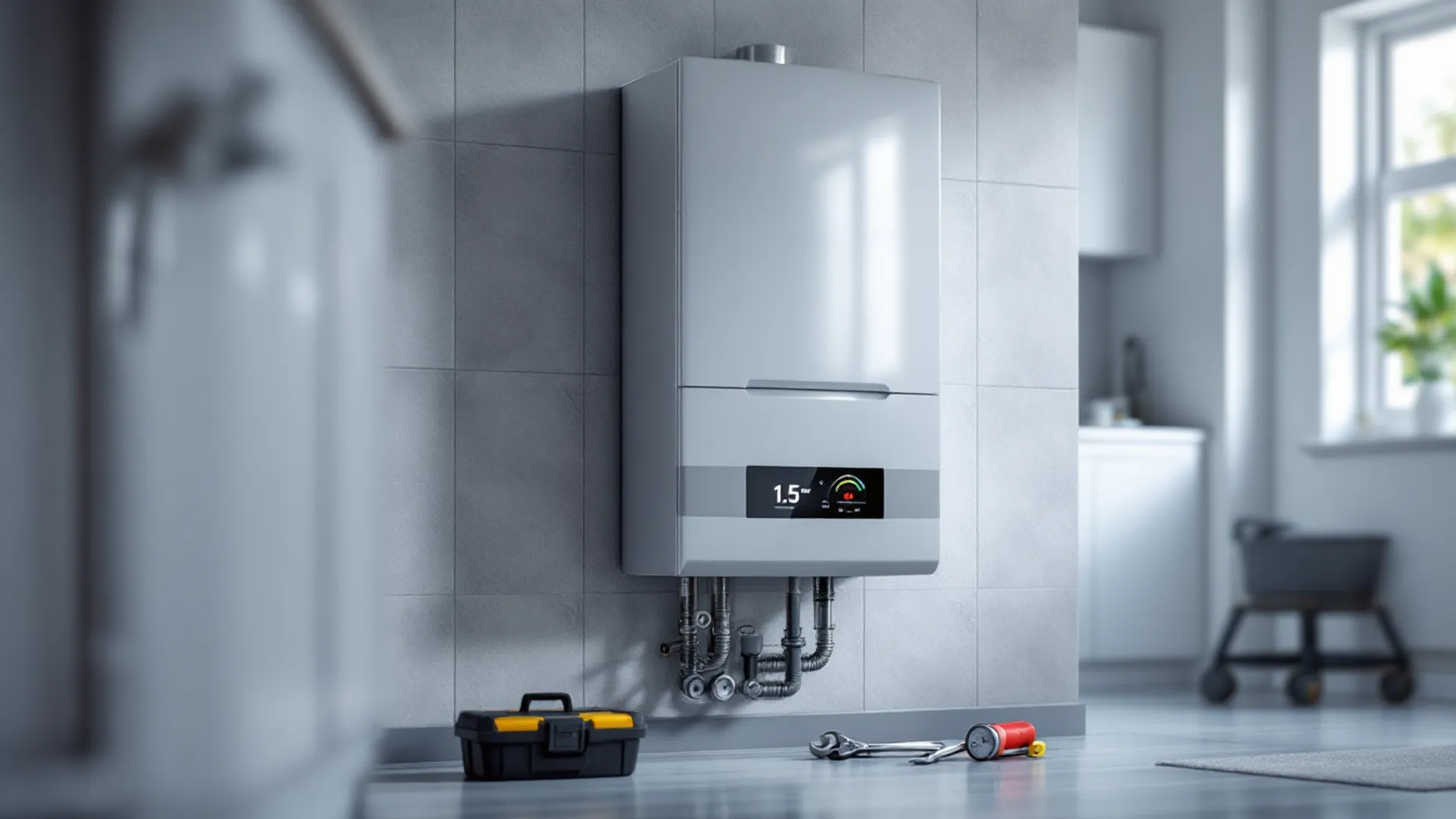
Additionally, the pressure is measured at the boiler — either a dial gauge (analogue) or a bar reading on a digital display. Most combi and system boilers display or show the pressure clearly on the front panel.
Normal operating pressure: Specifically, 1.0–1.5 bar when the system is cold. Pressure rises slightly when hot (typically to 1.5–2.0 bar) as water expands. This is normal.
Low boiler pressure: causes
Gradual natural loss: For example, even sealed systems lose very small amounts of water over time through micro-seepage at joints and fittings. Systems that need topping up once every 6–12 months are within normal parameters.
Bleeding radiators: As a result, every time you bleed a radiator, you release a small amount of water. If you’ve bled several radiators, you may need to repressurise afterwards.
Water leak: Meanwhile, the most common cause of repeated or rapid pressure loss. Look for staining or dampness at visible pipe joints. Leaks are more often hidden — in concealed pipework, under floors, or at the connections behind the boiler.
Faulty expansion vessel: The expansion vessel is a small tank inside (or adjacent to) the boiler that accommodates the expansion of water when it heats up. It has an internal diaphragm that separates a water side from a pressurised air side. When the diaphragm fails, the vessel fills with water. It can no longer accommodate expansion, so pressure drops repeatedly as the water contracts on cooling.
Pressure relief valve leaking: Furthermore, a PRV that’s slightly open (either faulty or set to open at too low a pressure) continuously drains water from the system via the overflow pipe. If water drips from the overflow pipe outside (usually a copper pipe through an external wall), this is the cause.
How to repressurise a combi or system boiler
In particular, most sealed system boilers have a filling loop — a flexible braided hose connecting two valves, usually found underneath or adjacent to the boiler.
Standard filling loop: Consequently, 1. Locate the two filling loop valves (typically small lever handles on the pipework under the boiler) 2. Check the pressure gauge — confirm it reads below 1 bar 3. Open both filling loop valves slowly — you’ll hear water entering the system 4. Watch the pressure gauge rise 5. Stop when the gauge reads 1.2–1.5 bar 6. Close both valves firmly 7. Check the pressure hasn’t risen further after a few minutes (it shouldn’t)
Similarly, if your boiler has an internal filling link (some Worcester Bosch and Vaillant models), there’s a small key or lever on the pipework just inside the boiler casing. Consult the manual for the specific procedure.
Moreover, after repressurising, run the heating and check the pressure when hot. It should not exceed 2.5 bar when hot — if it does, the expansion vessel may need attention.
Pressure keeps dropping: what to do
However, if you’re repressurising more than once a month:
- Check all visible pipe joints for dampness, staining or dripping — particularly around the boiler, at radiator connections, and under sinks where pipework runs.
- Check under suspended floors if there’s a void (a screwdriver tapping floorboards that sound damp is a warning sign).
- Check the overflow pipe outside — is water dripping from it?
- Consider a leak detection survey — acoustic and thermal imaging can locate leaks in concealed pipework without opening up walls or floors.
Additionally, repeated pressure loss is always caused by water leaving the system. It doesn’t self-correct. A plumber needs to find and fix the leak.
High boiler pressure: causes and risks
Overpressurisation: Specifically, if the filling loop is opened too far, or left open, pressure rises above the safe range.
Expansion vessel failure: For example, as described above — a failed diaphragm means no room for water expansion, so pressure rises sharply when the system heats.
Faulty filling loop valve not closing fully: As a result, a valve that doesn’t fully close allows mains pressure to continuously feed the sealed circuit, driving pressure up.
What happens at high pressure: Meanwhile, above approximately 2.5–3 bar, the pressure relief valve opens and releases water via the overflow pipe outside. This looks alarming — hot water or steam outside the property — but it is what the PRV is designed to do. It releases pressure before damage can occur.
Is high pressure dangerous? Furthermore, at the levels a domestic system reaches, the pressure relief valve protects against failure. You should not see pressure exceeding 3 bar regularly — if it does, the expansion vessel or PRV needs attention from a plumber.
Reducing pressure that’s too high
In particular, if the cold pressure reads above 2 bar:
- Bleed a radiator to release a small amount of water and reduce pressure
- Re-check the pressure — aim for 1.2–1.5 bar cold
- If pressure drops normally on bleeding and stays there, the filling loop may have been opened too far
- If pressure keeps rising even without the filling loop open, the expansion vessel or PRV needs investigation
Consequently, do not attempt to manually force open the PRV — it’s a safety device that should only operate under pressure. Get a plumber to assess the expansion vessel and PRV.