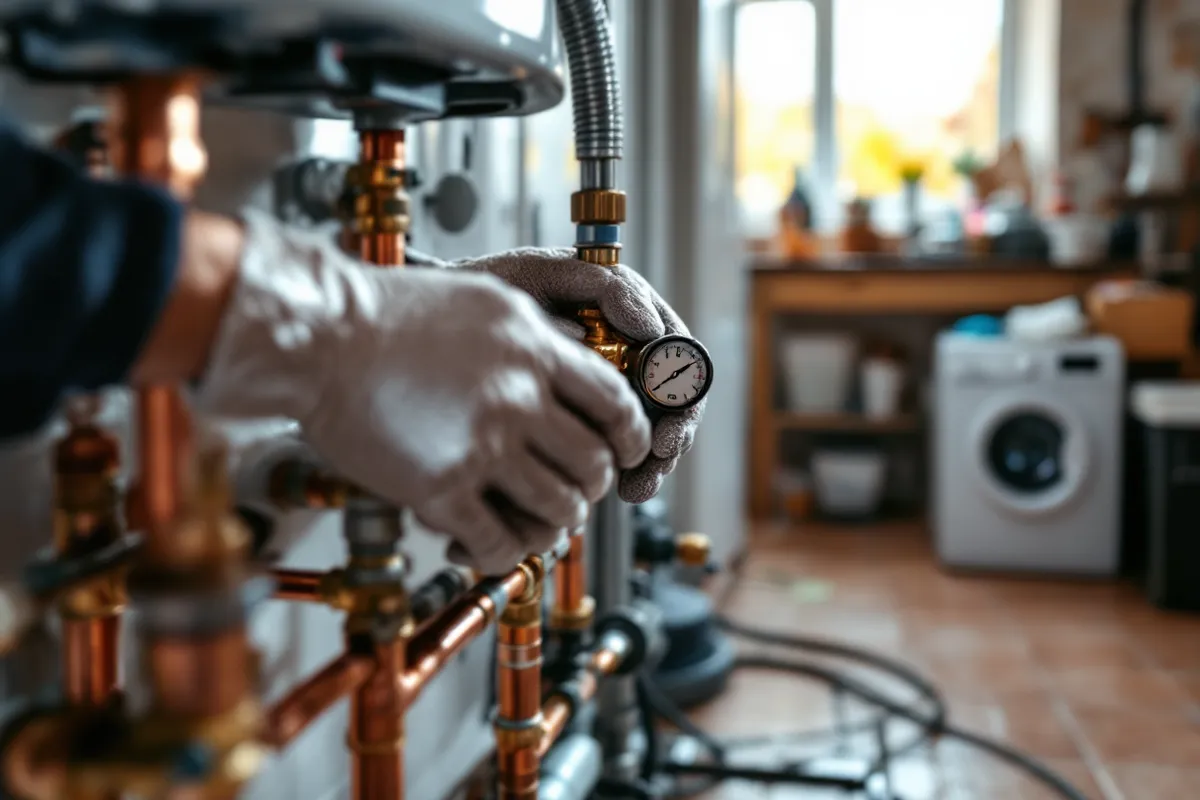
A boiler service is easy to put off. The boiler works, nothing looks wrong — so why bother? The answer is simple: an annual service catches developing problems before they cause failures. As a result, it maintains efficiency and is a legal requirement for landlords. For most homeowners, skipping a service doesn’t produce an instant breakdown. Instead, it means a gradual loss of efficiency and a larger repair bill when a fault finally appears.
How often should a boiler be serviced?
In practice, annual servicing is the standard recommendation for all domestic gas boilers, regardless of age or condition. Most boiler warranties require it — skipping a service voids many manufacturer warranties. The Gas Safety (Installation and Use) Regulations 1998 make annual servicing a legal requirement for landlord-owned properties. Gas Safe and British Gas both recommend it.
For oil-fired boilers, annual servicing is also standard. LPG boilers follow the same requirements as gas.
New boilers: For example, some manufacturers require the first service within 12 months of installation. Others allow 24 months for a new installation. Check your warranty documentation to confirm which applies to your boiler.
What happens during a gas boiler service
In practice, a Gas Safe registered engineer typically takes 45–75 minutes and covers four areas:
Visual inspection:
- Condition of the boiler casing and any visible external damage
- Flue terminal — clear, undamaged, with the correct distance from windows and doors
- Gas supply pipe and connections — no corrosion, no signs of leakage
- Any unusual soiling around the boiler (carbon staining points to combustion problems)
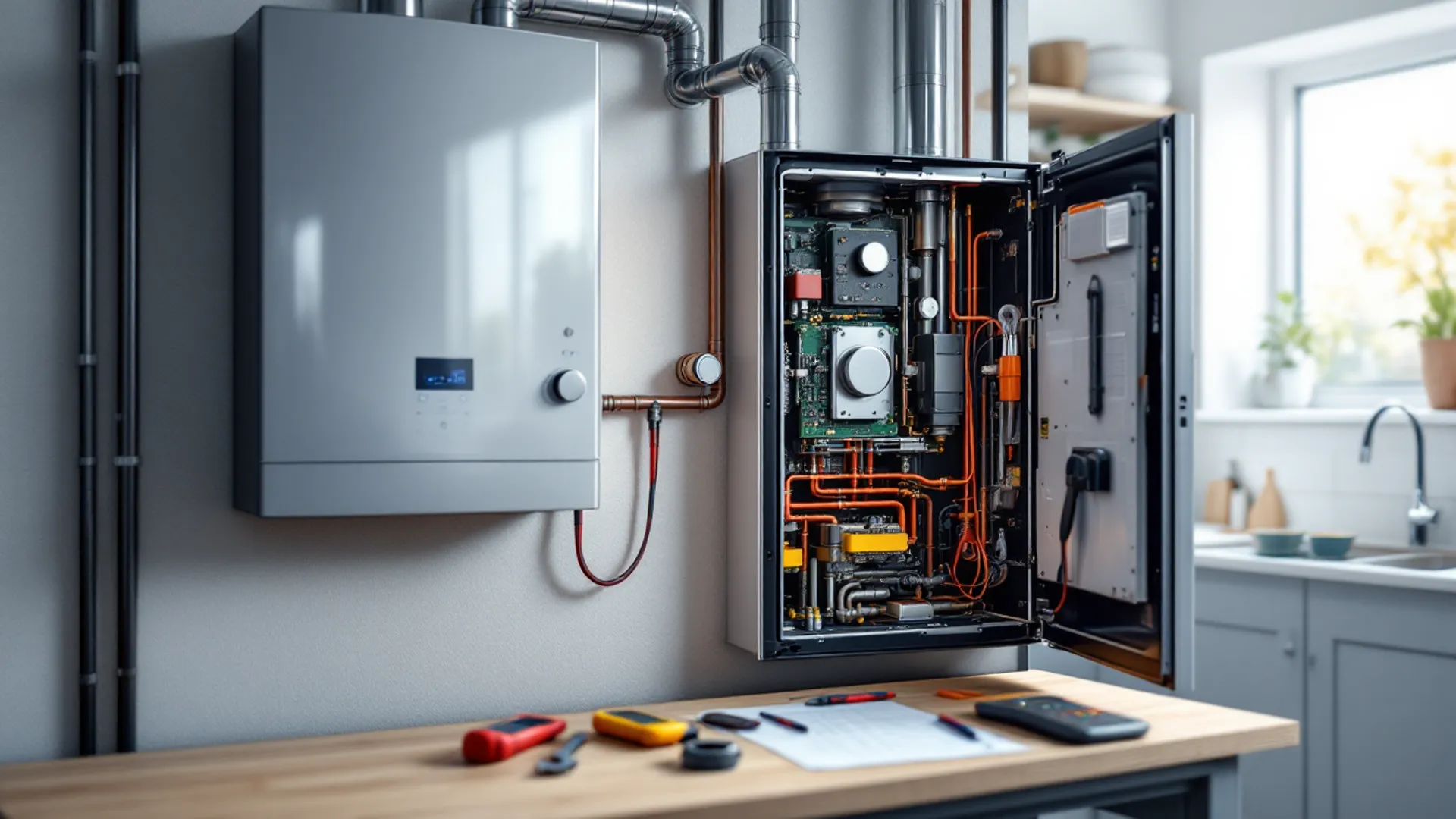
Internal inspection: Specifically, the engineer removes the casing and checks the burner, heat exchanger, ignition leads and electrodes, combustion chamber, flue connection, internal pump, expansion vessel, diverter valve (on combis), and gas valve. Scale, corrosion, and wear all show up here. Deflated expansion vessels are one of the most common findings.
Testing and adjustment: A flow meter confirms the boiler is using gas at the correct rate for its output. A flue gas analyser measures carbon monoxide levels, oxygen levels, and combustion efficiency — abnormal CO readings mean incomplete combustion and need investigation. The engineer also runs the boiler through heating and hot water modes, tests safety controls, and checks flue integrity.
Documentation: The engineer completes a gas boiler service record showing the date, their Gas Safe registration number, findings, combustion readings, and any recommendations.
What findings indicate a problem
High CO in flue gases: A combustion analysis reading above the manufacturer’s limit indicates incomplete combustion. Causes include a dirty burner, a partially blocked heat exchanger, incorrect gas pressure, or a faulty gas valve. The engineer adjusts where possible and may replace the burner or escalate to a manufacturer specialist.
Low or zero expansion vessel pressure: The expansion vessel diaphragm has failed. As a result, the vessel needs recharging via its Schrader valve (like a bike tyre) or replacing if the diaphragm has collapsed. A failed expansion vessel causes repeated pressure drops and eventually trips the pressure relief valve.
Cracked or corroded heat exchanger: This is a serious finding. In fact, heat exchanger replacement is expensive — often close to the cost of a new boiler on older models. If an engineer finds a cracked heat exchanger, get a second opinion before committing to a major repair. It’s worth knowing whether replacement or a new boiler makes more economic sense.
Worn or stuck diverter valve (combi boilers): Combi boilers use a diverter valve to switch between heating and hot water. A stiff or incomplete valve causes warm but not hot water, or heating running when it shouldn’t. An experienced engineer can often free a stiff valve. A fully failed valve needs replacing (parts plus labour).
No carbon monoxide detector: Not a boiler fault, but a responsible engineer notes the absence and recommends installation. Fit a CO detector in every room with a gas appliance. Replace it every 7–10 years as the sensor degrades.
Finding a Gas Safe registered engineer
For this reason, all engineers working on gas appliances must hold Gas Safe registration. Verify any engineer’s registration at gassaferegister.co.uk before booking. The registration card shows which categories of work the engineer holds — confirm that gas boiler servicing is listed explicitly.
Unregistered gas work is illegal. It also invalidates insurance and voids the boiler warranty. Always verify, even if the contractor claims registration — the Gas Safe website lets you check both the engineer’s ID card number and their specific licensed work categories.
Servicing costs
Annual boiler service pricing depends mainly on boiler type:
- Standard gas combi boiler: the most common, usually the quickest service
- System or regular boiler: slightly more involved
- Older open-flued boiler (increasingly rare): needs extra flue checks
For example, boiler service contracts from energy suppliers and plumbing networks bundle emergency call-out cover in with the annual service. Whether that’s good value depends on your boiler’s age and reliability.
For example, a boiler that hasn’t had a service for several years may cost slightly more for the first visit — the engineer has more to clean and check. Returning to an annual schedule reduces this premium over time.