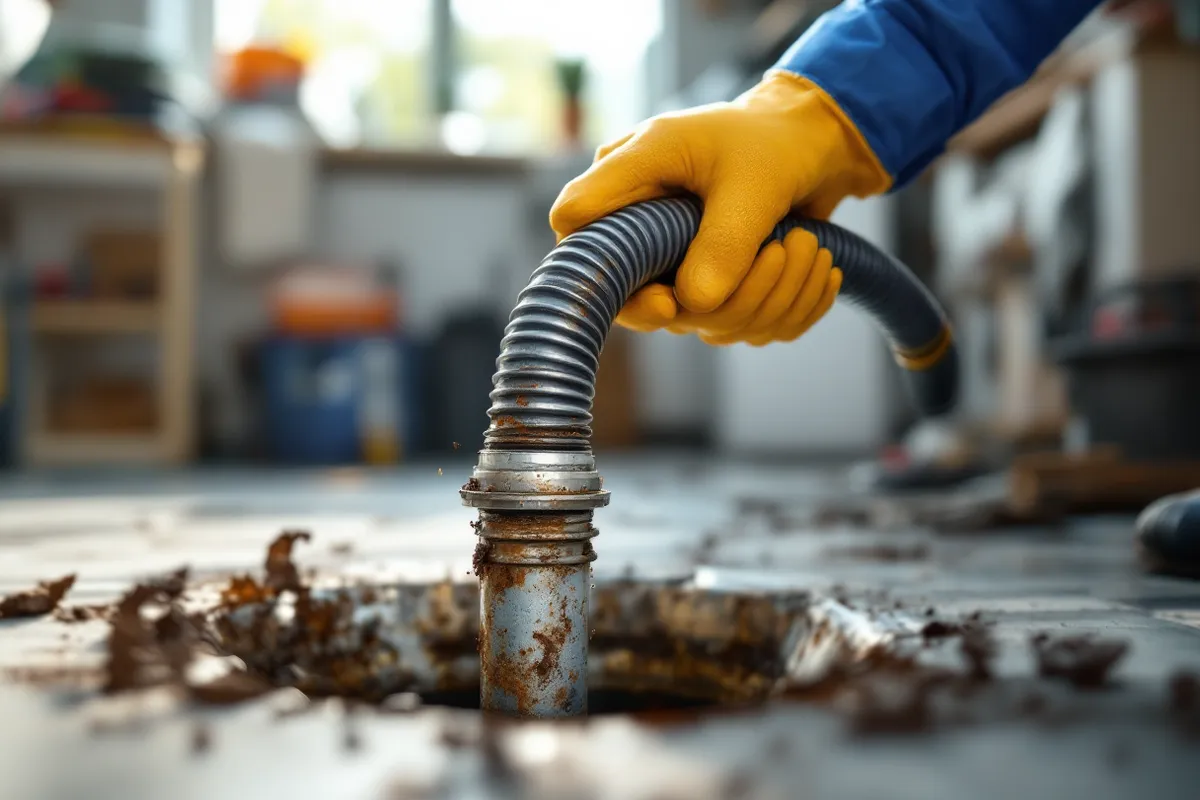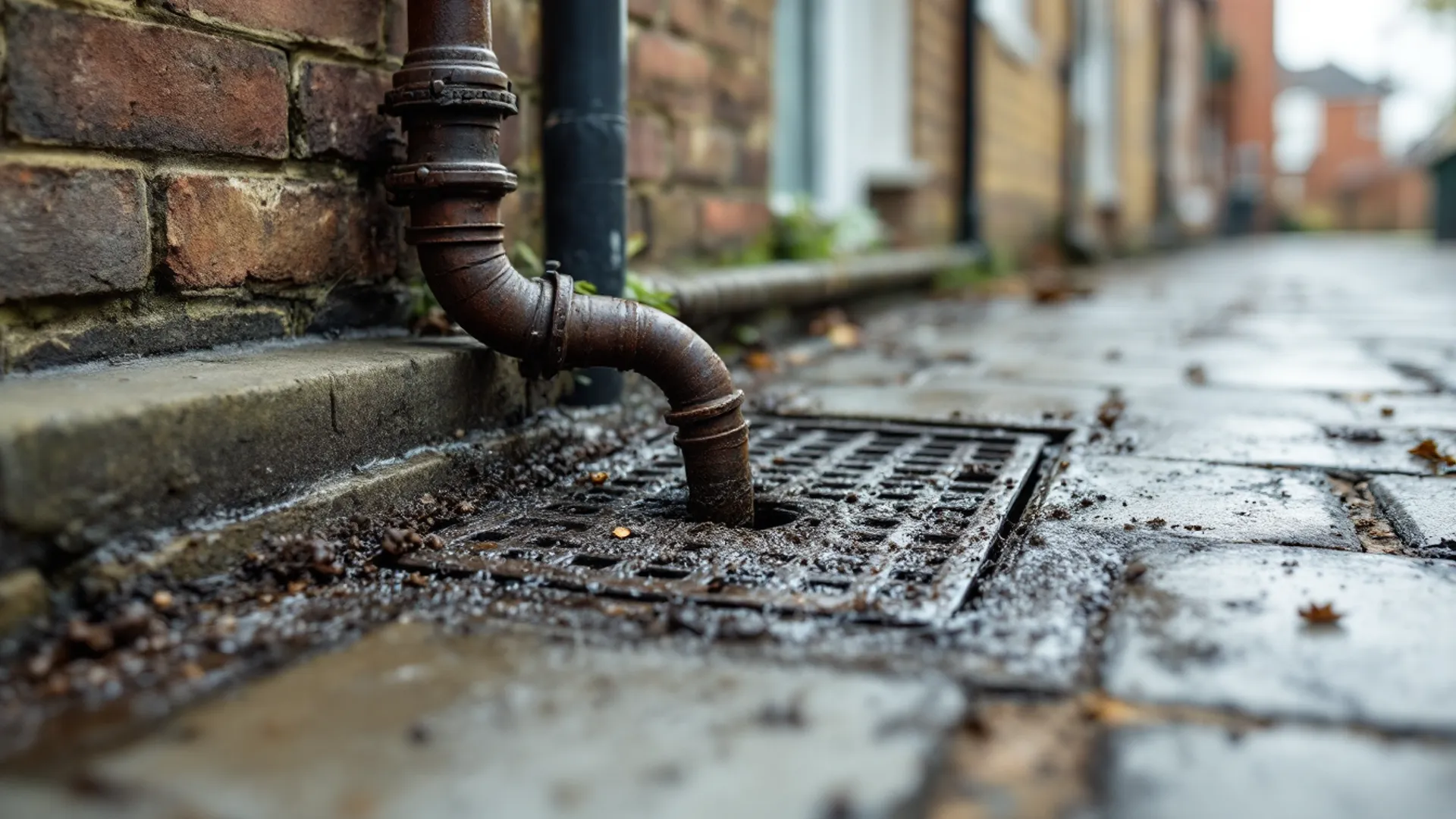
Drainage failure in a commercial setting carries consequences that residential blockages don’t: loss of trading ability, health and safety risk, potential regulatory action, and reputational damage. A restaurant that can’t pass its environmental health inspection, a hospital ward with backed-up sanitation, or a hotel with sewage pooling in the car park — these are not hypothetical scenarios. They happen regularly to businesses that treat drainage as a reactive issue rather than a planned maintenance item.
Why commercial drainage fails more often than residential
However, the volume and nature of commercial waste is fundamentally different from domestic:
Catering and food service: Additionally, kitchen drains carry large quantities of fat, oil and grease (FOG). Even with best practice scraping and disposal, a commercial kitchen produces FOG waste that would represent a year’s worth from a domestic kitchen in a week. FOG accumulates in underground drains rapidly, leading to recurring blockages.
High occupancy: Specifically, hotels, office blocks, hospitals and schools generate waste from many people using plumbing simultaneously. Flow rates and waste volumes are much higher than any domestic system is designed for.
Process waste: For example, manufacturing, food processing, automotive, healthcare and other sectors produce specialist waste streams that need specialist drainage management — including interceptors, grease traps, sediment traps, and in some cases trade effluent consents.
Age and maintenance history: As a result, many commercial properties have older drainage infrastructure that hasn’t been maintained. Legacy clay pipe systems under car parks and industrial yards are often in poor condition.
Legal obligations
Environmental Protection Act 1990: Meanwhile, businesses have a duty of care for waste, including trade effluent. Allowing drain blockage and overflow that causes pollution — to controlled waters, soil, or watercourses — is a criminal offence.
Building Regulations Part H: Furthermore, any new drainage or alterations to drainage in commercial premises must comply with Part H, which covers drain design, materials and maintenance access.
Health and Safety at Work Act 1974: In particular, sanitation must be maintained for employees. A business that allows drainage to become a health risk to staff is in breach.
Environmental health inspections: Food businesses in particular are subject to Environmental Health Officer inspections. Drainage is a scored category. Poor drainage compliance can result in improvement notices, reduced hygiene ratings, and ultimately closure.
Water company requirements: Consequently, trade effluent (commercial or industrial liquid waste) often requires a consent from the water company before it can be discharged to the sewer. Operating without consent, or breaching consent conditions, attracts significant fines.
Grease management: the core issue for catering
Grease traps and grease interceptors separate FOG from kitchen waste water before it enters the drains. They work by allowing water to flow through while grease. This Is less dense than water, floats to the top and is retained in the trap body.
Types: Similarly, - In-line grease trap: Compact trap fitted under the sink or in a chamber under the kitchen floor. Capacity typically 10–200 litres.
- External grease interceptor: Large tank (500 litres to several cubic metres) in the ground outside the building, serving the whole kitchen.
- Automatic grease unit (AGU): An electrically powered unit that heats and skims the grease automatically on a timed cycle.
Maintenance requirements: Moreover, - Manual traps need emptying when 25% capacity is reached — typically weekly for busy commercial kitchens
- The frequency depends entirely on the kitchen’s output; an environmental health officer will advise on required minimum frequency
- Pumped interceptors need specialist waste contractor emptying (the contents are classified waste)
- Records of emptying must be kept to demonstrate compliance
However, a blocked grease trap passes FOG straight into the drain — the trap is bypassed rather than intercepted.
A commercial planned maintenance programme: what it should include
Quarterly drain jetting: Additionally, high-pressure jetting of all underground drain runs from accessible chambers, rotating nozzle cleaning of pipe walls to prevent FOG and silt accumulation. For catering, quarterly minimum; for high-volume kitchens, monthly.
Annual CCTV condition survey: Specifically, full camera inspection of all underground drains with a written condition report. Identifies structural deterioration, displaced joints, root ingress and developing blockages before they become failures. Essential for insurance purposes and for managing repair costs (planned relining vs emergency excavation).
Inspection chamber maintenance: For example, clearing, cleaning and assessment of all chambers. Checking covers are sound and sealed.
Grease trap management: As a result, coordinated with the maintenance schedule, ensuring traps are emptied and inspected at the correct frequency.
Written records: Meanwhile, a compliance file is maintained by the contractor, providing evidence for environmental health inspections, building managers, and insurance.
Cost comparison: reactive vs planned
Furthermore, a single emergency call-out to a commercial property (out-of-hours rates, traffic through busy retail or restaurant environments, potential closures) typically costs considerably more than the equivalent planned work:
- Blocked drain clearance
- CCTV survey after a significant blockage
- Emergency excavation and repair, in the worst cases
In particular, a planned maintenance contract for a medium-sized commercial property (restaurant or retail unit) bundles:
- Quarterly jetting, annual CCTV and compliance records into one fixed annual price
- Priority emergency response at reduced call-out rates included
Consequently, the break-even is approximately one avoided emergency call-out per two years — most commercial properties experience more than that.
Setting up a maintenance contract
Similarly, when specifying a commercial drain maintenance contract, require:
- Named account manager and 24/7 emergency contact
- Written service report after each visit
- Photographic evidence of pre- and post-service condition
- CCTV footage and written report for annual survey
- WinCan or equivalent reporting format
- Evidence of public liability insurance and employer’s liability
- Environmental waste carrier licence number (for waste including grease trap contents)
Moreover, for large or complex sites, a full drainage asset register. A mapped record of every drain run, chamber location, and service access point — is worth commissioning. This is particularly valuable when managing multi-occupancy or multi-site commercial property.