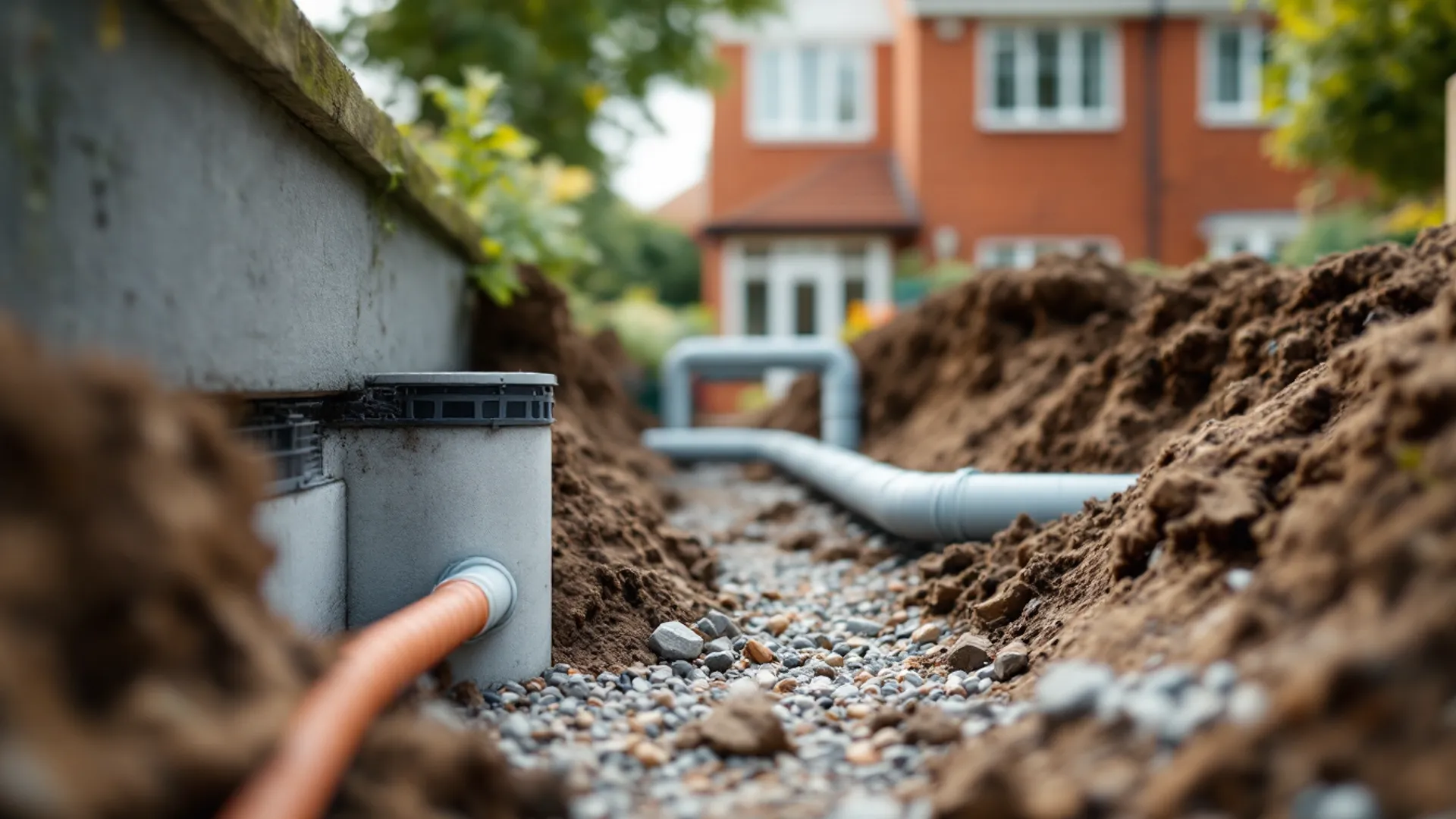
Adding an extension, converting a loft, installing a new bathroom, or changing the use of a building all potentially trigger Building Regulations requirements for the drainage system. Part H of the Building Regulations covers drainage and waste disposal for England and Wales. Getting it wrong means a completion certificate won’t be issued — which can affect mortgage lending, insurance, and future sale of the property.
When do Building Regulations apply to drainage?
However, building Regulations approval (via either a local authority building control application or a notification to an approved inspector) is required for:
- New drainage systems — any new foul water or surface water drainage installed as part of a new building or extension
- Significant alterations to existing drainage — connecting new sanitary appliances to an existing system, re-routing drain runs, changing pipe gradients, adding inspection chambers
- Extensions that affect drainage — if an extension covers existing drainage, the drainage may need to be rerouted (and the rerouted drainage must comply)
- Change of use — converting from commercial to residential, or adding residential use to a mixed-use building, requires the drainage to be assessed against Part H requirements
- Loft conversions with new bathrooms — adding a new bathroom requires the waste to be connected to the drain system in a compliant way
Additionally, minor maintenance works — replacing like-for-like pipe sections, clearing blockages, re-bedding existing pipework — do not typically require Building Regulations notification.
Part H: the key requirements
Part H1 — Foul water drainage: Specifically, covers the underground drains carrying sewage from the building to the public sewer or septic tank. Key requirements:
- Pipe gradients sufficient to maintain self-cleansing velocity (1:40 minimum for 100mm pipes carrying low flow; 1:80 is acceptable where flow velocity is higher)
- Minimum pipe sizes (100mm for drains carrying WC waste; 75mm for waste-only runs)
- Inspection access at bends, junctions, and at intervals along straight runs (maximum 45m between access points on straight runs)
- Bedding and cover requirements to protect pipes from damage and ground movement
Part H2 — Wastewater treatment systems: For example, applies where a property can’t connect to the public sewer. Covers septic tanks and package treatment plants. Requirements include design for the anticipated effluent load, soil suitability assessment (percolation test), and setback distances from buildings, watercourses, and boundaries.
Part H3 — Rainwater drainage: As a result, surface water from roofs and impermeable surfaces must be drained appropriately. For new development, surface water should, in priority order: soak into the ground (soakaway), discharge to a watercourse (if available), discharge to a combined sewer as a last resort. The shift away from combined sewer discharge is a significant policy direction — local authorities and water companies increasingly resist new connections to combined sewers.
Part H4 — Building over sewers: Meanwhile, if an extension or outbuilding is proposed within 3m of a public sewer, or directly over one, approval from the sewerage undertaker (water company) is needed in addition to Building Regulations. The water company must retain access to the sewer for inspection and maintenance.
Building over or near existing drains
Furthermore, this is one of the most common drainage issues in residential development. If your proposed extension footprint falls over an existing drain run. Whether that run is your private drain or a public sewer — you have two main options:.
Option 1 — Reroute the drain: In particular, move the drain outside the footprint of the extension, at the required depth and gradient. Building control will check the new design and inspect the installation.
Option 2 — Build over it: Consequently, if building over a private drain is unavoidable, the drain must be accessible (inspection chambers within the building, which must have removable covers accessible from inside) and the structure above must be designed to protect the drain from loadings. Building over a public sewer requires a “build-over agreement” with the water company.
Similarly, note: A private drain that your extension is built over becomes very expensive to repair or replace if it fails. Excavation under an existing extension is a major structural undertaking. Option 1 (rerouting) is almost always preferable if physically possible.
CCTV drain survey before building
Moreover, before any major building work, a pre-construction CCTV drain survey of all existing drainage is strongly recommended. Reasons:
- Establishes baseline condition — any existing defect is documented before work starts, removing any ambiguity about what damage (if any) construction caused
- Identifies the exact drain run locations — essential for planning where footings can and can’t go
- May reveal the drain is already in a condition that needs attention — better to know and plan for it before the scaffolding goes up
- Building control inspectors increasingly request pre-construction drainage surveys for extensions near existing drains
Sustainable Urban Drainage (SUDS) and planning conditions
However, for developments requiring planning permission, the local planning authority (LPA) may attach a drainage planning condition requiring SUDS. This means the surface water drainage design must be reviewed and approved by the lead local flood authority (LLFA) as well as building control.
Additionally, lLFA approval is separate from Building Regulations and involves a drainage strategy document — typically prepared by a drainage engineer — demonstrating that:
- Surface water runoff from the development matches pre-development rates
- Drainage hierarchy has been followed (soakaway preferred over sewer connection)
- The drainage system will be maintained in the long term
Specifically, this requirement applies to all developments requiring planning permission in England; in Wales it applies to all developments above a certain threshold. If your project requires planning permission, ask your planning consultant or architect whether a drainage strategy is needed as a planning condition.