When you call a drainage engineer for a blocked drain, they’ll typically arrive with both a jetting rig and rodding equipment. Which method they use — and in what order — depends on the nature of the blockage, the condition of the pipework, and what access points are available. Understanding the difference helps you ask the right questions and know what you’re paying for.
What is drain rodding?
However, drain rodding uses flexible fibreglass rods screwed together in sections, pushed into the drain manually to break up or push through a blockage. The rods are fitted with different attachments: a plunger head for pushing, a corkscrew for cutting through root growth, or a scraper for attached deposits.
When rodding is appropriate: Additionally, - Softer blockages close to the access point (within 10–15 metres)
- Inspection chamber clearance (removing accumulated silt and debris)
- Initial diagnosis to locate where the blockage is
- Older clay pipe systems where the joints are fragile and full jetting pressure would risk damage
- Pre-clearance before CCTV inspection (to allow the camera to pass)
Limitations of rodding: Specifically, - Can push a blockage further into the system rather than clearing it completely
- Can’t clean the pipe walls — deposits remain after clearing
- Ineffective against root-filled sections (roots grab the rods)
- Limited range — not suitable for long runs without intermediate access
What is high-pressure drain jetting?
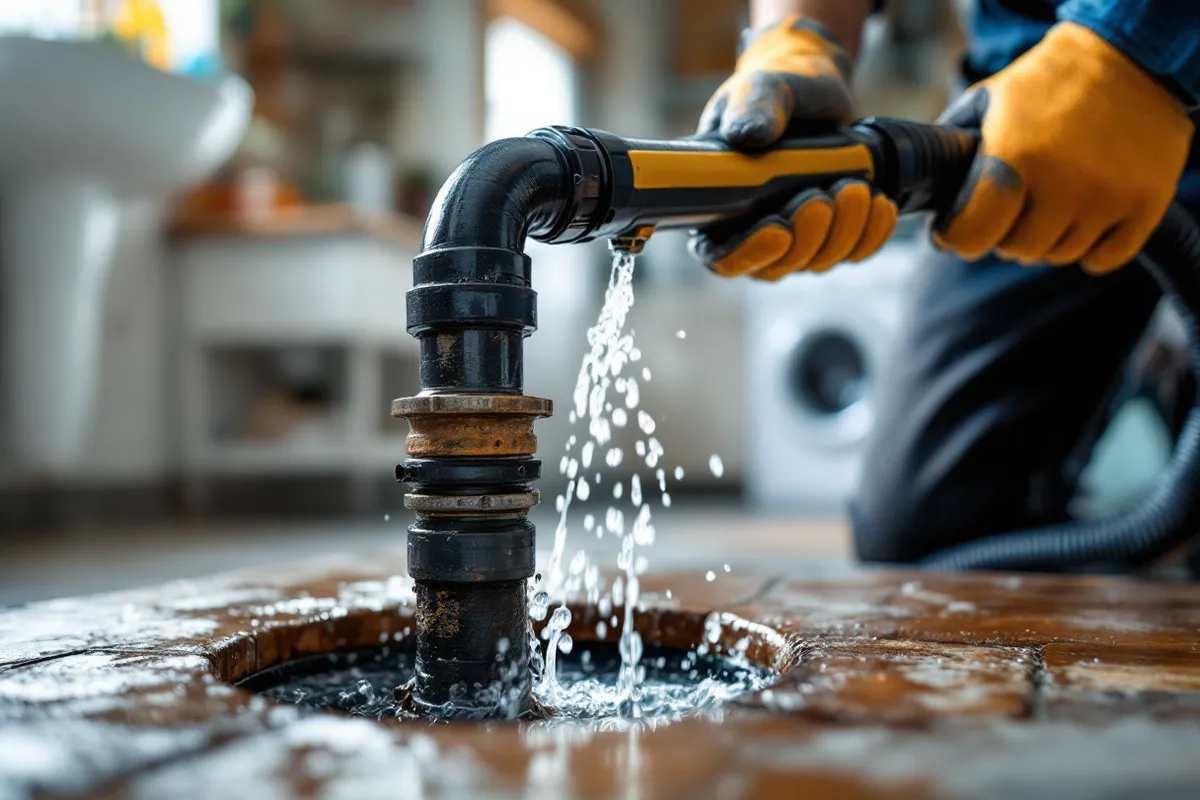
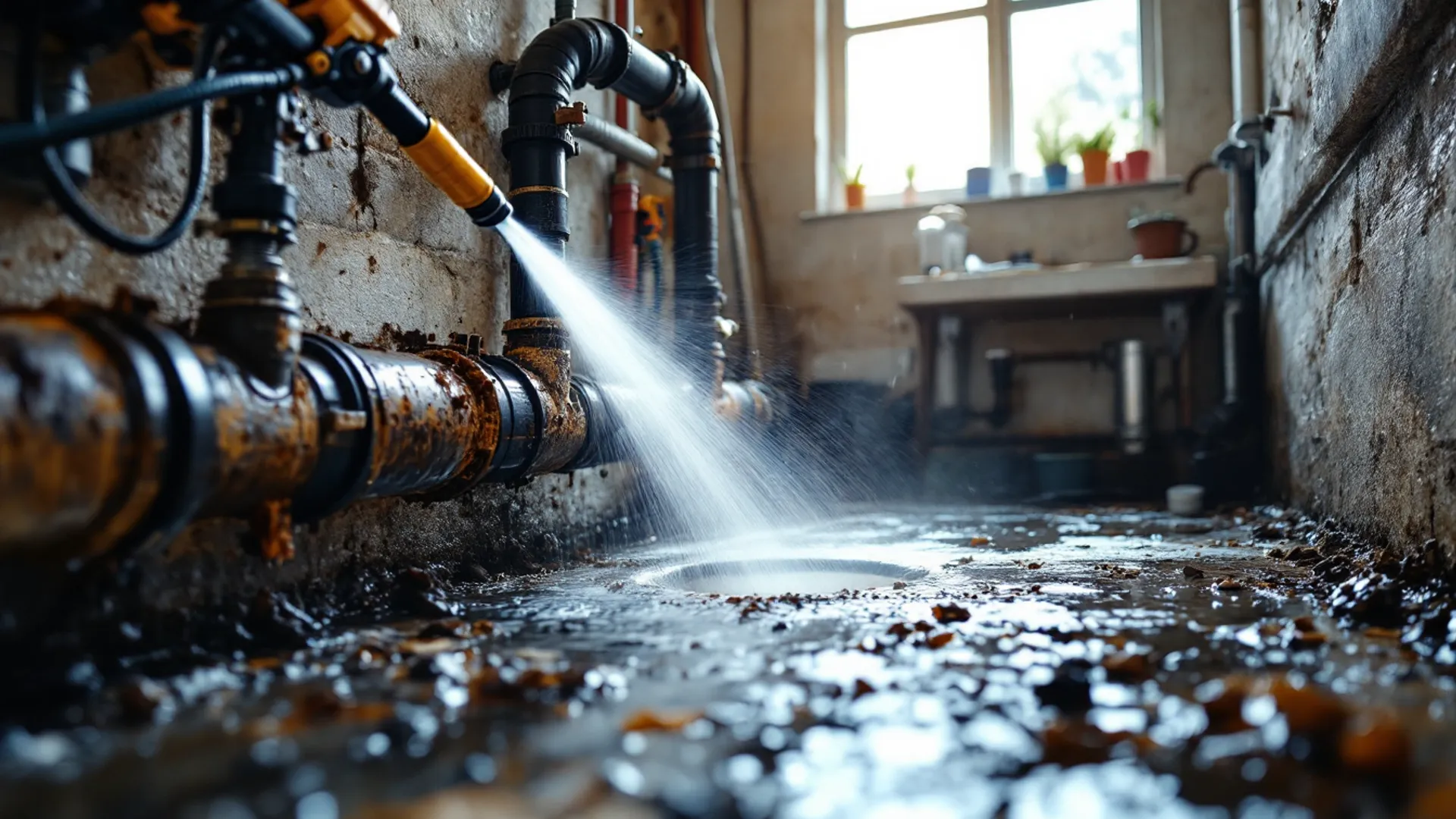
Jetting uses water at high pressure (typically 2,000–4,000 psi for domestic drains, up to 10,000 psi for large commercial systems) to cut through blockages and clean the pipe walls simultaneously. The jet nozzle is self-propelling — the rear-facing jets push the nozzle forward into the drain while the forward-facing jet cuts through the blockage.
For example, modern jetting rigs carry 200–400 litres of water and can treat runs of 80–150 metres in a single pull. The jetter is typically introduced at an inspection chamber, not through a toilet or sink access point.
When jetting is appropriate: As a result, - Most blocked drains (it’s the standard first-line treatment)
- Fat, oil and grease (FOG) deposits — jetting emulsifies and flushes FOG completely
- Established root ingress (a root-cutting nozzle attachment removes roots)
- Silted or scaled pipe walls — jetting removes deposits that slow flow even before a full blockage develops
- Pre-survey cleaning (a dirty pipe gives a poor camera image; jetting first ensures a clean CCTV result)
- Post-repair cleaning (after lining or excavation, jetting removes debris from the repair site)
Limitations of jetting: Meanwhile, - High water usage (important for properties on private water supplies)
- Not appropriate for pipes with open fractures — the pressure can force soil ingress through the fracture and worsen the damage
- Older brick-built egg-shaped sewers may have mortar joints that high pressure damages further
- Requires a water supply on site
The standard approach for a typical domestic blockage
Furthermore, for a typical blocked drain (kitchen or outside gully, no prior CCTV findings):
- Camera inspection first (optional but recommended) — a quick pass with a push-rod camera identifies the blockage type and location before any treatment
- Jet the blockage — standard approach for the vast majority of domestic blockages
- Post-clearance camera check — confirm the blockage is fully clear and the pipe condition is satisfactory
In particular, some engineers skip step 1 for a routine call-out and go straight to jetting. This is fine for clearly straightforward cases (kitchen drain backing up, no structural history) but less appropriate for repeat blockages or where there’s any suggestion of structural issues.
When CCTV comes before any treatment
Consequently, if the drain has blocked before, if there are multiple drains backing up simultaneously, or if you’re aware of tree roots in the garden, a CCTV survey before any treatment changes the decision-making entirely:
- A root-filled pipe section: jet with root-cutting nozzle, then assess whether the pipe needs relining or excavation
- A displaced joint or partial collapse: mechanical clearing may push debris through; structural repair is needed first
- A shared sewer with a blockage beyond the property boundary: the water company is responsible, not you
Similarly, treating a structurally compromised drain with full-pressure jetting without first knowing its condition is a risk. Not a common risk, but a real one in old clay systems.
What the charge covers
Moreover, when you’re invoiced for a drain clearance, the typical breakdown is:
- Call-out: engineer attendance + first hour
- Jetting: included in most fixed-price clearances, or per-hour on time-and-materials contracts
- CCTV inspection: usually quoted separately, depending on length and report format
- Rodding: normally included in clearance costs
- Root cutting: may attract a supplement if significant root growth is found
However, always ask before work starts whether the quoted price includes CCTV and what happens if the first treatment doesn’t fully clear the drain. A reputable contractor gives you a fixed price for a clear outcome, not a door-opening price that escalates on site.
Long-term: which method keeps drains clear longest?
Additionally, jetting wins on long-term performance. Rodding physically breaks the central core of a blockage but leaves the pipe walls dirty. Fat residue, root fibres and scale provide attachment points for the next blockage. Jetting cleans the full pipe bore, leaving a smooth surface that’s significantly slower to re-block.
Specifically, for drains that block repeatedly, preventive annual jetting is substantially cheaper than repeated reactive clearances. A preventive jetting programme is a fixed annual cost that prevents blockages rather than responding to them.