Prevention is almost always cheaper than cure when it comes to drains. A blocked drain callout for a straightforward clearance costs far less than letting a drain collapse, back up into the house, or cause water damage to a floor or ceiling — which can cost thousands. This guide covers practical drain maintenance — what to do yourself and what to schedule with a professional.
Why drains block
However, before you can maintain something effectively, it helps to understand why it fails. The four main causes of drain blockages in UK homes are:
Fat, oil and grease (FOG) Additionally, — The most common cause of kitchen drain blockages. FOG is liquid when hot but solidifies as it cools, coating the inside of the drain pipe. Each pour adds another layer until the bore narrows enough to trap everything else.
Non-flushable materials Specifically, — Wet wipes, sanitary products and cotton buds are rigid enough to snag on existing build-up or root intrusions and create a dam. Tissue paper (non-toilet-paper grade) also causes problems.
Root ingress For example, — Tree and shrub roots find moisture and enter through hairline cracks in drain joints, then expand inside the pipe. This is a slow process that takes years but once roots are established, clearance alone won’t fix it.
Physical pipe deterioration — Clay pipes (standard until the 1980s) become brittle over decades. Cracks, root intrusion and ground movement all cause structural failure. Modern plastic pipes are more durable but can still be damaged by ground movement or incorrect installation.
What you can do yourself
Monthly
Flush kitchen drains with hot water. As a result, fill your sink fully with hot (not boiling) water and release the plug. The surge of water carries light grease deposits further down the pipe and toward the main sewer, reducing build-up. For cold-water pipes use the hottest water from the tap only.
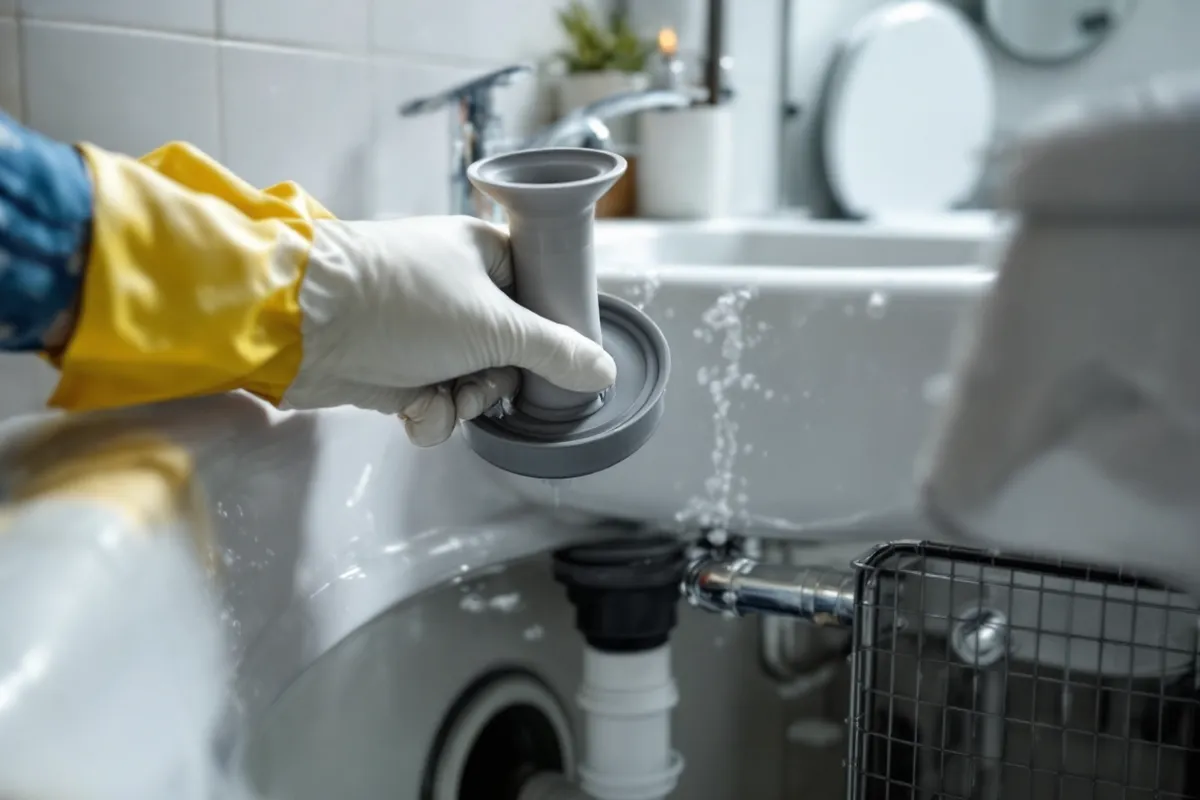
Check bathroom plughole traps. Meanwhile, hair and soap scum accumulate in the trap immediately below the plughole. Remove and clear it manually — a hair-removal tool (a long plastic strip with backwards-facing barbs) is cheap and effective.
Test outside gullies. Furthermore, pour a bucket of water into each outside gully (the plastic or cast-iron grids at the base of downpipes and in paved areas) and watch how quickly it drains. Slow drainage indicates debris accumulation.
Seasonally (spring and autumn)
Clear leaf fall from gullies before it washes in. In particular, autumn leaf fall is one of the main causes of blocked outside drains. Once compacted, wet leaves are almost solid and resistant to jetting. A leaf blower or hand clearance before rain arrives is far easier than unblocking later.
Flush outside drain runs. Consequently, attach a hosepipe to an outside tap and run it directly into inspection chamber openings, gullies and the drain at the base of your downpipes. This flushes light debris before it can compact.
Check inspection chambers (manholes) are accessible. Similarly, vegetation growing over manhole covers in garden areas is very common. An overgrown cover means slower access in an emergency — and overgrown roots mean increased risk of root ingress into the drain beneath.
Inspect visible pipe sections. Moreover, if any plastic waste pipe runs externally (e.g., down an outside wall to a ground-level gully), check that it’s secure, intact and not cracked.
Annually
Add enzyme drain treatment. However, biological drain cleaners — which use bacteria to break down organic matter — can be added monthly and are particularly effective in the trap beneath kitchen sinks. Unlike caustic chemical unblockers, biological products are safe for plastic and clay pipes and don’t damage the bacterial community in a septic tank.
Have your inspection chambers cleared. Additionally, an engineer with a small jetter can clear inspection chambers (the plastic or concrete manholes at junction points of your drain system) of accumulated silt and debris. This takes 30–60 minutes per chamber, with the price depending on size and access. Far cheaper than an emergency clearance after a blocked chamber causes surface flooding.
Consider a preventive CCTV survey for older properties. Specifically, if your home has clay-pipe drains (pre-1980s construction) and mature trees nearby, a CCTV survey every 5–7 years will identify root ingress before roots cause a full blockage or collapse.
Professional maintenance contracts
For example, for landlords, commercial properties and HMOs (houses in multiple occupation), a drain maintenance contract provides regular scheduled jetting and inspection rather than emergency callouts. Most drainage companies offer these on a quarterly or bi-annual basis.
As a result, benefits include:
- Predictable cost vs. unpredictable emergency callout fees
- Priority response when emergency callouts are needed
- A paper trail of maintenance records (important for compliance with HMO licencing conditions and insurance)
Products worth keeping at home
Drain guard / hair catcher. Meanwhile, a simple mesh insert that sits over the bath or shower plughole and catches hair before it enters the waste pipe. Empty it weekly.
Enzyme drain maintainer. Furthermore, a liquid or tablet biological drain cleaner for monthly use in kitchen and bathroom drains.
Plunger. In particular, a basic cup plunger will shift most localised blockages before they become severe. Keep one accessible.
Bicarbonate of soda and white vinegar. Consequently, for occasional odour treatment and light organic build-up — not effective on serious blockages but useful for maintenance.
What not to do
- Don’t pour hot fat down the drain. Even diluted with hot water, FOG will solidify further down the pipe where the water has cooled.
- Don’t flush wet wipes. Even “flushable” wipes don’t break down in the drain run and will eventually cause a blockage.
- Don’t use caustic chemical unblockers as a substitute for clearance. If a drain is fully blocked, the chemical sits above the blockage and corrodes your pipe, not the obstruction.
- Don’t ignore slow drains. A slow drain is telling you something — investigate it before it becomes a no-drain.