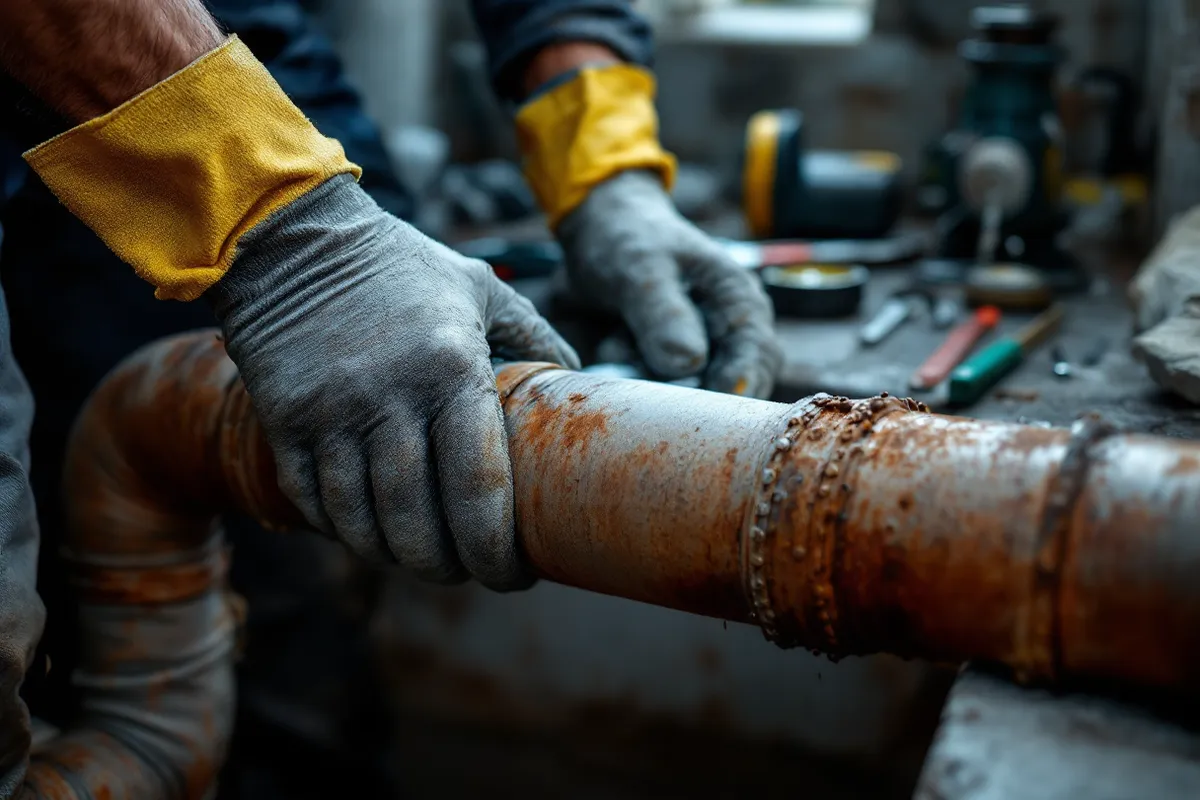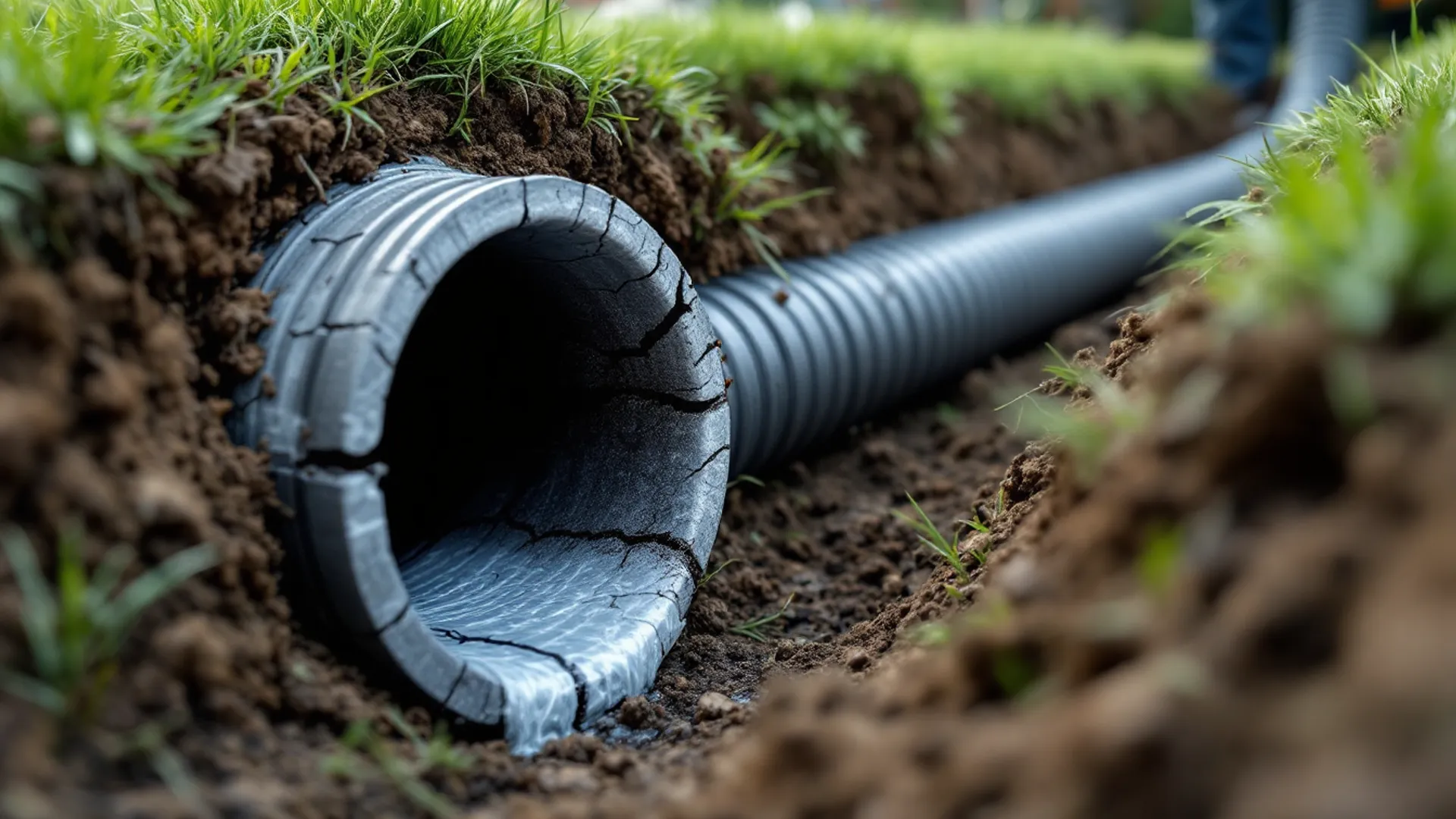
Drain excavation — digging up your garden, path or driveway to replace a damaged pipe — is disruptive, expensive and often avoidable. Cured-in-place pipe (CIPP) lining, commonly called drain relining, repairs cracked, fractured and root-infiltrated drains from the inside, without a single spade of soil being moved. Understanding what it can and can’t do helps you ask the right questions when a contractor assesses your drainage.
How CIPP drain relining works
However, the process involves inserting a flexible liner (a felt or fibreglass tube saturated with resin) into the damaged pipe through an existing access point. The liner is inflated with air or water until it presses against the entire inner surface of the pipe. The resin is then cured — using hot water, steam, or UV light depending on the system used — which hardens the liner into a rigid new pipe within the old pipe.
Additionally, the result is a close-fit, jointless pipe-within-a-pipe. The liner is typically 3–6mm thick, meaning the new internal bore is slightly smaller than the original. But The smooth surface of the cured liner is hydraulically more efficient than the rougher internal surface of old clay or concrete pipes, so flow performance is often maintained or improved.
UV lining Specifically, is the fastest curing method (minutes rather than hours) and increasingly standard for domestic and light commercial work. The liner is pulled through the pipe, inflated, and a UV lamp is drawn along the inside at a controlled speed to cure the resin progressively.
What conditions CIPP relining can treat
Longitudinal cracks: For example, cracks running along the pipe length, caused by ground movement, root pressure, or material degradation. Relining seals the crack permanently.
Circumferential cracks: Cracks around the pipe circumference, often caused by point loading (a heavy vehicle over an unprotected drain, for example). Relining bridges and seals these.
Root ingress through joints: As a result, tree roots that have entered through displaced or failed joints. The roots must be removed first (by jetting with a root-cutting nozzle), then relining seals the entry point.
Displaced joints: Meanwhile, joints that have shifted out of alignment, allowing infiltration (groundwater in) or exfiltration (sewage out). Relining re-seals displaced joints, though the structural misalignment remains.
General age-related deterioration: Furthermore, clay pipes from the Victorian era that are pitted, spalling, or losing material from the pipe walls. A lining restores structural integrity.
What CIPP relining cannot treat
Full collapse: In particular, a collapsed section of pipe has lost its circular cross-section and the liner has nothing to press against. Excavation and replacement is required for any section where the pipe has collapsed fully.
Deformation beyond tolerance: Consequently, a severely deformed pipe (flattened, kinked, or displaced by more than approximately 20–25% of diameter) cannot be successfully relined — the liner won’t maintain contact around the damaged area.
Scale and debris accumulation: Similarly, relining a dirty pipe doesn’t remove the debris — the liner simply encases it and potentially a reduced bore is the result. All pipes must be high-pressure jetted clean before relining.
Connections and junctions: Moreover, access points and branch connections need specialist handling — cutting in junction connections after relining, or using special junction liners. A good contractor plans this carefully; a bad one leaves branch connections blocked.
How relining is confirmed to be appropriate
However, the process starts with a CCTV drain survey. The footage and condition report tell the engineer:
- Whether the structural defects can be addressed by relining
- The length and diameter of pipe to be relined
- Whether the pipe bore is sufficient after lining (the finished liner reduces the diameter slightly)
- Whether access points allow the liner to be introduced and inflated
Additionally, a pre-relining jetting clear is then carried out. Post-relining, a further CCTV inspection confirms the liner has seated correctly and that any branch connections have been re-opened.
Relining vs excavation: when to choose which
Relining is preferred when:
- The structural defects (cracks, root entry, displaced joints) don’t extend to full collapse
- The pipe is under a landscaped garden, path, or driveway that would be expensive or disruptive to excavate
- The pipe is under a building (an extension, for example) where excavation would involve significant structural work
- The pipe runs under a road (requiring highway authority permits for excavation, traffic management, and reinstatement)
- The owner wants to minimise disruption and time
Excavation is necessary when: Specifically, - There is a full collapse of the pipe
- The pipe has deformed beyond what relining can accommodate
- There are structural problems above the pipe (the drain is contributing to ground movement affecting a building) that need physical investigation
- Access for relining equipment is impossible
- The pipe diameter is too small for available lining equipment
For example, in practice, many jobs involve a combination: relining for the accessible sections with minor defects, and targeted excavation for isolated collapsed sections.
What drives the price
As a result, drain relining costs vary significantly with pipe diameter, length, and access:
| Scenario | What affects the price |
|---|---|
| Single 3m domestic section (100mm pipe, easy access) | Smallest, easiest-access job |
| Full garden drain run, 15m (100mm pipe) | Longer run, more lining material |
| 25m commercial drain (150mm pipe) | Larger diameter, commercial scale |
| Excavation and relay, 3m (for comparison) | Depends heavily on the surface reinstated |
Meanwhile, every job is quoted individually — actual costs depend on survey findings, pipe condition and access complexity.
Furthermore, always get the CCTV survey findings in writing before accepting a relining quote. A contractor who quotes for relining without camera evidence of what they’re lining may be overselling the scope.