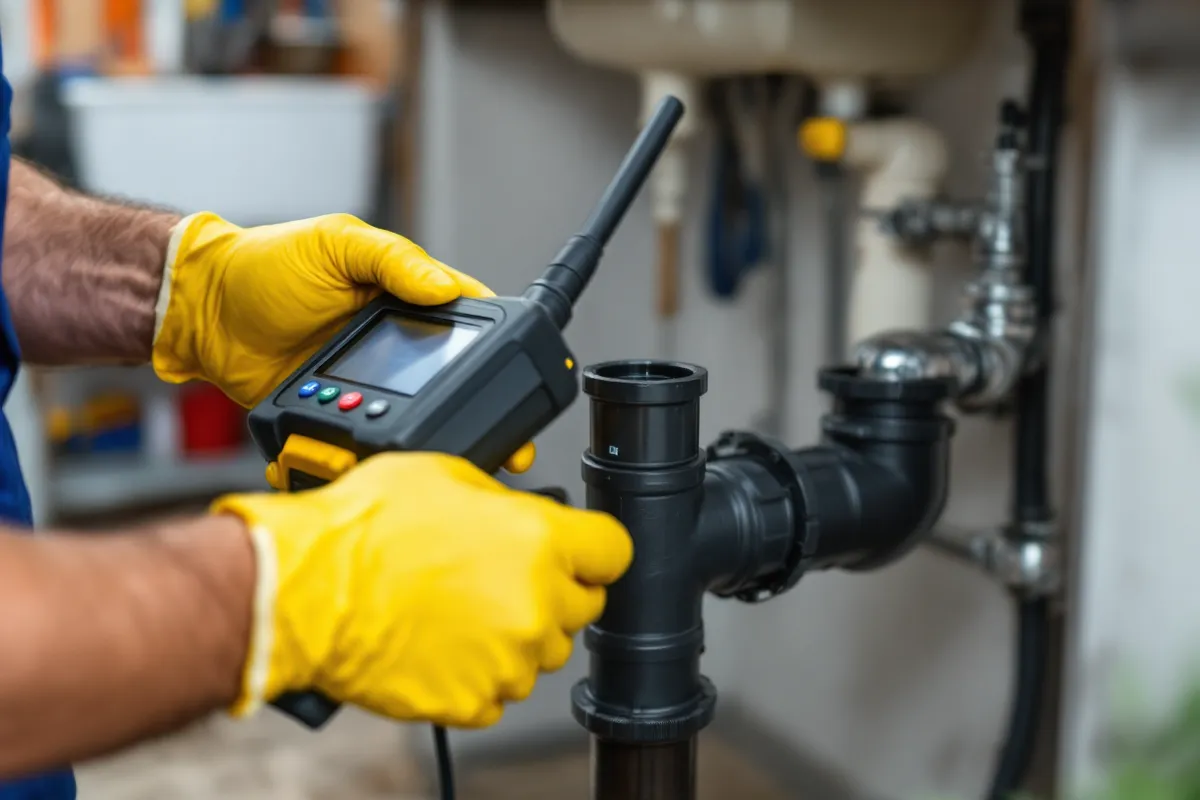
A commercial CCTV drain survey differs from a residential survey in scale, complexity, reporting requirements, and regulatory context. Whether you’re acquiring a commercial property, managing drainage maintenance for a portfolio, or responding to a regulator’s requirement, specifying the survey correctly from the outset is essential to getting usable results.
What makes commercial drainage different
However, commercial properties — retail, industrial, office, hospitality, food service, healthcare — have drainage systems that vary enormously in size, pipe material, age, and complexity. Key differences from residential:
Scale: Additionally, a small retail unit might have a drainage system similar in complexity to a large house. A food processing facility, hospital or hotel complex may have hundreds of metres of underground drainage with multiple pipe diameters, grease interception systems, and trade effluent connections.
Pipe sizes: Specifically, commercial drainage typically uses 150mm, 225mm, 300mm or larger pipes. Different camera equipment is required for larger pipes, and robotic inspection units (rather than push-rod cameras) are needed for large-bore sewers.
Regulatory context: For example, commercial properties may have trade effluent consents, environmental permits, or drainage conditions attached to planning permissions. Survey findings may need to be reported to the Environment Agency, the water company, or the local planning authority.
Grease management systems: As a result, commercial kitchens have grease traps, interceptors and automatic grease units that need inspection as part of a comprehensive drainage survey.
Multi-tenancy: Meanwhile, if the commercial property has multiple tenants, the drainage system may serve shared and private drains in complex configurations. The survey scope must be agreed in relation to the landlord/tenant maintenance boundary.
Pre-acquisition commercial drain survey
Furthermore, acquiring a commercial property or taking on a long-term lease creates a 15–25 year commitment to a drainage infrastructure. A pre-acquisition drain survey is equivalent to the structural survey — it establishes the condition of what you’re acquiring.
What to survey: In particular, - All underground foul water drainage within the property boundary
- Surface water drainage including interceptors and oil/grit separator tanks
- Grease management systems (commercial kitchen properties)
- The drainage connection to the public sewer (confirm location and condition of the connection point)
- Any drainage passing under or adjacent to the building structure
What the survey should produce: Consequently, - Full camera footage of all surveyed runs
- WinCan-compliant condition report with defect schedule
- Drainage asset register: plan showing all surveyed runs, chamber locations, pipe diameters, invert levels
- Prioritised remediation schedule with cost estimates
- Compliance assessment against current regulations (trade effluent consent, Environment Agency requirements)
Drainage management surveys for portfolio landlords
Similarly, institutional and commercial landlords managing portfolios of commercial properties increasingly use planned drainage surveys as part of their asset management programme. The objectives are:
- Establishing baseline condition across all assets
- Prioritising maintenance and capital expenditure
- Demonstrating compliance for environmental and insurance purposes
- Identifying properties approaching end-of-life for major drainage systems
Moreover, for a portfolio survey programme, standardised reporting across all properties allows like-for-like comparison and prioritisation. WinCan provides a common reporting framework; some asset managers use their own overlay systems that import WinCan data.
Food business drainage surveys
However, food businesses face the most stringent drainage compliance requirements. Environmental Health Officers assess drainage as part of routine inspections, and drainage-related compliance failures. Blocked or overflowing drains, non-compliant grease management, pest access through damaged drains — can result in:.
- Reduced hygiene ratings (affecting public-facing display requirements)
- Improvement notices requiring rectification within set timescales
- Closure orders in serious cases
Additionally, for food businesses, a drainage survey should include:
- Inspection of all kitchen waste drainage including underground sections
- Camera inspection of the connection between kitchen drainage and the grease trap/interceptor
- Assessment of grease trap or interceptor capacity vs kitchen output
- Inspection of inspection chambers for pest access (rodents enter via drain systems — gap of 10mm or more in a chamber cover or cracked pipe is an access point)
- Compliance assessment against local authority requirements
Specifically, surveys for food businesses should produce a compliance report as well as a condition report.
Insurance and commercial drainage
For example, commercial property insurance policies may require evidence of regular drainage maintenance and inspection. Claims related to drainage failure — flooding, contamination, business interruption — are more likely to be met without dispute if the landlord or tenant can demonstrate:
- Regular planned maintenance (jetting and inspection records)
- Current CCTV condition survey
- Prompt response to identified defects
Drainage condition surveys at lease renewal and lease end
Commercial leases that include repairing obligations (full repairing and insuring leases, for example) require tenants to keep the drainage in good repair. At lease expiry:
- The landlord typically surveys the drainage to confirm the tenant has met their repairing obligations
- Any drainage defect found at lease end that wasn’t present at lease start is potentially a dilapidations claim
- A schedule of condition survey (including drainage) at lease start establishes the baseline
As a result, both landlords and tenants benefit from a drainage survey at lease start. Establishing the baseline protects tenants from being charged at exit for defects that existed at entry, and gives landlords clear evidence of pre-let condition.
What to specify in a commercial drainage survey contract
- All drainage runs within scope (list all buildings, access points, and drain systems to be surveyed)
- Minimum camera range required
- Pipe sizes and camera equipment required for larger pipes
- Reporting format (WinCan, CCTV survey report, condition schedule)
- Whether a drainage asset register/plan is included
- Delivery timescale for report and footage
- Evidence of public liability insurance
- Health and safety requirements for site access
- Who receives the report and footage