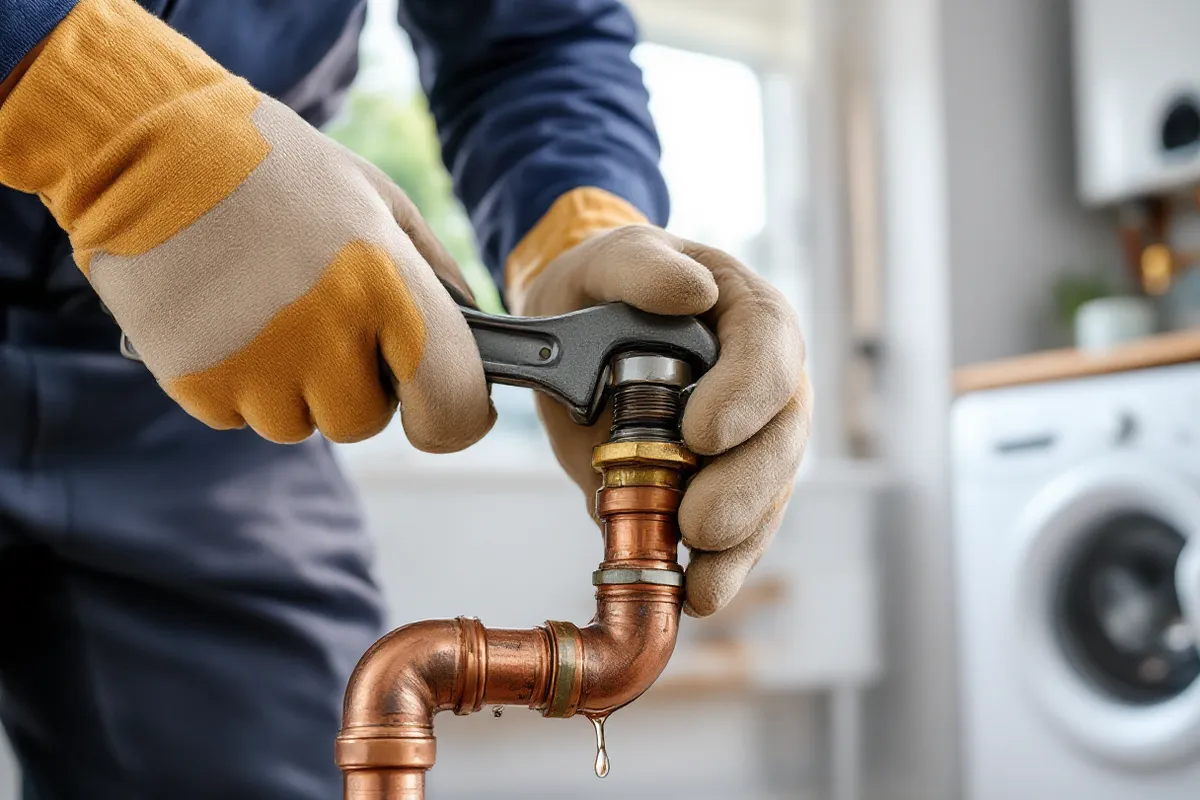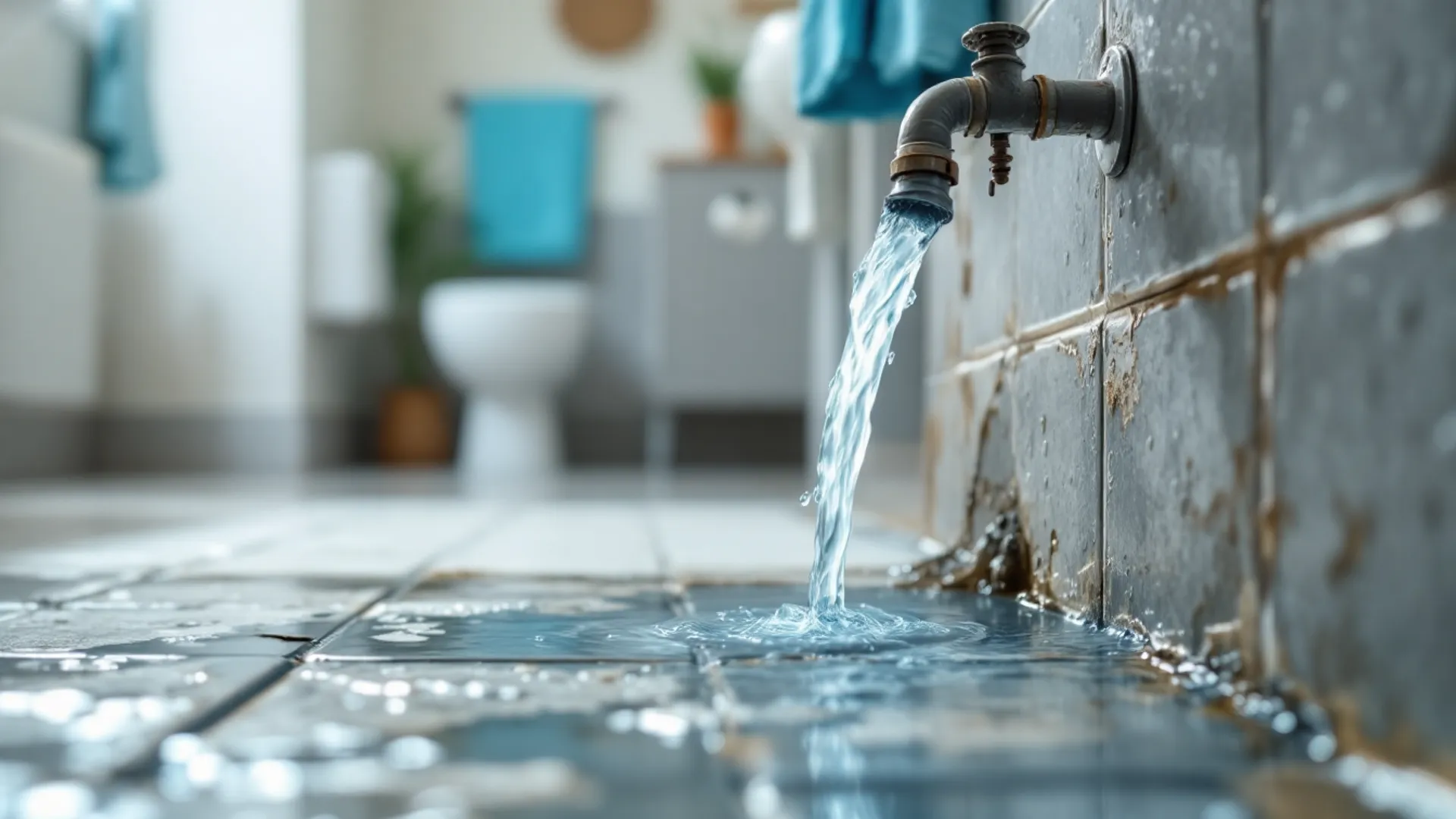
Plumbing emergencies don’t wait for convenient moments. A burst pipe at 2am, sewage backing up into the ground floor bathroom on Christmas Eve, or a boiler losing pressure with no heating in February. Each needs an immediate, clear-headed response.
However, this guide gives you the step-by-step actions for the most common plumbing emergencies, the questions to ask when you call an emergency plumber. What to do before they arrive to minimise damage.
Burst pipe
Additionally, a burst pipe is the most damaging plumbing emergency. Water can flow at 50–100 litres per hour through a small fracture, saturating floors, ceilings and walls within minutes.
Do this immediately:
-
Turn off the mains water supply. The main stop valve is usually under the kitchen sink, in an airing cupboard, or where the supply pipe enters the house. Turn it clockwise until it stops. If it’s stiff or seized, locate the external stop valve (in the pavement outside the house, under a small plastic cover) and call your water company’s emergency line.
-
Turn on all cold taps to drain water from the pipes and reduce pressure. Do not turn on the hot taps yet — the hot water tank may still be full.
-
Turn off the electrics in any room where water has penetrated. Do not switch anything on or off if the floor, ceiling or a socket is wet. Go to the consumer unit (fuse box) and isolate the relevant circuits, or switch off the main breaker.
-
Catch the water. Buckets, towels, dehumidifiers — anything to reduce soaking of floors and ceilings. Lift laminate flooring immediately if possible — water trapped under laminate causes the most expensive floor damage.
-
Photograph everything before starting any clean-up. Your insurer will require evidence of the damage at the point of discovery.
-
Call an emergency plumber. Describe the situation clearly: where you think the burst is, whether you’ve isolated the supply, what’s affected. A good emergency plumber will confirm the ETA before ending the call.
What to tell the plumber: Specifically, - Approximate location of the burst (inside/outside, floor, ceiling)
- Whether you’ve isolated the water supply
- Whether any electrics are affected
- Access details (entrance, parking)
Sewage backing up
For example, raw sewage backing up into your property through a toilet, bath or floor drain is a health emergency. Sewage contains pathogens including E. coli and hepatitis A.
Immediate actions:
-
Do not use any water. Stop all toilet flushing, washing and dishwashing — everything that drains into the blocked system will back up further.
-
Ventilate the area. Open windows. Sewage gas (hydrogen sulphide) is toxic in concentration.
-
Evacuate children and vulnerable people from the affected area.
-
Keep the area dry. Don’t step in the backup unless necessary, and if you do, wear waterproof boots.
-
Call an emergency drainage engineer. Sewage backup at ground level is not a DIY job. The blockage is in the main drain run or shared sewer, not just a trap — it requires high-pressure jetting with appropriate safety controls.
-
Contact your water company if you believe the blockage is in the public sewer (beyond your property boundary). They have a legal duty to clear public sewer blockages free of charge, though they often take longer to respond than a private drainage company.
After clearance: As a result, disinfect all contaminated surfaces with a BS EN 1276-approved disinfectant. Bag and bin contaminated materials — don’t wash them.
No cold water
Meanwhile, if cold water stops flowing at all taps simultaneously:
-
Check the water meter — is the supply running? If the meter is stationary, your water company may have an outage in your area. Check their website or call their emergency line.
-
Check the stop valve is fully open. A partially closed stop valve after maintenance is a surprisingly common cause.
-
If water is running at the meter but not inside, the supply pipe between the meter and the property may have frozen (in winter) or failed.
If the pipe is frozen: Furthermore, apply a warm (not hot) cloth to visible sections of pipe. Never use a blowtorch or boiling water — you can crack the pipe or cause a steam explosion. If you can’t locate or access the frozen section, call a plumber.
No hot water / boiler failure
-
Check the boiler’s pressure gauge. If it reads below 1 bar (the green zone on the gauge), the system has lost pressure — this is the most common cause of boiler lockout. Re-pressure via the filling loop (the flexi-hose beneath the boiler between the cold supply and the heating return) until the gauge reads 1.2–1.5 bar, then reset the boiler.
-
Check the thermostat settings and timer. It sounds obvious, but clocks changing for GMT/BST and dead batteries in wireless thermostats cause a significant number of “boiler failures”.
-
Reset the boiler. Most modern boilers have a reset button on the front panel. If the boiler fires and then cuts out again within a few minutes, there’s a fault — stop resetting and call a Gas Safe registered engineer.
-
If there’s no hot water but the heating works, the diverter valve or plate heat exchanger may be faulty — these are engineer-only repairs.
If your boiler is showing an error code: In particular, photograph the display. This is the single most useful thing you can tell an engineer — it tells them what the boiler’s own diagnostics have found.
Questions to ask when calling an emergency plumber
- What is your response time? (confirm ETA, not just “within a few hours”)
- Are you available now, or on a call-back list?
- Do you work on [gas / boilers / drainage] or only plumbing? Many “emergency plumbers” don’t have Gas Safe registration and can’t touch the boiler.
- Will you give me a fixed price before starting work? Any reputable emergency plumber will assess and quote before starting.
- Is there a call-out fee on top of the hourly rate?
What a 60-minute response time actually means
Consequently, when an emergency plumber says “60 minutes”, they mean 60 minutes from accepting the job to arriving at your door. This starts from when they confirm your booking, not when you first call. Engineers already on a job, travelling from a distant previous job, or covering large rural areas may quote longer.
Similarly, our engineers cover most UK urban areas with a genuine 60-minute target for emergencies. In rural areas we’ll give you an honest ETA rather than a promise we can’t keep.