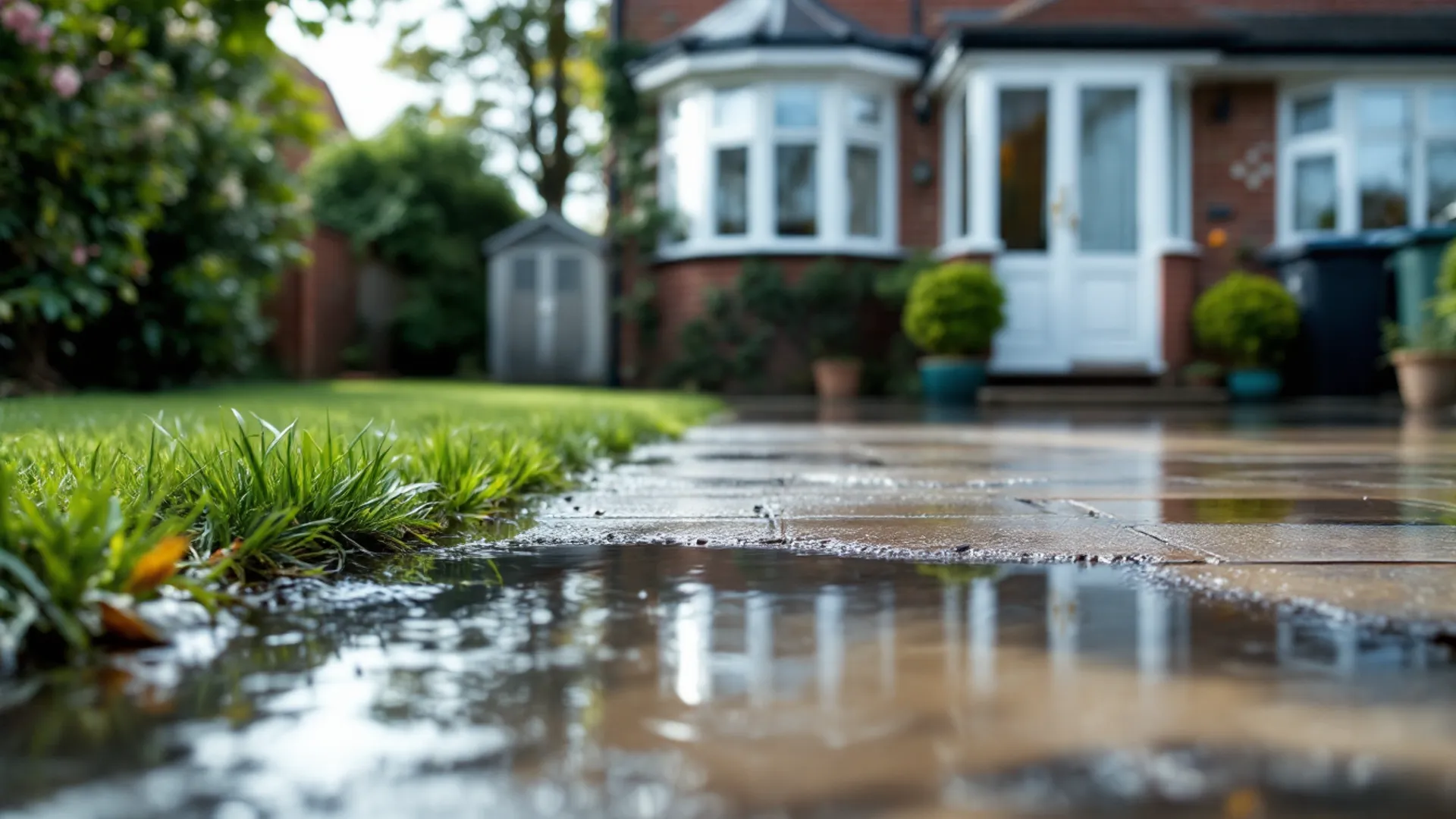
Flooding from rivers and the sea gets the headlines, but surface water flooding. Caused by heavy rainfall overwhelming drainage systems — is now the most widespread flood risk in the UK and the fastest growing. Nearly 3 million properties in England are at some risk of surface water flooding. Unlike fluvial (river) flooding, surface water flooding can affect properties far from any watercourse, including urban areas where impermeable surfaces have replaced the ground’s natural drainage capacity.
What causes surface water flooding?
However, surface water flooding occurs when rainfall intensity exceeds the capacity of drainage systems to carry it away. Three factors combine:
Increased rainfall intensity: Climate data shows that while total annual rainfall is not dramatically increasing, extreme short-duration rainfall events are becoming more frequent and more intense. The drains designed for conditions a century ago were not designed for the rainfall patterns of 2026.
Increased impermeable surface area: Additionally, decades of front garden conversion to paved hardstanding, driveway extensions, and urban development have dramatically increased the proportion of surfaces from which rainwater runs off rather than soaking in. Where fields once absorbed water, there are now roofs and roads.
Ageing sewer infrastructure: Specifically, victorian combined sewers were often designed for storms that occur once in 30 years. The same sewers, now responsible for much larger catchments due to urban expansion, regularly surcharge (overflow at manholes) during storms that occurred three times in the last decade.
Checking your property’s flood risk
For example, the Environment Agency’s Flood Risk mapping tool (check flood-risk-for-planning.service.gov.uk) provides flood risk data for every property in England:
- Flood Zone 1: Low risk from rivers and sea (less than 0.1% annual probability)
- Flood Zone 2: Medium risk (0.1–1% probability from rivers or sea)
- Flood Zone 3: High risk (more than 1% probability)
As a result, separate to river and sea flood zones is the surface water flood risk map, which shows areas at risk from high-intensity rainfall events. This is shown separately in the EA tool as “Risk of flooding from surface water”. Check this as well as the main flood zone.
A property that’s in Flood Zone 1 (low river flood risk) may still show high surface water flood risk. Particularly in low-lying urban areas with flat ground and combined sewers.
What drainage maintenance has to do with it
Meanwhile, your property’s drainage infrastructure directly affects whether surface water causes problems on your property during a flood event. Key points:
Blocked gutters and downpipes Furthermore, cause water to overflow at high-level, running down walls, pooling against the building, and potentially entering through basement windows and floor-level gaps rather than going to the drain. An overflowing gutter in a 30mm/hour rainfall event can deliver as much water against your wall as the rainfall itself.
Blocked gullies and soakaways In particular, fail during intense rainfall events. A gully blocked with autumn leaves can’t take the flow — water backs up and pools, finding any available entry point.
Shared or undersized combined sewers Consequently, surcharge during peak events, lifting manhole covers and discharging sewage-contaminated water at ground level. If a chamber cover lifts on your property, sewage enters from the sewer rather than from rainfall.
A good private drainage condition Similarly, doesn’t prevent the sewer from surcharging, but it ensures that your property’s contribution to the system is minimal and that any water at ground level during a surge event drains through your system rather than pooling.
Flood resilience measures for drainage
Flood-resistant air brick covers: Moreover, standard air bricks in older properties admit water at ground level. Flood-resistant covers with rising ball valves seal automatically when water reaches them and reopen when water recedes.
Anti-flood valves (non-return valves) on drains: However, if your property has experienced sewer surcharge entering through floor drains or the drainage system, a non-return valve prevents water from backing up from the sewer. These are particularly important for basement drainage and any drain gully at or below ground level.
Permeable paving on driveways: Additionally, replacing impermeable paving with permeable alternatives reduces runoff from your property. In some local authorities, planning permission is not required for permeable paving if it discharges to a soakaway rather than the sewer.
Soakaway maintenance: Specifically, a functioning soakaway helps handle surface water from your roof and paths without adding to the sewer load.
Insurance and flood risk
For example, flood insurance for high-risk properties is available through the Flood Re scheme, established in 2016 to ensure flood insurance remains available and affordable for eligible high-risk properties. Flood Re covers buildings and contents insurance. It is not available for commercial properties or properties built after January 2009 (the post-2009 exclusion is to avoid incentivising high-risk new development).
As a result, for properties without Flood Re eligibility, flood insurance is individually underwritten and may be expensive or difficult to obtain for properties in Flood Zone 3. Factors that help:
- Evidence of a functioning and well-maintained drainage system
- Non-return valves fitted to below-ground drains
- No previous claims from surface water flooding
Meanwhile, a CCTV condition report showing a well-maintained private drainage system is useful evidence for insurers assessing the risk of a sewer surcharge claim.
New build requirements: SUDS
Since 2015 in Wales (and from 2024 in England under Schedule 3 of the Flood and Water Management Act), new major developments have been required to include Sustainable Urban Drainage Systems (SUDS). These include attenuation ponds, permeable paving, green roofs. Flow control chambers that slow the release of surface water from development sites, preventing post-development runoff from exceeding pre-development rates.
Furthermore, the impact of SUDS requirements in new development is gradual — the existing urban fabric continues to generate surface water at historical rates. But for property owners adjacent to new development, it provides some protection against drainage worsening as their area develops.