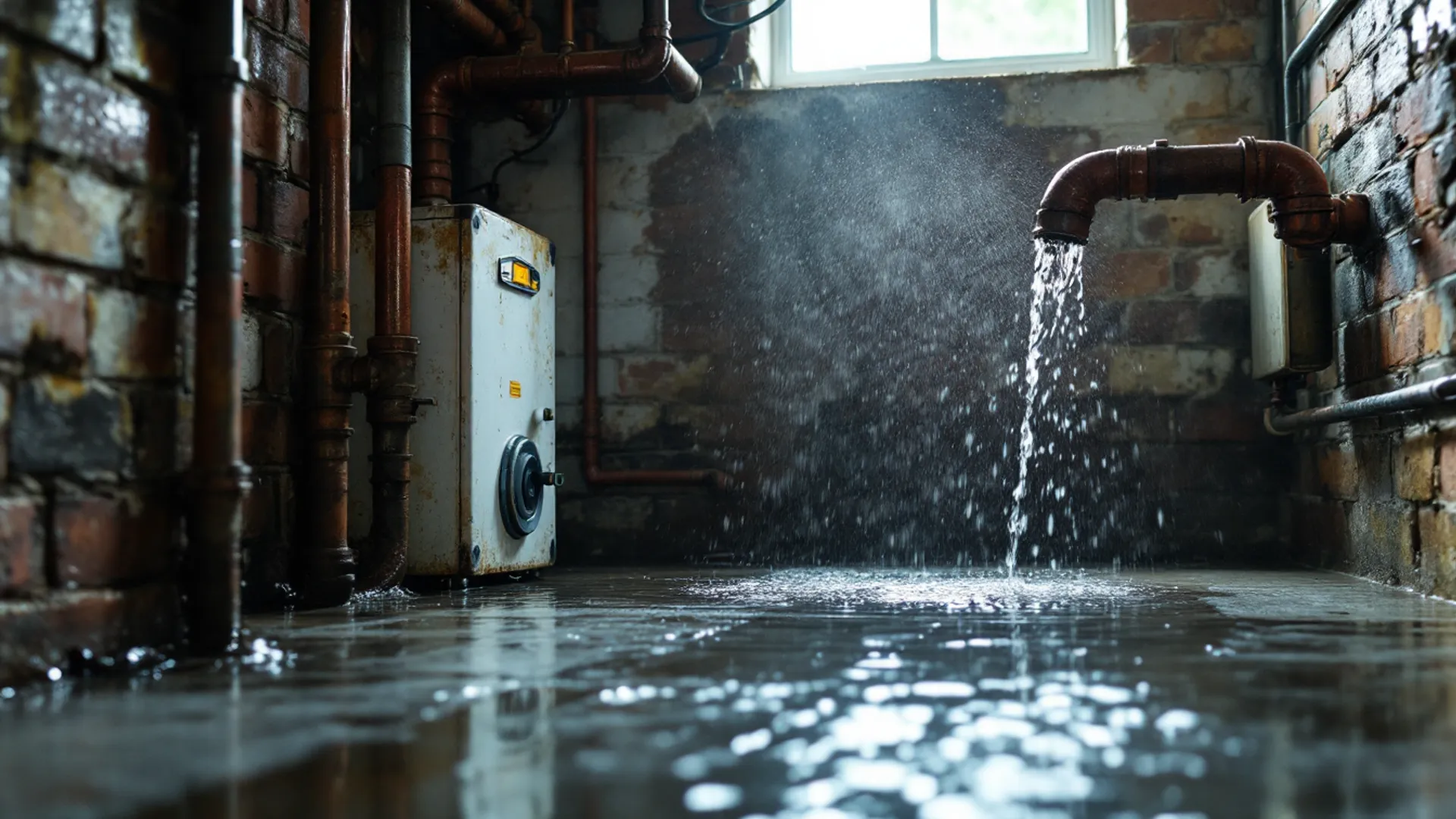
A flooded basement or cellar is one of the more serious domestic water emergencies. The combination of structural damage risk, electrical hazard. The difficulty of removing large volumes of water from below ground makes it significantly more involved than a blocked drain upstairs. Here’s how to handle it — and how to stop it happening again.
Safety first
However, before entering a flooded cellar:
Electricity. Additionally, water and live electricity are lethal together. If the flood has reached any electrical sockets, cables, consumer unit components, or appliances, do not enter until the electricity is isolated. Turn off the supply at the main consumer unit if it’s safely above the water level and in a dry location; otherwise call your electricity network operator (not your energy supplier — the network operator handles emergencies) who can isolate the supply at the meter or street.
Gas. Specifically, if you smell gas or suspect a gas pipe has been affected by the flooding, leave the property, do not use any electrical switches, and call the National Gas Emergency Service on 0800 111 999.
Structural stability. For example, flooded basements can undermine floor slabs and walls. If the structure is old or the flooding is extensive, stay out until a structural engineer or the emergency services have assessed it.
Identifying the source
As a result, the source determines the response:
Sewer flooding (foul water): Meanwhile, the most serious type — sewage in the flood water is a health hazard. Identifiable by the smell and appearance. Caused by a blocked drain backing up, or a sewer surcharging during heavy rain (combined sewers). If the source is a blocked drain, the blockage needs clearing urgently. If it’s sewer surcharge from the public sewer, report to your water company (they may have emergency response teams for sewage flooding).
Surface water ingress: Furthermore, clean rainwater entering through walls, floor joints, or window wells. Caused by ground water rising during heavy rain, a failed damp proof membrane, or inadequate perimeter drainage. This is the most common basement flooding type in the UK — particularly in properties that originally had cellars not designed for habitation.
Burst or leaking pipe: In particular, clean water at pressure, localised source. Isolate the water supply at the stopcock immediately.
Groundwater: Consequently, sustained water entry through walls and floor, not correlated with a specific event. Common in older basements with failed tanking. Not an emergency in the same way, but requires structural waterproofing work.
Immediate response
Similarly, once you’ve confirmed it’s safe to enter:
- Isolate water supply if the source is internal (burst pipe, overflowing appliance).
- Remove the water. A submersible pump is the standard tool for water removal — drainage engineers carry these, or you can hire one from a tool hire shop. Feed the discharge hose to an outside gully or surface drain. For small volumes (under 100 litres), a wet/dry vacuum cleaner works.
- Ventilate. Once pumped, open every ventilation point and use fans to begin drying. Water in a cellar creates significant humidity that promotes mould growth within 24–48 hours.
- Document. Before clearing anything, photograph and video the flood extent and damage for insurance purposes.
Calling for professional help
Moreover, drainage engineers handle basement flooding regularly and carry submersible pumps, jetting equipment, and CCTV cameras. If the source is a blocked drain backing up, they can clear the blockage and get your drain flowing within an hour.
However, if the source is a sewer surcharge, your water company’s emergency drainage team is the relevant contact. This is infrastructure flooding, not a property maintenance issue you can fix yourself.
Additionally, for ongoing groundwater ingress or failed tanking, a specialist basement waterproofing contractor (structural waterproofing to BS 8102) is required. This is a multi-day civil engineering job, not a plumbing call-out.
Common causes and their fixes
Blocked cellar drain or floor gully: Specifically, a floor drain in the cellar that’s blocked can’t handle water that enters through other routes. Clear the floor drain first — it may be all that’s needed. Annual jetting of cellar floor drains is good practice.
Backed-up soil stack or drain: For example, if the blockage is in the main underground drain, water backs up to the lowest outlet — often a cellar toilet or floor drain. A CCTV survey identifies where the blockage is; jetting clears it. CCTV relining may be needed if the pipe is damaged.
Failed perimeter drain: As a result, victorian and Edwardian properties often have brick-built cellar walls with no tanking. The ground outside the wall fills with water during heavy rain and seeps through. A perimeter French drain around the property intercepts the water before it reaches the wall.
Sump pump failure: Meanwhile, properties with existing sump pumps that have failed often flood within hours of heavy rain. Sump pumps require annual testing (run a bucket of water in to confirm the float switch activates the pump). Dual-pump installations with battery backup prevent this.
Drainage surveys after flooding
After any basement flooding from a drain source, a CCTV survey of the underground drains is worthwhile. Flooding events often reveal underlying structural defects. A partially collapsed pipe that was coping with normal flow but couldn’t handle storm surge, or a joint that’s been slowly opening for years.
Furthermore, the survey also documents the pre-repair condition for insurance purposes and identifies whether relining (less disruptive) is viable, or whether excavation is required.
Prevention
Keep floor drains clear: In particular, sweep and check cellar floor drains quarterly. Blocked floor drains are the single most common cause of preventable basement flooding.
Install a non-return valve: Consequently, if sewer surcharge is a risk (combined sewer, known flooding history in the area), a non-return valve on the drainage connection prevents sewer water from backing up into the property. Fitted by a drainage engineer; requires building control notification.
Sump and pump: Similarly, for properties with groundwater ingress, a properly specified sump pump system (BS 8102 compliant) provides active water management. Spec the system for the peak inflow rate your cellar experiences, with battery backup.
Maintain perimeter drainage: Moreover, ensure air bricks aren’t blocked, ground level outside the cellar isn’t higher than the cellar floor, and any existing perimeter drain is clear.
Annual drain jetting: However, preventive jetting of underground drains reduces the risk of blockage-related backing up. Particularly relevant for properties in Victorian terraces where tree roots are an ongoing issue.
Insurance
Additionally, most buildings insurance covers sudden, unexpected water damage — including burst pipes and some drain flooding. It generally does not cover gradual ingress, poor maintenance, or groundwater that seeps in through walls. Check your policy schedule carefully.
If your cellar floods from sewer surcharge, your water company may have a compensation scheme. Ask specifically about their sewer flooding register and the Guaranteed Standards Scheme.