A blocked drain is one of the most common household problems in the UK — and one of the most stressful when it hits. This guide walks you through the safest DIY methods for unblocking a drain, the warning signs that mean you need a professional. What a drainage engineer actually does when they arrive.
What causes most blocked drains?
However, the three most common causes of blocked drains in UK homes are:
- Fat, oil and grease (FOG). FOG solidifies as it cools in the pipe, narrowing the bore until water can’t pass. This is the leading cause of kitchen drain blockages.
- Non-flushable wipes and sanitary products. Despite being labelled “flushable”, most wet wipes don’t break down in the sewer. They bind with other debris and create the dense “fatbergs” that block both domestic pipes and public sewers.
- Root ingress. Tree and shrub roots seek out moisture — and a hairline crack in a clay drain pipe is an invitation. Roots force their way in, then grow until they fill the pipe completely.
Additionally, other causes include: accumulated hair and soap scum in bathroom gullies, mineral scale build-up from hard water, collapsed pipes (often in Victorian clay-pipe systems), and foreign objects.
Warning signs your drain is blocked
- Water draining slowly from sinks, bath or shower
- Gurgling sounds from drains or toilet when water flows elsewhere
- Water backing up into a bath or shower tray when you flush the toilet
- Unpleasant smells from drains — the smell of trapped organic matter or sewage gas
- Water pooling around an outside gully or inspection chamber
Specifically, a single slow drain usually means a localised blockage close to that fixture. Multiple fixtures draining slowly, or sewage backing up into your bath, suggests a blockage further down the shared drain run — or in the main sewer.
DIY methods: what works and what doesn’t
1. Boiling water
For example, for kitchen sink blockages caused by grease, slowly pouring a full kettle of boiling water down the drain in two or three stages can melt and flush FOG. Do not use boiling water on plastic (PVC) waste pipes — it can warp the joints.
2. Bicarbonate of soda and vinegar
As a result, pour half a cup of bicarbonate of soda into the drain, followed by half a cup of white vinegar. Leave for 20–30 minutes, then flush with hot water. The fizzing reaction can break up light organic blockages but won’t clear anything solid or heavily compacted.
3. A plunger
Meanwhile, a cup plunger (the standard dome shape) works on sink and bath blockages. Block the overflow with a wet cloth, ensure there’s enough water in the basin to cover the cup. Push firmly and repeatedly without breaking the seal. This creates hydraulic pressure that can dislodge a blockage within a few feet of the drain opening.
4. A drain snake (hand auger)
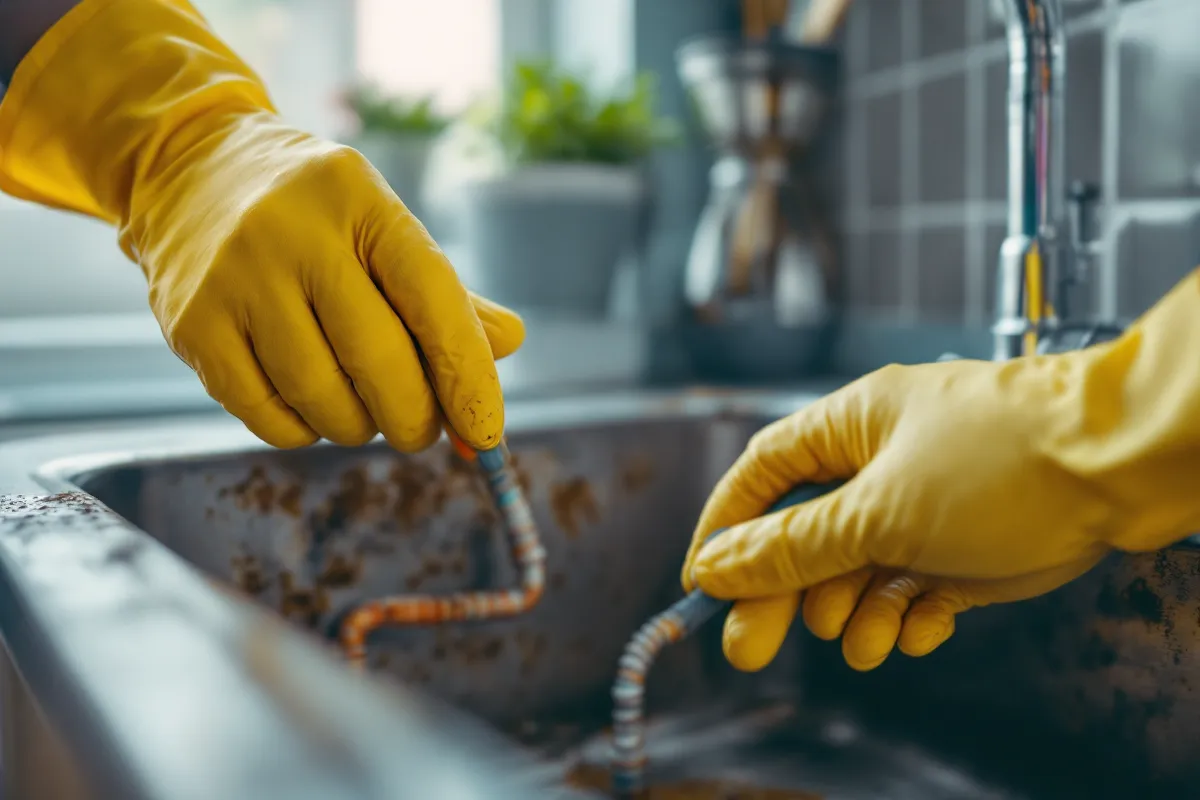
Furthermore, a mechanical drain snake — a flexible steel cable with a rotating head — can reach several metres into a pipe and either break up or retrieve a blockage. These are hired easily and inexpensively by the day. Feed the cable gently, rotating as you push, until you feel resistance, then work it back and forth.
5. Chemical drain unblockers
In particular, caustic soda (sodium hydroxide) products can dissolve organic matter. Use them strictly according to the manufacturer’s instructions, wear gloves and eye protection, and ensure good ventilation. Do not use chemical unblockers on completely blocked drains. The chemical will simply sit in the pipe and can damage joints, particularly in older pipework. Do not mix different chemical products.
What doesn’t work
- Ignoring it — blockages don’t clear themselves and worsen over time
- Repeatedly pouring chemicals down a blocked drain
- Using a garden hose — domestic water pressure is too low to clear a significant blockage
When to call a professional
Consequently, call a drainage engineer if:
- Water is backing up into multiple fixtures (suggests main drain or sewer blockage)
- You can see sewage in an inspection chamber (manholes in the garden or driveway)
- DIY methods haven’t cleared the blockage within 30–60 minutes
- The blockage keeps returning — this usually means root ingress or a structural fault
- You can smell sewage gas (hydrogen sulphide) — this needs urgent attention as the gas is toxic
What happens when a drainage engineer visits
Similarly, a qualified drainage engineer will arrive with equipment you can’t hire at a DIY shop:
High-pressure water jetting (HPWJ). A van-mounted jetter pumps water at pressures of up to 4,000 psi through a hose with a specialist nozzle. The forward-facing jets cut through blockages while the rearward-facing jets simultaneously flush debris away. This clears most blockages completely in a single visit.
CCTV camera survey. Moreover, a push-rod camera is fed into the pipe and transmits live footage to a handheld monitor. The engineer can identify exactly where the blockage is, what’s causing it (grease, roots, a collapsed section), and whether the pipe structure is sound. Most engineers capture this footage and can provide a WinCan-compliant survey report for insurers or conveyancers.
Mechanical rodding. However, for heavily compacted blockages or root masses, rodding breaks up the obstruction before jetting can flush it through.
Additionally, after clearing a blockage, a good engineer will recommend whether a further CCTV survey is worth doing (particularly if root ingress is found). Whether any pipe repairs are needed.
Preventing blocked drains
- In the kitchen: collect FOG in a container and dispose of it in the bin, never the sink
- In the bathroom: use a hair catcher in shower and bath drains; empty it weekly
- What to flush: only the three Ps — pee, paper (single-ply toilet tissue), and the obvious third
- Garden drains: clear fallen leaves from gullies before they compact and wash into the pipe
- Annual jetting: for properties in older housing stock or with mature trees nearby, an annual preventive jet-clean costs less than an emergency callout
Getting a quote
If you’ve tried the DIY methods above and the drain is still blocked. Or you’d rather avoid the mess and have it done properly — our engineers are available 24/7 across the UK. We quote a fixed price before starting and guarantee the work.