A blocked toilet is unpleasant, urgent, and — in a single-bathroom household — a minor emergency. The good news is that most toilet blockages cleared easily without a plumber, provided you know what you’re doing. The key is to act methodically, avoid making things worse, and recognise the signs that indicate a deeper problem.
First: assess the situation
However, before reaching for any tools, look at what you’re dealing with:
Is the bowl filling when you flush? Additionally, if water is rising towards the rim, do not flush again. A second flush on a fully blocked toilet will cause an overflow. Wait for the water level to drop (it will, slowly, through gravity) before attempting anything.
Is there a smell of sewage from drains elsewhere in the house? Specifically, if other drains — bath, sink, shower — are slow or gurgling when you flush the toilet, the blockage is in the main drain, not the toilet trap. The methods below may not resolve a main drain blockage; call a drainage engineer.
Did something obviously fall in? For example, children’s toys, mobile phones, bottles, and sanitary products are common culprits. If you saw something go in, a plunger is unlikely to help — you’ll need a closet auger (toilet snake) to retrieve or break it up.
Method 1: Hot water and washing-up liquid
As a result, for a standard blockage caused by organic material or excessive toilet paper, this is often enough:
- Squirt a generous amount of washing-up liquid into the bowl
- Add a bucket of hot (not boiling — boiling water can crack vitreous china) water poured from waist height to create some pressure
- Wait 5–10 minutes for the liquid to lubricate the blockage
- Attempt a flush
Meanwhile, if the bowl drains slowly after the hot water, a single flush may clear it. If there’s no movement at all, proceed to the plunger.
Method 2: The toilet plunger
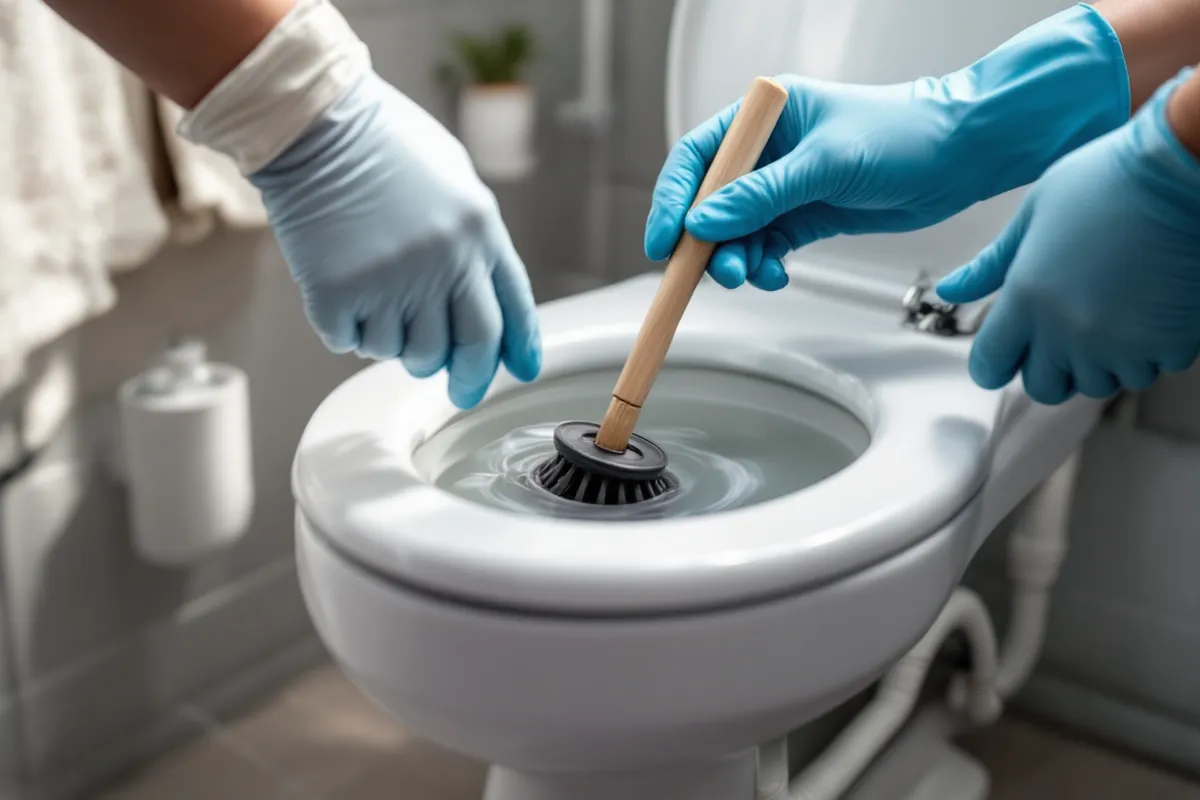
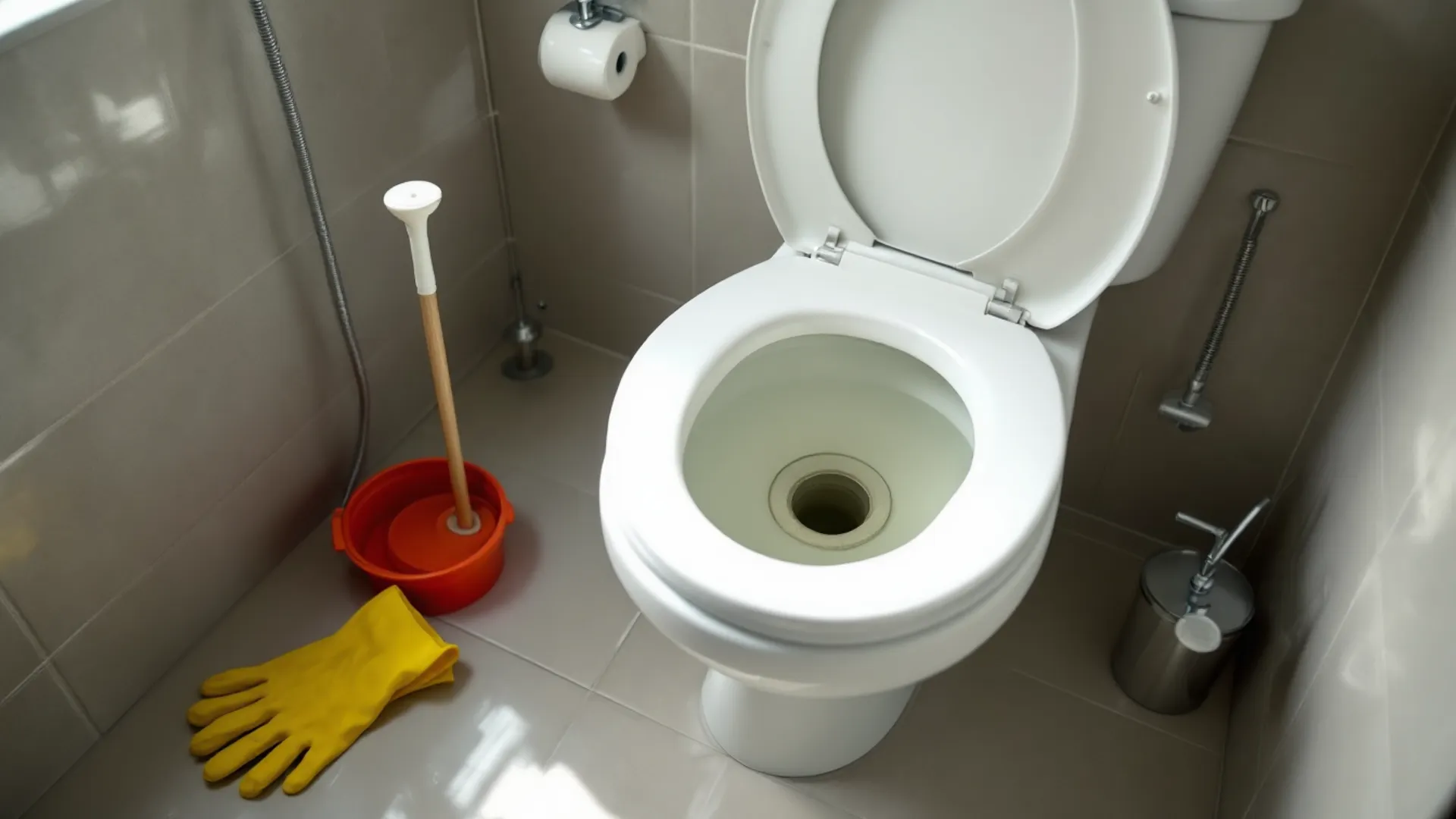
Furthermore, a proper toilet plunger has a flange (a fold-out rubber extension) that fits into the toilet outlet, creating an effective seal. A flat cup plunger designed for sinks will not work properly on a toilet — it won’t seal.
In particular, how to use it effectively:
- Ensure there’s enough water in the bowl to submerge the rubber head of the plunger
- Insert the plunger at an angle to let air escape, then straighten it so the cup is fully over the outlet
- Push down slowly to compress the cup, then pull up sharply — this creates suction on the upstroke that’s more effective than the downstroke push
- Repeat 10–15 times with consistent rhythm
- Remove the plunger and see if the water level drops
Consequently, if the water drains away, flush once gently. If it drains normally, you’re done. If it refills and blocks again, the blockage has moved but not cleared — repeat.
Method 3: A toilet/closet auger (drain snake)
Similarly, a toilet auger is a flexible cable with a hand-turned handle, designed to feed around the toilet trap and either break up or retrieve a blockage. They’re available from plumber’s merchants and are the right tool for:
- Blockages that won’t respond to plunging
- Suspected foreign objects
- Blockages that clear then return immediately
Moreover, feed the cable into the outlet gently, rotating the handle as you go. When you feel resistance, work the cable back and forth. You may feel the blockage give way and flush through, or you may retrieve the object.
What not to do
Don’t use chemical drain cleaners. However, products like bleach or caustic drain cleaner are designed for pipe blockages, not toilet traps. They won’t clear a physical blockage and may react dangerously with any other chemical already in the bowl. They’re also ineffective against foreign objects.
Don’t flush repeatedly hoping the pressure will clear it. Additionally, each flush fills the bowl further and increases the risk of overflow.
Don’t use wire coat hangers as improvised augers. Specifically, they scratch the vitreous enamel inside the toilet bowl, damaging it permanently.
Don’t apply excessive force with the auger. For example, toilet ceramics can crack if an auger is forced aggressively around the tight bends.
When to stop and call a plumber
As a result, stop DIY attempts and call a plumber if:
- Other drains in the house are slow or backing up — indicates a main drain blockage that requires jetting equipment, not household tools
- The blockage has cleared but keeps returning — suggests a partial obstruction in the underground drain that’s catching debris
- You can hear gurgling from the toilet when you run water elsewhere — sign of a venting problem or drain blockage further down the system
- There are sewage smells from floor drains or gullies — the sewer is backing up, which is a health hazard
- You’ve tried all methods above and nothing has worked — it’s time for professional equipment
What drainage engineers use
Meanwhile, a drainage engineer attending a blocked toilet will typically start with a 100mm high-pressure jetting nozzle inserted via the closest access point (often an outside inspection chamber). Jetting at 2,000–4,000 psi dislodges almost any blockage within seconds.
Furthermore, for a persistent or recurring blockage, a CCTV camera inspection determines whether there’s a structural problem. A partial collapse, root ingress, or mis-aligned joint — that’s causing the repeated catching. This is far more cost-effective than paying for repeated clearances on a drain that will keep blocking.
Preventing toilet blockages
In particular, the only things that should go down a toilet: human waste and toilet paper. Everything else — wet wipes (including “flushable” ones), cotton buds, cotton wool, sanitary products, nappies, food waste. Medication — should go in the bin.
Consequently, in hard water areas, limescale builds up under the rim and in the internal passages, narrowing them over time. An annual dose of a specialist toilet descaler (applied overnight) keeps the ceramics and trap in good condition.