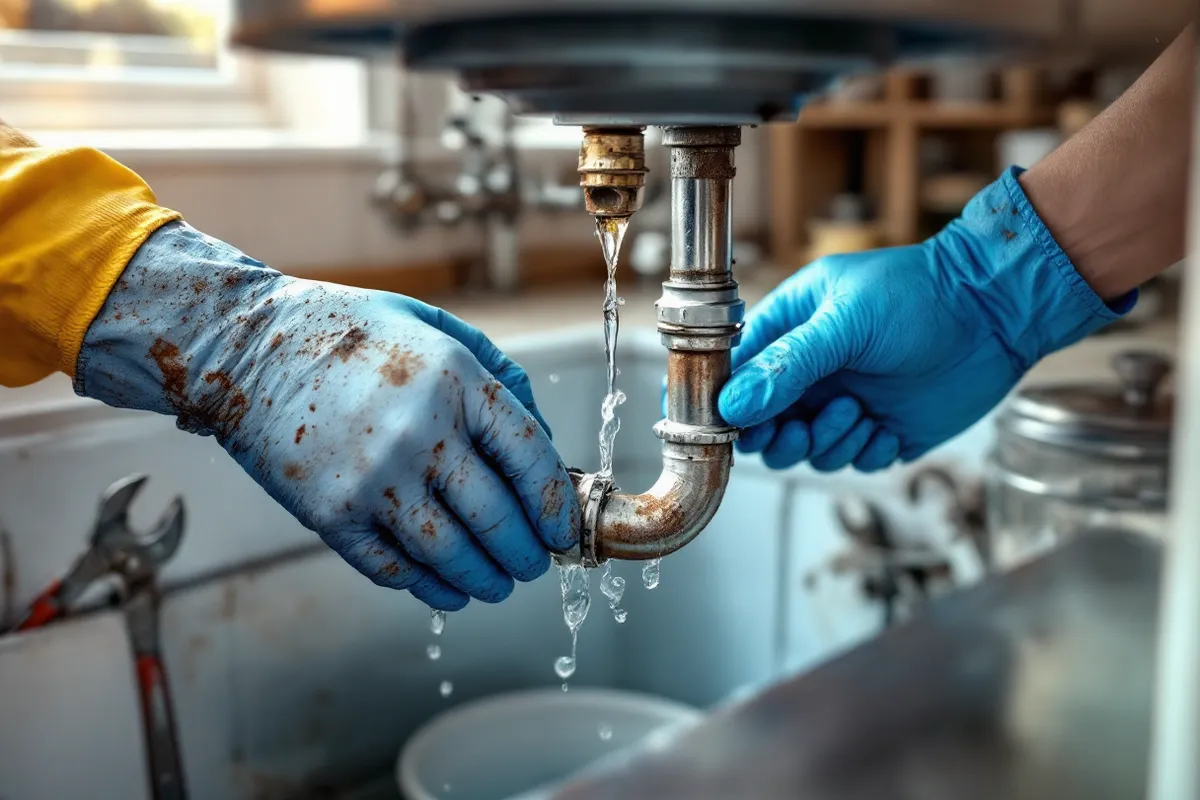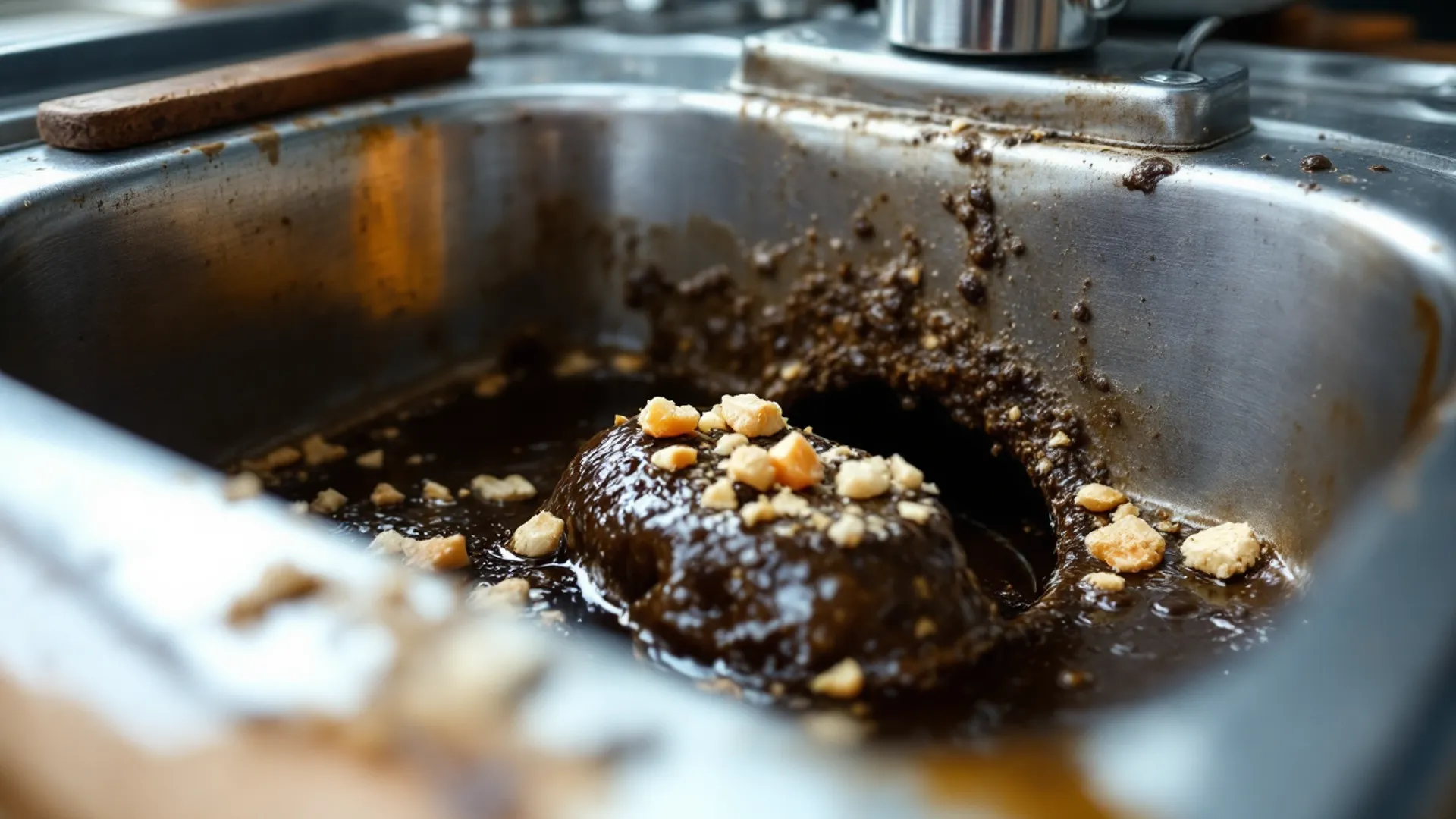
Kitchen drains are the drainage system’s hardest-working component — and its most frequently blocked. Fat, oil, grease, food particles, and soap combine in hot water that cools as it drains, depositing a sticky residue on pipe walls that builds up over months. The result is a classic slow-drain situation that can progress to a complete blockage with little warning.
Why kitchen drains block so often
However, the problem is chemistry and physics combined. Cooking fat and grease are liquid when hot and solid when cool. When you pour cooking water, wash oily pans, or rinse greasy plates, the fat goes down the drain in emulsified form (mixed with the hot water). As it moves through the cooler drain pipe, the emulsion breaks — the fat separates and deposits on the pipe wall.
Additionally, this is a cumulative process. Day after day, a thin layer is deposited. After months or years (longer if there’s strong hot water flushing), the layer builds to the point where flow is restricted. The restriction catches food particles, which catch more grease, and the cycle accelerates until the pipe blocks.
Specifically, the section most commonly blocked is where the pipe changes temperature. Usually a few metres into the underground drain run, where the pipe is no longer heated by the warmth of the kitchen floor.
Signs of a developing kitchen drain blockage
- Water draining slowly from the sink (the classic early sign)
- Gurgling sounds as the sink empties
- Unpleasant smell from the drain (decomposing organic matter trapped in grease deposits)
- Water backing up into the sink when the dishwasher empties
- Multiple kitchen outlets (sink, dishwasher) slow simultaneously
For example, don’t ignore a slow drain — it won’t improve without action and will eventually block completely, usually at the most inconvenient moment.
What you can try first
Boiling water (for modern plastic pipes only): As a result, boiling or near-boiling water dissolves fat deposits temporarily. Pour a full kettle slowly down the drain; repeat if the drain speeds up. Note: don’t use boiling water if you have older clay or cast iron waste pipes — thermal shock can crack the pipe or its joints.
Biological drain cleaner: Meanwhile, enzyme or bacterial-based cleaners (such as Bio-Drain, Mr Muscle Natural Power, or Buster Kitchen Plughole Gel) introduce microorganisms that digest fat and organic deposits. Pour a generous dose down the drain, leave overnight (don’t run water for several hours), and repeat weekly for a month. This is the safest and most appropriate chemical treatment for kitchen drains.
Washing soda (sodium carbonate): Furthermore, a traditional, non-caustic drain treatment. Pour a mug of washing soda crystals down the drain, follow with a kettle of hot water, and leave. Washing soda is alkaline and effectively cuts through grease deposits without damaging pipes.
The kitchen sink plunger: In particular, cup plungers work on kitchen sinks. Ensure there’s water in the bowl to submerge the cup, create a seal over the plughole, and plunge with a firm push-pull motion 10–15 times. The hydraulic action can dislodge a soft blockage.
What not to use: Consequently, caustic drain cleaners (bleach, sodium hydroxide-based cleaners) are marketed as kitchen drain solutions but are relatively ineffective against fat — fat is oily, not the type of organic matter these cleaners dissolve well. They also damage some pipe materials and create hazardous fumes. Avoid.
When DIY isn’t enough
Similarly, if the drain is fully blocked (no flow), or if the slow drain persists after trying the above methods, the blockage has built to the point where professional jetting is needed.
Moreover, a kitchen drain blockage that extends into the underground section requires high-pressure jetting:
- Jetting at 2,000–4,000 psi dislodges and emulsifies any grease deposit
- A jetting nozzle with rear-facing jets also cleans the pipe walls — important to restore the full bore and prevent immediate re-blocking
- Post-jetting, the water should run freely and the drain should smell noticeably better
When to consider a CCTV survey with jetting: However, if the same drain blocks repeatedly (every 3–6 months), there’s usually an underlying reason:
- A partial collapse or displaced joint that’s catching debris
- An offset or sagging section where fat accumulates in a low point
- Root ingress providing a framework for fat to attach to
- Shared drain problems downstream that are returning material to the blockage point
Additionally, cCTV identifies which of these applies so the right long-term solution applied easily.
Grease traps for problem kitchens
For kitchens that have recurring blockages despite regular maintenance, a grease trap (or grease interceptor) provides a physical solution. Fitted under the sink or in a chamber outside the building, a grease trap allows water to flow through while retaining the floating fat layer in the trap body.
Specifically, grease traps are standard in commercial kitchens but fitted easily in domestic properties with chronic grease drain problems. They require periodic emptying (weekly for heavy use, monthly for light use). The retained grease is classified waste and must be disposed of properly, not simply tipped back down the drain.
Prevention: the only long-term solution
For example, kitchen drain blockages are almost entirely preventable with good habits:
Never pour fat down the drain. As a result, let cooking fat, oil and grease cool and solidify in the pan, then scrape it into the bin. Even small amounts of liquid fat (the pan wash-up water) should go through a mesh sink strainer, not straight down the drain.
Use a mesh sink strainer. Meanwhile, these catch food particles before they enter the drain. Empty them after every washing-up session.
Weekly: pour a kettle of hot water down the drain. Furthermore, this re-emulsifies any depositing fat and flushes it through before it can solidify.
Monthly: use a biological drain treatment. In particular, enzyme cleaners maintain the drain by continuously digesting any organic matter that gets through.
Annually: consider preventive jetting. Consequently, for households that cook regularly, annual professional jetting keeps the underground section clean before deposits accumulate to blockage level.