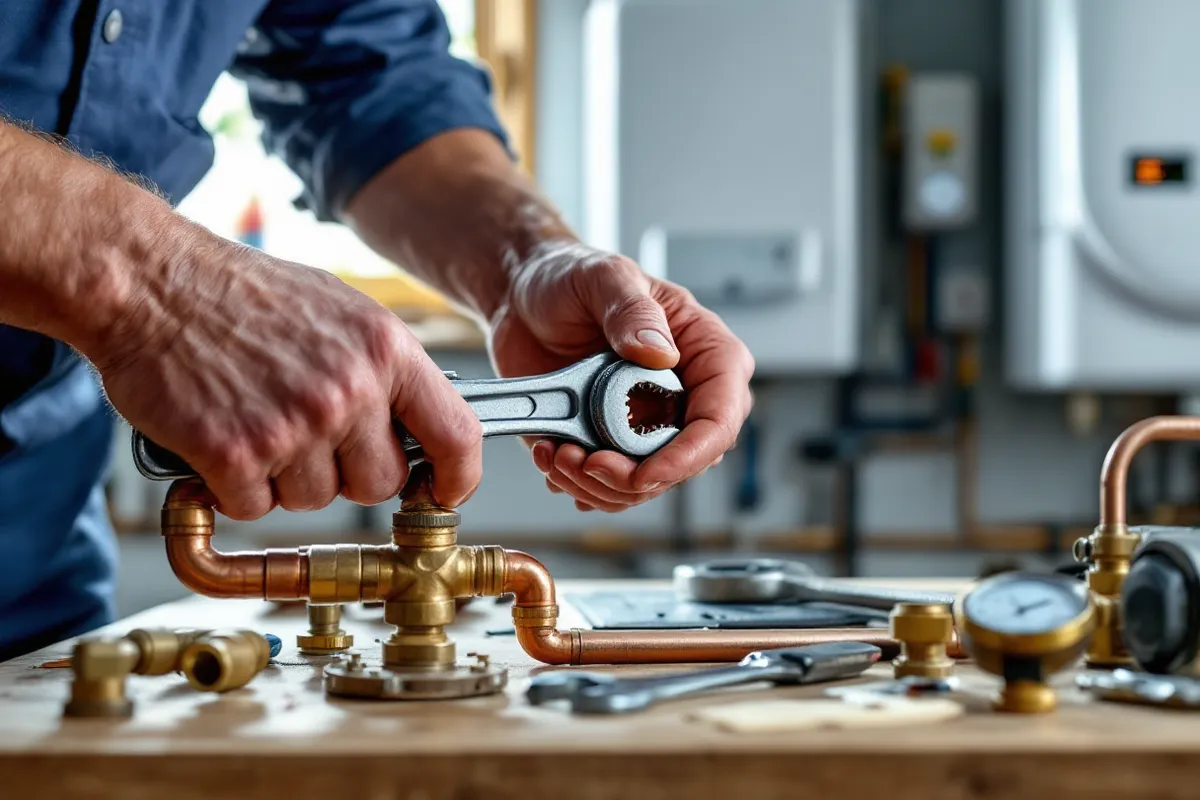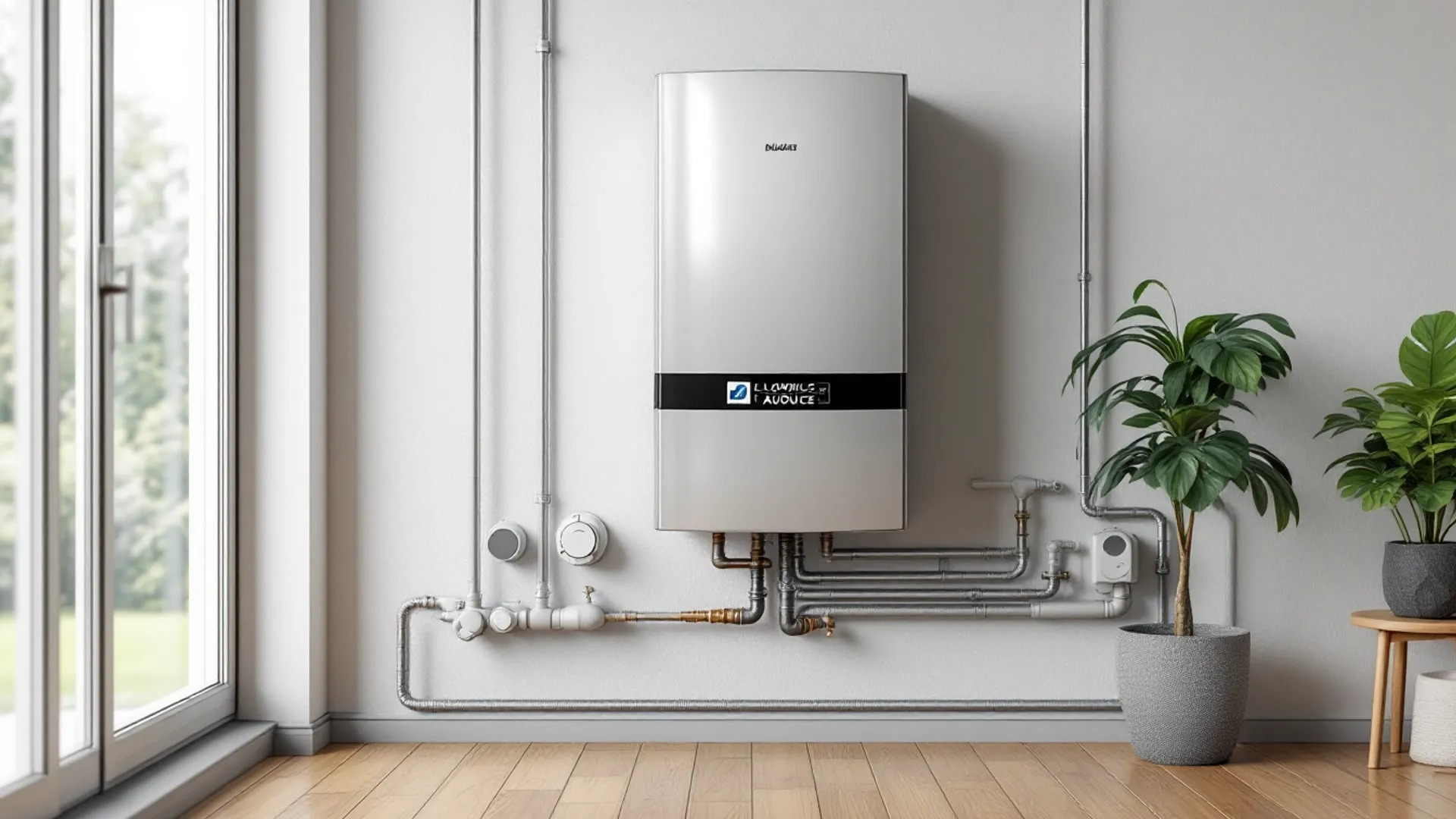
A new boiler is a major household purchase, with a 10-year manufacturer’s warranty if installed and maintained correctly. The choice you make now will heat your home for the next 15–20 years, so getting it right matters. This guide covers the key decision points.
Types of domestic boiler
Combi boiler (combination boiler): However, the most common type installed in UK homes. A combi serves both central heating and domestic hot water from a single unit, heating water on demand directly from the mains supply. There’s no hot water cylinder and no cold water tank — just the boiler.
Additionally, Best for: Most 2–3 bedroom properties with up to 2 bathrooms and a mains water supply with adequate pressure. Properties where a cylinder would take up valuable space. Not ideal for properties with multiple showers running simultaneously (flow rate limitations apply).
System boiler (sealed system): Specifically, heats the central heating circuit via an expansion vessel within the boiler, but stores hot water in a separate sealed cylinder. The cylinder is heated quickly via a coil and hot water is available at mains pressure.
For example, Best for: Medium to large properties (3–5 bedrooms) with multiple bathrooms. Properties where high-flow simultaneous hot water use is required. Where there’s cylinder space available.
Regular/conventional boiler (open-vented or heat-only): As a result, the traditional type, working with a cold water tank in the loft and a hot water cylinder. Almost always the type found in older properties.
Meanwhile, Best for: Replacing like-for-like in older properties where changing the system type would be very expensive. Properties with poor mains water pressure (the gravity head from the loft tank provides adequate pressure). Multi-bathroom properties with high hot water demand.
What size boiler do you need?
Furthermore, boiler output is measured in kW. The right output depends on:
- Number of radiators: Each radiator has a heat output requirement; the boiler must supply all radiators simultaneously
- Property size and insulation: A well-insulated modern house needs less heat output per m² than a Victorian terrace
- Hot water demand: Combi boilers need additional capacity for domestic hot water
In particular, rough guidance for combi boilers:
- Small flat or terrace with 6–8 radiators: 24–28kW
- Medium house with 10–12 radiators, 1 bathroom: 28–32kW
- Larger house with 12–15 radiators, 2 bathrooms: 32–40kW
Consequently, an undersized boiler struggles to maintain temperature on cold days. An oversized boiler is inefficient (it cycles on and off rather than running at a low steady load). A heating engineer should calculate the heat loss of your property and specify the boiler output from first principles.
Key brands and what to know
Worcester Bosch, Viessmann, Vaillant: Similarly, premium brands with strong reliability records, good spare parts availability, and extensive engineer network. Typically carry 5–12 year warranties when fitted by accredited installers.
Ideal, Baxi, Glow-worm, Potterton: Moreover, mid-range manufacturers with good reliability. Less prestigious but well-supported.
Budget brands: However, cheaper initial cost, shorter warranties, limited spare parts availability in the long term. Not recommended for a 15–20 year installation.
Additionally, the brand matters less than correct sizing, correct installation, and annual servicing. A correctly-sized mid-range boiler properly installed will outperform an oversized premium boiler that’s never serviced.
The system flush requirement
Specifically, before installing a new boiler, the existing heating system must be flushed. All major manufacturers require this as a condition of warranty — and most make this explicit in their warranty terms. An installer who doesn’t flush the system before fitting a new boiler is either cutting corners or poorly informed.
For example, the reason: old sludge, rust particles, and flux residues from previous pipework installations can damage a new boiler’s heat exchanger within months. A powerflush clears the system of this material before the new boiler is connected.
As a result, after the powerflush, a magnetic filter is fitted at the boiler return to protect the new appliance continuously. This is now standard practice.
Installation requirements
Meanwhile, a new boiler installation involves:
- Gas Supply: A Gas Safe registered engineer must carry out all gas connections
- Building Regulations notification: New boiler installations are notifiable under Part J (combustion appliances) and Part L (conservation of fuel). An installer registered with a Competent Person scheme (such as Gas Safe) can self-certify; otherwise a separate building regulations application is needed.
- Flue: The flue must be positioned to meet minimum distances from windows, doors, and ventilation (consult Part J Technical Guidance for specific requirements). High-efficiency condensing boilers need a condensate drain.
- Heating system preparation: System flush, magnetic filter, correct chemical inhibitor dosing.
What to look for in an installation quote
Furthermore, a good installation quote includes:
- Supply of the specified boiler (manufacturer and model clearly stated)
- Labour for full installation (including pipework modifications if needed)
- System flush/powerflush (confirm this is included)
- Magnetic filter supply and fit
- Removal and disposal of old boiler
- Flue modifications if required
- Building regulations notification (if not self-certifying)
- Extended warranty registration with the manufacturer
- Gas Safe certificate issued on completion
In particular, what it should not include: surprise extras added after the job starts for items the engineer could have identified on survey.
Considering heat pumps
Consequently, air source heat pumps (ASHPs) are a low-carbon alternative to gas boilers. They extract heat from outside air, amplify it. Deliver it to the heating system at typically 3–4 times the electrical energy input (a COP of 3–4).
The current reality for replacement of gas boilers: Similarly, - ASHPs produce heat at a lower temperature (35–50°C vs boiler’s 70–80°C) and work best with underfloor heating or oversized radiators
- A retrofit into an existing radiator system often requires upgrading radiators throughout the property (significant additional cost)
- Running costs depend on the ratio of electricity to gas price — currently, electricity costs approximately 3–4× gas per kWh, requiring a COP of 3–4 to break even on running costs
- The Boiler Upgrade Scheme provides a £7,500 grant (England and Wales, 2026) to reduce the installation cost
For new builds, well-insulated homes, and properties with underfloor heating, an ASHP is often the right choice. For a poorly insulated property with small radiators, a gas boiler replacement remains the pragmatic choice while the grid decarbonises and radiator upgrade costs fall.
Moreover, get specific advice based on your property’s heat loss, insulation levels, and radiator sizing before committing either way.