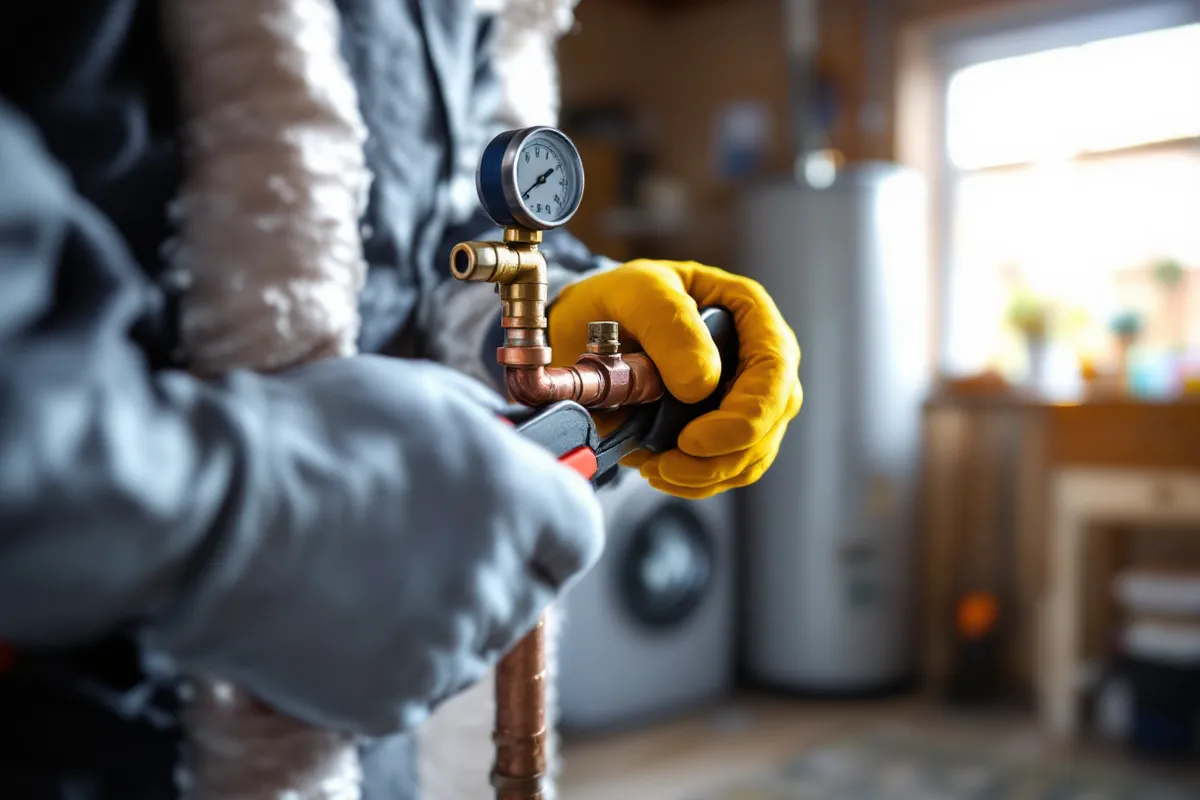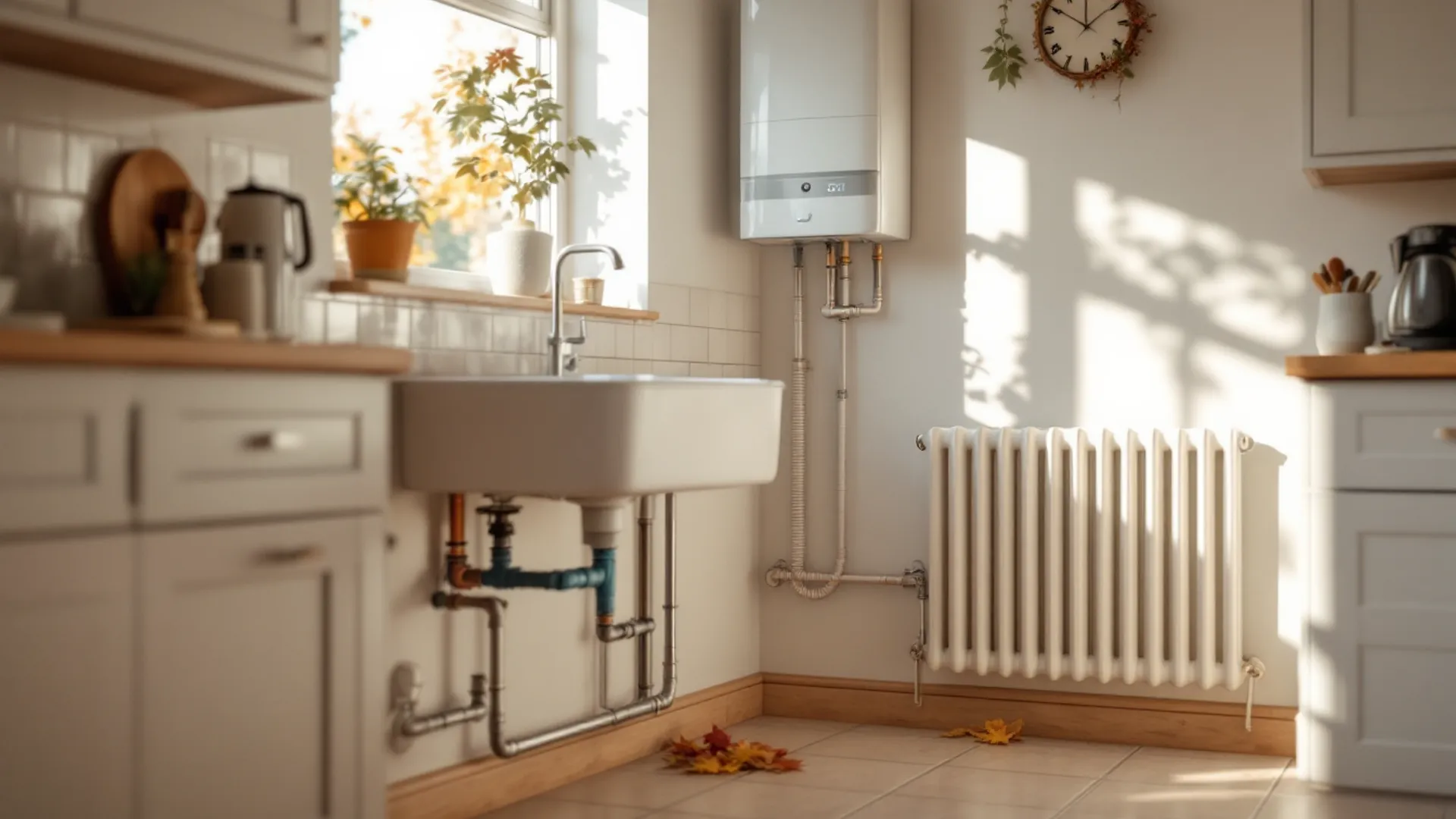
The plumbing emergencies that happen in January and February are almost always preventable with preparation in October and November. Here’s a systematic winterisation checklist for UK homes.
October: heating system preparation
Book the boiler service. However, boiler engineers are busy in November and December; October bookings are available. An annual service catches developing faults before the heating season starts, when a breakdown is most disruptive.
Repressurise the system. Additionally, with the heating off and cold, check the pressure gauge — it should read 1–1.5 bar. Top up via the filling loop if needed. A system that’s already below 1 bar in October will drop further as you start using it.
Bleed all radiators. Specifically, with the heating on and at temperature, check each radiator for cold patches at the top and bleed as needed. A system full of air is inefficient and puts extra load on the boiler.
Check the magnetic filter. For example, clean the filter element (monthly is ideal, but at minimum annually). The black sludge you remove is magnetite that would otherwise circulate through and damage the boiler’s heat exchanger.
Test the programmer and thermostats. As a result, do all the room thermostats call for heat correctly? Does the programmer fire the boiler at the right times? Replace batteries in wireless thermostats before winter.
October: pipe protection
Insulate vulnerable pipe sections. Meanwhile, foam pipe lagging takes an hour to fit and prevents frozen pipes. Focus on:
- Pipes in the loft
- Pipes in an unheated garage or outbuilding
- Pipes against external walls (particularly north-facing)
- The boiler condensate pipe (where it exits through an external wall)
Drain the outside tap. Furthermore, isolate the inside service valve, open the outside tap, and leave it open. Any water in the pipe can drain out; if it freezes, it has no enclosed space to expand into. Fit an insulating cover if you prefer.
Check the header tank in the loft. In particular, if your property has a cold water header tank or central heating header tank in the loft, insulate the tank and the pipework around it. Don’t insulate the floor below the tank — you want some heat from the house to reach the loft space.
November: drainage preparation
Clear the gutters. Consequently, after the main leaf fall (late October/November), clear all gutters. A blocked gutter in winter rain overflows against the wall; in frost, the standing water freezes, expands, and cracks the gutter.
Check downpipes. Similarly, pour a bucket of water into each downpipe and confirm it flows freely to the drain. Listen for any sound of water running inside the wall (indicates a split downpipe).
Clear outdoor gullies. Moreover, lift each gully grate and remove accumulated autumn leaves. A blocked gully in heavy winter rain causes surface flooding.
Check inspection chamber covers. However, a sunken or cracked cover admits soil, frost, and surface water. Replace cracked covers now, not during a winter emergency.
If you’re going away in winter
Don’t turn off the heating. Additionally, set the heating to a minimum setpoint (12°C) rather than turning it off. A frozen pipe in an unheated property is expensive to repair and causes significant water damage. The energy cost of a low-temperature frost setting for 2 weeks is insignificant compared to the cost of a burst pipe.
Tell a neighbour and give them a key. Specifically, if they can check the property every 2–3 days, a slow leak or a frost problem can be caught early.
Turn off the mains water supply (the stopcock under the kitchen sink). If a pipe does fail while you’re away, no water flows from the burst. This limits damage dramatically.
Drain outdoor water features. For example, fountains, irrigation systems, and decorative ponds with pipes above ground should be drained and shut off before the first hard frost.
The emergency kit to have ready
As a result, keep the following available:
- Location of the mains stopcock (written down or photographed)
- Location of the consumer unit (electricity main switch)
- Your boiler manual (for error code reference)
- A radiator bleed key
- Your energy supplier’s emergency number
- A 24-hour emergency plumber’s number
Meanwhile, the middle of a frozen pipe emergency is not the time to search for any of these.
Recognising the warning signs of a developing problem
Condensate pipe accumulation on the boiler: Furthermore, if you can see drips forming on the boiler casing in cold weather, the condensate pipe may be draining slowly or partially blocked. This will cause a lockout in a hard frost. Clear it now.
Gutters pulling away from the fascia: Ice loading from frozen standing water (caused by poor drainage) pulls gutter brackets. Refasten or replace while accessible.
Damp patches on ground floor walls in cold wet weather: In particular, may indicate a drainage overflow from a blockage that only manifests in heavy rain. Investigate the gutters and drains.
Boiler that struggles to maintain temperature: Consequently, a boiler working very hard to maintain temperature suggests a system that’s sludged up, poorly balanced, or undersized for the heat demand. A powerflush before winter can transform efficiency.