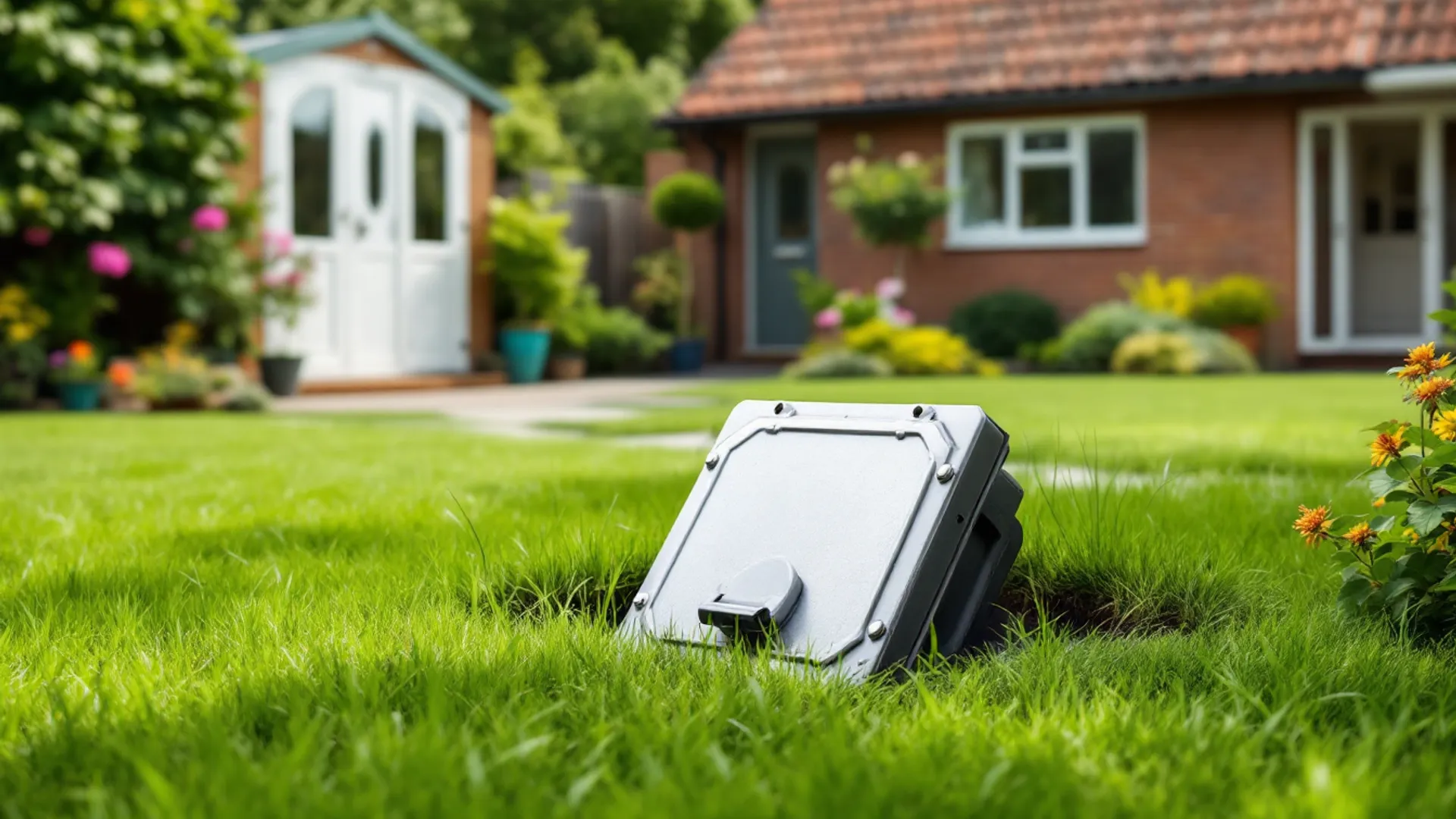
Around one million UK properties — predominantly in rural areas — rely on a septic tank rather than a mains sewer connection. Most owners have a vague awareness that the tank needs emptying periodically. But Few understand what a healthy septic system actually requires and what the signs of failure look like. Getting it wrong can mean a failed system, contamination enforcement from the Environment Agency, and a significant repair or replacement bill.
How a septic tank works
However, a traditional septic tank is a buried two or three-chamber vessel that receives all wastewater from the property. Solids settle to the bottom as sludge. Grease floats to the top as scum; the clarified liquid (effluent) in the middle layer drains out of the tank through an outlet to a soakaway or a drainage field.
Additionally, the bacterial action within the tank partially digests the settled sludge, reducing its volume over time — but not eliminating it. The remaining sludge accumulates and must be pumped out (desludged) periodically.
Important: A traditional septic tank does not fully treat the effluent. It provides primary treatment only — the effluent entering the soakaway is still biologically active and requires the soil to provide secondary treatment (which well-designed soakaways do).
Septic tanks vs package treatment plants
Specifically, a package treatment plant (sewage treatment plant) provides full biological treatment within the tank itself, producing effluent of a quality that discharged easily to a watercourse (with Environment Agency consent). They use electrical pumps and air injection to support active biological treatment.
Difference in practice: For example, - Septic tank: requires a soakaway; cannot discharge to a watercourse; needs desludging once or twice per year
- Package treatment plant: can discharge to a watercourse with consent; requires electrical supply; needs annual service and more frequent maintenance checks
As a result, if your soakaway is failing, a package treatment plant with watercourse discharge may be the only viable alternative to mains connection.
The 2020 General Binding Rules
Meanwhile, the Environment Agency’s General Binding Rules (which came into effect in 2020) changed what septic tanks can legally discharge:
You cannot legally: Furthermore, discharge septic tank effluent directly to a watercourse (ditch, stream, river) — this was previously allowed with registration, but is no longer permitted.
You must: In particular, discharge to a properly designed drainage field (soakaway) that meets BS 6297:2007 standards.
If you were discharging to a watercourse Consequently, before 2020, you were required to either:
- Connect to mains sewer (if available)
- Install a package treatment plant with an appropriate discharge consent
- Redirect effluent to a compliant drainage field
Similarly, the Environment Agency actively investigates complaints about pollution from septic systems. Enforcement can include an improvement notice requiring expensive works within a set timescale, and unlimited fines for ongoing pollution.
How often to desludge
Moreover, as a rough guide:
- Single occupancy, 2,700-litre tank: every 2–3 years
- 2 occupants: every 1–2 years
- 3–4 occupants: annually
- Large households or frequent visitors: twice yearly
However, the actual frequency depends on your specific tank capacity and usage. A sewage contractor can advise after inspection. The rule is never to let the combined sludge and scum layers exceed one-third of the tank capacity. Beyond this, solids begin passing to the soakaway and clog it.
Additionally, a clogged soakaway is a serious failure. Replacing a soakaway is a significant job that requires digging up the drainage field. A failed soakaway on a site with inadequate percolation is a major problem. You may be looking at land drainage improvements or a package treatment plant.
Signs your septic system is failing
Inside the house: Specifically, - Slow draining from sinks, baths, and toilets
- Gurgling sounds from drains
- Sewage backing up — the most serious sign
In the garden: For example, - Wet or boggy patches above the drainage field (effluent coming to the surface)
- Unusually lush, green grass over the soakaway in dry weather (effluent fertilising the grass from below)
- Persistent sewage smell in the garden
Tank itself: As a result, - High sludge level visible when the lid is lifted
- Evidence of solids in the outlet chamber (should be clear effluent only)
- Cracked or damaged tank structure (inspect when desludged)
What to avoid with a septic tank
Meanwhile, septic tank bacterial action is the mechanism that makes the system work. Anything that kills the bacteria causes the system to fail:
Do not put down the drain: Furthermore, - Bleach and disinfectants (in large quantities — occasional household cleaning use is generally fine, but daily cleaning with strong bleach kills the biology)
- Antibacterial soap in large amounts
- Chemical drain cleaners
- Nappies, wipes, sanitary products (these don’t degrade and fill the tank rapidly)
- Cooking oil and grease in large quantities (clogs the soakaway)
- Medications and antibiotics
- Paint, solvents, and chemicals
Do: In particular, use biological laundry detergents rather than chemical ones. Space out large water uses (avoid running dishwasher, washing machine, and bath in quick succession as the hydraulic overload pushes semi-treated effluent to the soakaway).
Annual inspection checklist
Consequently, whether you employ a contractor or do this yourself (with care):
- Measure sludge depth — use a sludge judge (a perforated tube) to measure accumulated sludge; desludge if above threshold
- Check inlet and outlet baffles — cracked or broken baffles allow solids to pass to the soakaway
- Check the tank structure — cracks or subsidence affecting the tank body
- Check inlet and outlet pipes — clear of blockage, correctly seated in baffles
- Check the distribution box (if present) — even distribution to the drainage field
- Observe the drainage field — no surface water, no odours, even grass growth
Similarly, keep a maintenance log with dates and findings. This is required if you ever sell the property and is useful evidence if the Environment Agency investigates.