Most UK households pay for water one of two ways: a fixed charge based on the historical rateable value of their property, or a measured charge based on how much water they actually use. Understanding which applies to you — and whether switching would save you money — can make a meaningful difference to annual household costs.
How water charging works in the UK
However, water billing in England and Wales is handled by regional water companies (Thames Water, Severn Trent, Yorkshire Water, etc.). There is no nationwide standard for billing structures, but all offer both unmetered and metered options.
Unmetered (rateable value): Additionally, based on a property’s rateable value — a historic assessment of the rental value of a property made before 1990 when the rating system was abolished for council tax. The rateable value has no direct relationship to the current market value of your property. You pay a fixed annual charge regardless of how much water you use.
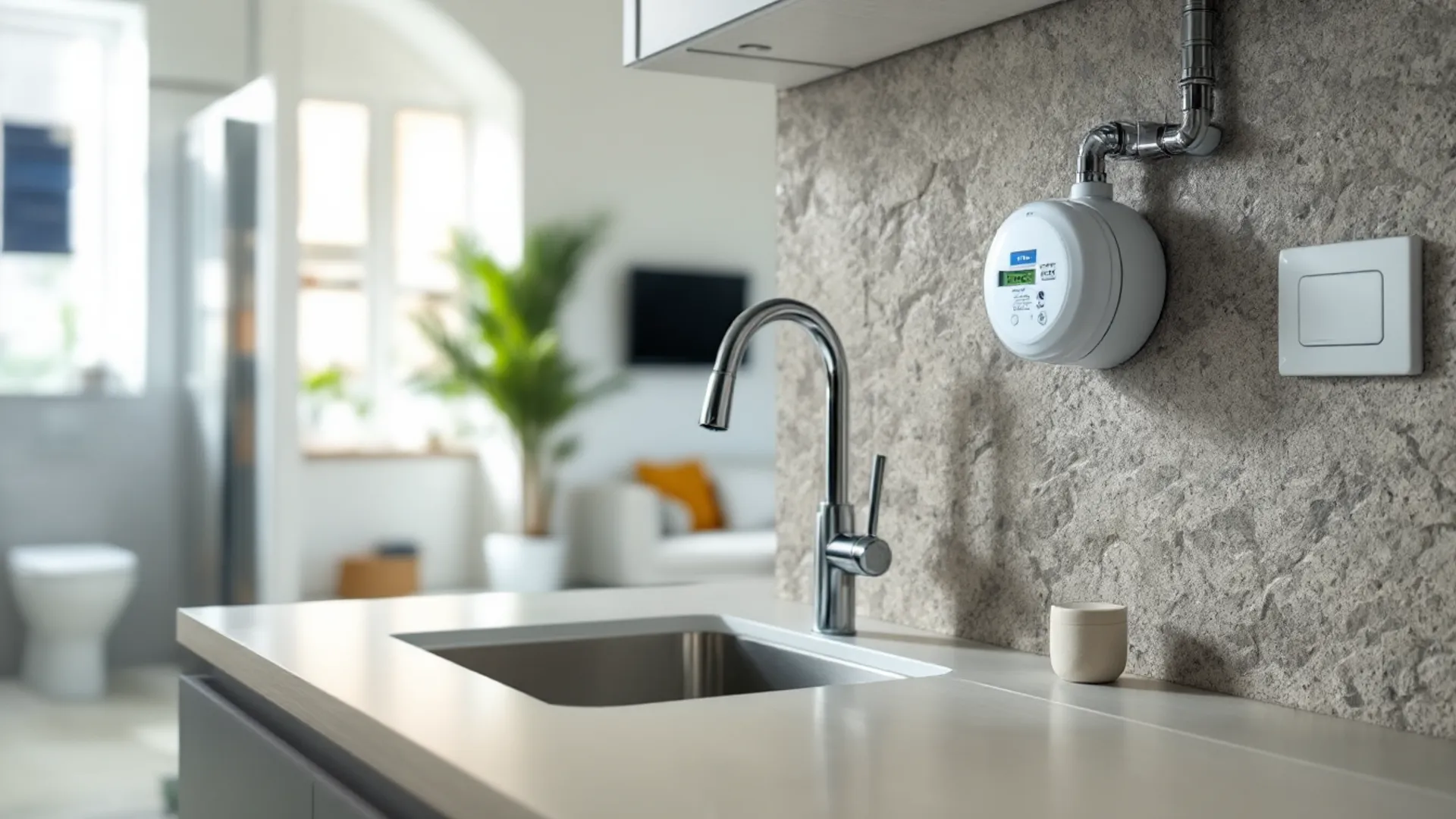
Metered: Specifically, a water meter is installed (usually at the property boundary, sometimes under the kitchen sink for flats). You pay for the water and sewerage you actually use, plus a small standing charge. Billing is typically quarterly or bi-annual.
How to tell which you’re on
For example, your water bill makes this clear:
- Unmetered bill: Shows your property’s rateable value and a charge rate per £ of rateable value. No consumption figure.
- Metered bill: Shows meter readings and a charge per cubic metre of water consumed.
As a result, if you’re unsure, call your water company — they can confirm and tell you your rateable value if unmetered.
Which is better value?
The rule of thumb: a water meter saves money for most households with fewer occupants than bedrooms. This is because unmetered charges are based on property size (roughly), while metered charges reflect actual usage which scales with people, not rooms.
Likely to save on a meter: Meanwhile, - Single person or couple in a 3+ bedroom house
- Households that are careful with water use
- Properties with efficient appliances (AAAA-rated dishwasher, low-flush toilets)
- Second homes or properties left empty for extended periods
Likely to pay more on a meter: Furthermore, - Large families in a small property
- Households with teenagers (long showers, high laundry frequency)
- Properties with gardens that require significant irrigation
- Properties in hard water areas with water softeners (salt regeneration cycles use water)
The calculator approach: In particular, your water company’s website will have a meter calculator. Enter your household size, bathroom count, and usage habits — it estimates your annual bill under each system. Use it before requesting a switch.
How to switch to a meter
Consequently, in England and Wales, most households have the right to request a free meter installation from their water company under the Water Industry Act 1991. The company must install one within a reasonable period.
The trial period: Similarly, you can try a meter for two years. If you’re paying more than you would on the unmetered rate after two years, you can switch back to unmetered charging. After two years, the switch is permanent. This trial right is important — use it before committing.
When a meter can’t be installed: Moreover, in some properties (flats with shared supply pipes, certain older buildings) a meter can’t be installed cost-effectively. In these cases, you may be charged on an “assessed” basis — a fixed charge estimated from household size rather than your property’s rateable value. This is sometimes better than the rateable value charge for large properties.
Reading a water meter
However, water meters read in cubic metres (m³). One cubic metre = 1,000 litres.
Additionally, the meter has a row of digits (black figures) and sometimes decimal digits (red or in a separate register). The black figures are the whole cubic metres used. Read left to right and submit to your water company online or by phone.
To check for leaks: Specifically, turn off all water in the house (taps, appliances, toilets) so nothing should be using water. Read the meter. Wait 30 minutes. Read again. Any movement indicates water is flowing somewhere — either a running toilet cistern, a dripping tap you’ve missed, or a pipe leak. This is the quickest leak detection method available.
Smart meters: For example, some water companies are rolling out smart water meters that transmit readings automatically and allow online monitoring. These also alert customers to unusual consumption patterns that suggest leaks. Check whether your water company offers these.
Water efficiency and meter savings
As a result, if you switch to a meter, these changes have the biggest impact on your bill:
Fix dripping taps: Meanwhile, a dripping tap can waste 15–20 litres per day — around 6m³ per year, a meaningful ongoing cost on a metered supply. More importantly, a dripping tap often indicates worn washers or cartridges that get worse quickly.
Fix running toilets: Furthermore, a continuously running toilet (the cistern that never stops refilling) wastes between 200 and 400 litres per day. On a meter, this adds up to a significant amount in water charges alone. The fix is typically an inexpensive ballvalve or flap valve — one of the highest-return plumbing repairs possible.
Reduce shower time: In particular, the average UK shower uses 10–12 litres per minute. Cutting a 10-minute shower to 6 minutes saves 40–50 litres per shower. For a household with two adults showering daily, that’s roughly 30m³/year saved — a worthwhile saving on a metered bill.
Fit aerators to taps: Consequently, tap aerators mix air into the flow, significantly reducing consumption with no perceptible loss of pressure. Inexpensive, and fitted in minutes.
Dual-flush toilets: Similarly, modern toilets use 2–4 litres for the half flush, 4–6 litres for full flush. Older single-flush toilets use 9–13 litres every flush. A household of four flushing 5 times per day saves over 50m³/year switching to dual flush — a meaningful saving on a meter.
Sewerage charges
Moreover, one point that surprises many households: your water bill includes sewerage charges — the cost of treating and disposing of the water you use. Sewerage charges are a large part of the total bill and are calculated as a percentage of your metered water consumption (on the assumption that roughly 95% of water used in a house goes down the drain). You cannot separately meter sewerage.
However, this means that outdoor water use (garden irrigation, car washing, topping up a pond) is charged for sewerage that it doesn’t actually generate. The water doesn’t re-enter the sewer. If you use significant volumes of water outdoors, this is worth noting when evaluating meter economics.
Key contacts
To request a meter or discuss billing: Additionally, - Thames Water: 0800 316 9800
- Severn Trent: 0800 783 4444
- Yorkshire Water: 0345 1 242 424
- Anglian Water: 0345 791 9155
- United Utilities (North West): 0345 672 3723
- South West Water: 0344 346 1010
- Southern Water: 0330 303 0277
- Wessex Water: 0345 600 3600
Specifically, your water company’s website will also have online meter switch request forms. The Consumer Council for Water (CCWater) provides independent advice if you have billing disputes: 0300 034 2222.