A water softener is the most effective solution to hard water problems in the UK. It removes the calcium and magnesium that causes limescale from the water supply before it enters the property’s plumbing. For homes in hard water areas, particularly in southern and eastern England, a water softener offers measurable benefits in energy efficiency, appliance life, and cleaning effort.
How water softeners work
However, all standard domestic water softeners use an ion exchange resin. The resin consists of tiny beads covered in sodium ions. As hard water flows through the resin column, calcium and magnesium ions (which carry a stronger positive charge) displace the sodium ions and bind to the resin. The water leaving the softener has had its calcium and magnesium removed and replaced with sodium.
Additionally, the resin becomes saturated with calcium and magnesium over time and must be regenerated. Regeneration involves flushing the resin with a concentrated salt solution (brine). This Forces the calcium and magnesium off the resin and replaces them with sodium again. The waste brine (containing the removed calcium and magnesium) is flushed to drain.
What you need for a water softener: Specifically, - A supply of block salt or tablet salt (replenished monthly typically — a 25kg block lasts approximately one month for a household of four in a very hard water area)
- A drain connection for the regeneration waste water
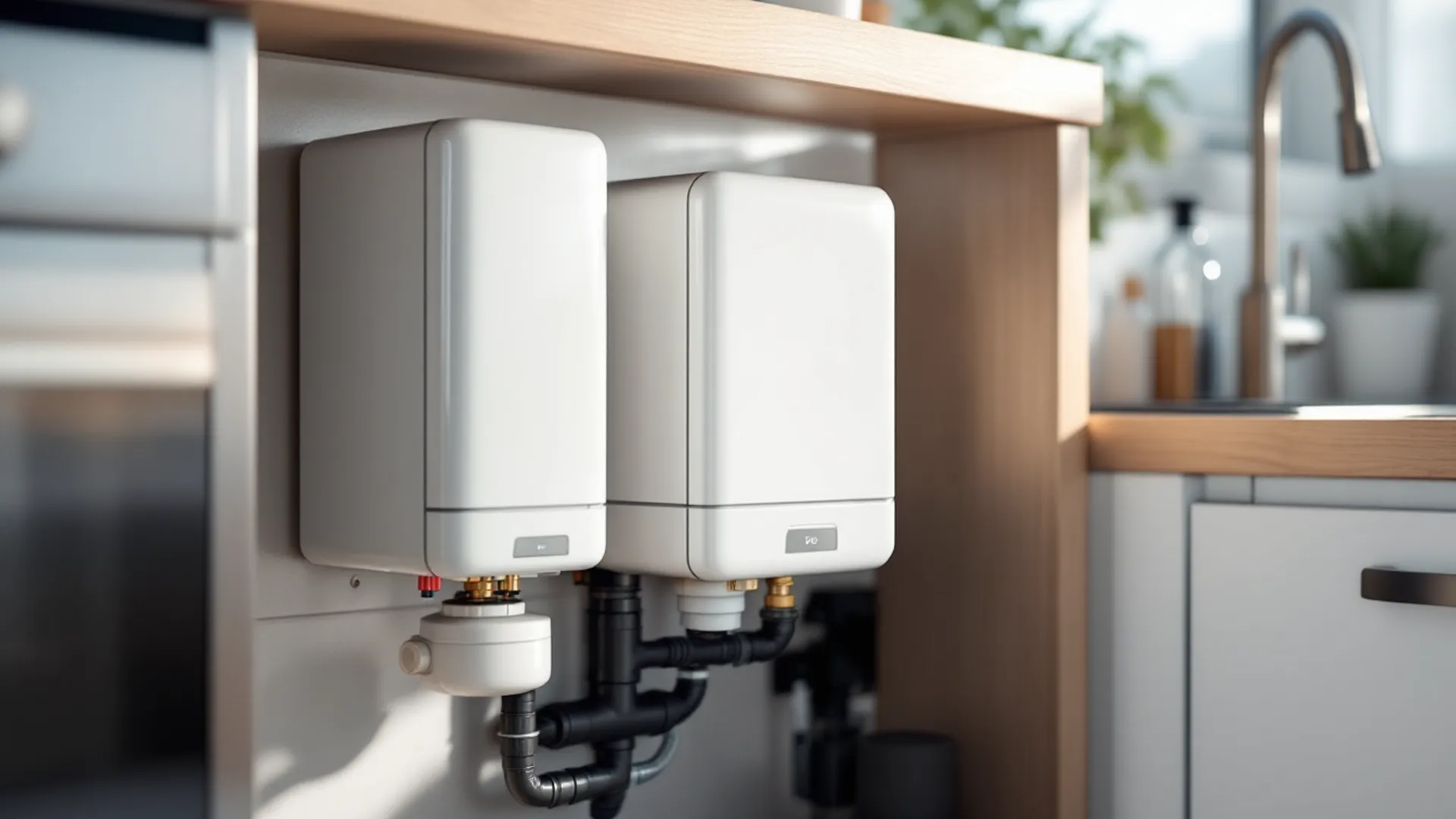
- An installation space (typically under the kitchen sink or in a utility room — a standard unit is the size of a small dishwasher)
- A bypass on the incoming supply so regeneration water doesn’t enter the softened supply during the regeneration cycle
What soft water does and doesn’t change
What changes: For example, - No limescale deposits on taps, showers, tiles, or inside appliances
- Better soap lather (noticeably less soap needed)
- Softened water feels noticeably silkier than hard water
- Central heating efficiency improves (no scale on boiler heat exchanger)
- Kettle elements stay clean
What doesn’t change: As a result, - Taste of drinking water: Some people find softened water tastes different (a slightly saltier character). Most water softeners have a separate unsoftened drinking water outlet at the kitchen sink (a single small tap, run directly from the rising main before the softener). This is standard practice.
- Water pressure and flow
- Water appearance (softened water is clear — it may look slightly different in a bath due to the absence of the chalky film hard water leaves, but it’s not cloudy)
Does soft water taste salty?
Meanwhile, softened water has elevated sodium levels (the ion exchange replaces calcium and magnesium with sodium). The degree depends on water hardness — harder water requires more sodium exchange, producing slightly more sodium in the softened water.
For most adults, the sodium in softened water is nutritionally insignificant. However, for people on medically supervised low-sodium diets, or for making infant formula, the NHS recommends using unsoftened water. This is why the unsoftened drinking water spur is standard — you always have the option.
Types of water softener
Twin-tank (twin cylinder): Continuous soft water supply — one cylinder softens while the other regenerates. More expensive but ideal for higher-consumption households or properties where continuous supply is important.
Single-tank (meter-controlled or timer-controlled): Furthermore, regenerates at set intervals or based on measured consumption. Interrupts supply briefly during regeneration (at night, typically). Suitable for most households.
Block salt units: In particular, the most common in the UK. Salt blocks are loaded directly into the unit. The blocks dissolve slowly, creating the brine solution for regeneration.
Tablet/granular salt units: Consequently, salt tablets or granules are loaded into a salt reservoir separate from the softening vessel. Require periodic checking and refilling.
What installation involves
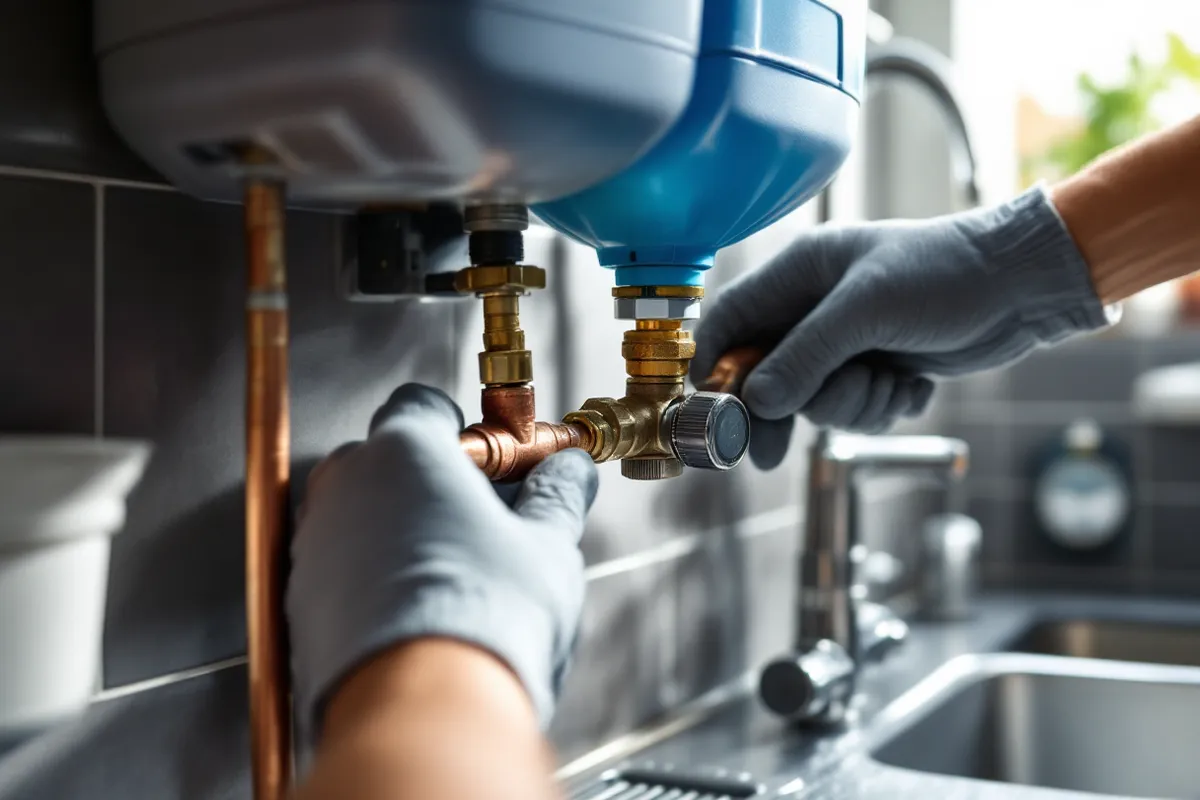
Similarly, water softener installation is plumbing work — not a DIY job for most households (though skilled DIYers sometimes tackle it). A plumber will:
- Identify the installation location (typically where the rising main enters the property)
- Cut into the rising main and install a bypass valve arrangement
- Fit the inlet and outlet connections to the softener
- Run a discharge pipe to the nearest drain
- Commission the unit (set hardness parameters, regeneration cycle timing, initial brine preparation)
Moreover, the plumber should also fit an unsoftened water spur to the kitchen cold tap at the same time if one isn’t already present.
Installation cost: However, price depends mainly on access — a straightforward installation in a standard utility room or kitchen location costs less than a complex one with difficult access or long pipework runs.
Ongoing costs
Additionally, the main ongoing cost is salt:
- Block salt: two 4kg blocks used approximately monthly for an average household in a hard water area
- Water for regeneration: 40–60 litres per regeneration cycle — measurable but not significant in household water budget
Specifically, annual servicing is recommended but not always required — many units run for years without issues. A basic annual check (salt level, brine tank, resin condition) is available from a water treatment specialist.
Value calculation
For example, for a household in a very hard water area, the running cost of salt and occasional servicing is offset over time by savings elsewhere:
As a result, estimated annual savings come from:
- Energy bills (no scale on boiler)
- Cleaning products (less detergent, descaler needed)
- Appliance maintenance and replacement (extended life)
Payback period: Meanwhile, for most hard water area properties, the installation cost is recovered over a few years through these combined savings. After payback, the net annual benefit is positive.
Salt alternatives: potassium chloride
Furthermore, for households where sodium restriction is a concern, potassium chloride used easily instead of sodium chloride (common salt) as the regenerant. This produces potassium ions in the softened water rather than sodium. Potassium chloride costs approximately 2–3× more than sodium chloride.
In particular, potassium is not harmful to most people and is nutritionally beneficial — this option is increasingly popular with health-conscious households.