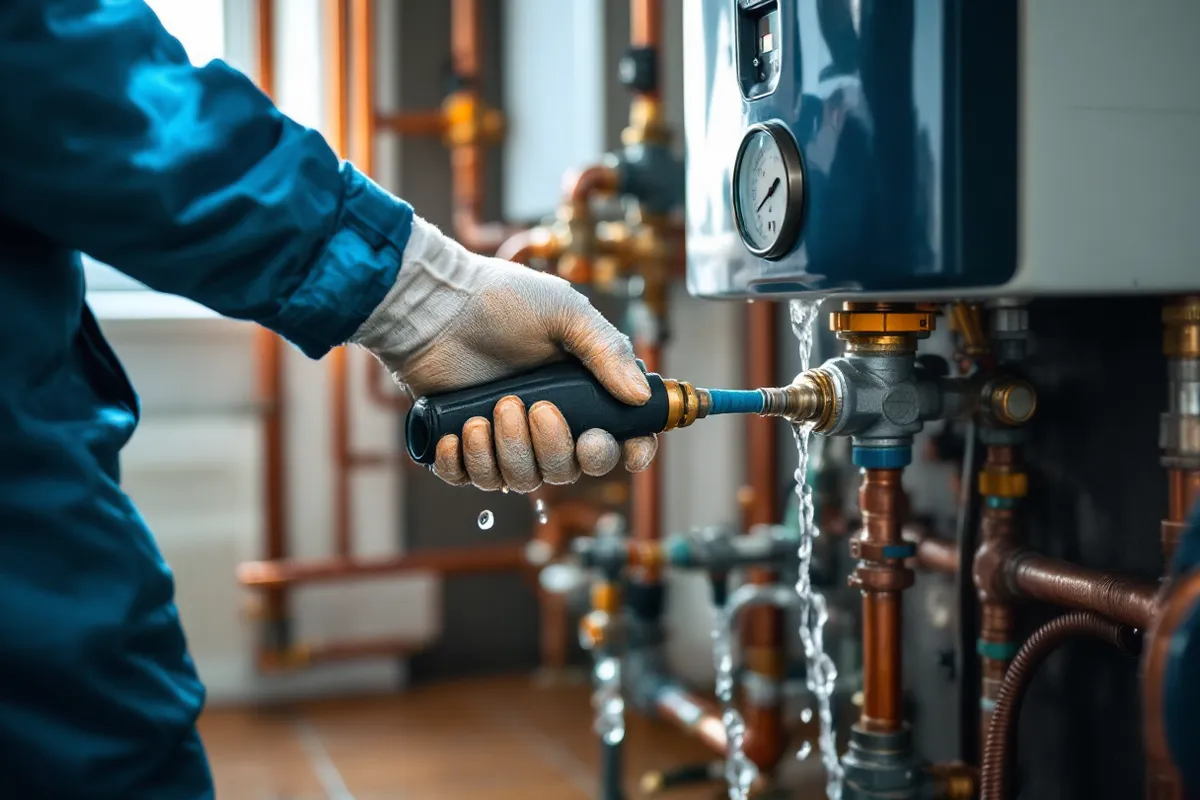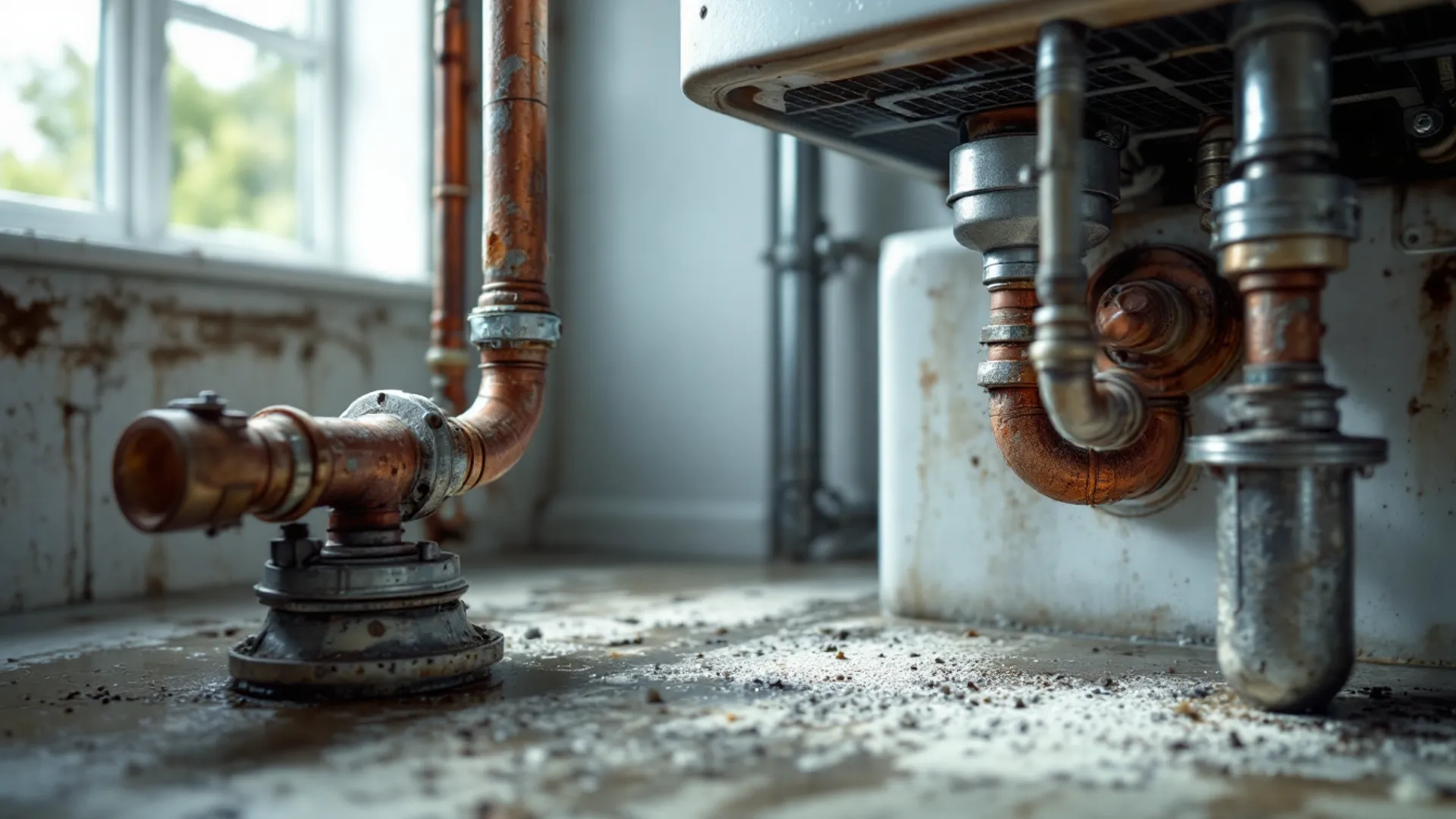
If some radiators do not heat evenly, your boiler is noisy, or the heating takes a long time to warm up, the system may contain magnetite sludge, rust particles or limescale. A powerflush is a machine-led central heating clean that moves water and cleanser through the system at high flow to remove that contamination.
This guide explains what a powerflush involves, when you need one, how it differs from a chemical flush, and how to protect the system afterwards. To book the service, see central heating powerflush.
What is magnetite sludge?
Central heating water is a closed loop. The same water circulates through the boiler, pipework and radiators again and again. Over time, steel radiators and iron components corrode internally and shed tiny iron oxide particles. Those particles combine with other debris to form dark sludge called magnetite.
Magnetite settles in the lowest points of the system, especially the bottom of radiators and low pipe runs. As it accumulates:
- Radiators develop cold patches at the bottom (where sludge sits)
- Flow is restricted, so the boiler works harder to move heat around
- Boiler efficiency drops — you burn more gas for less heat
- Boiler components wear faster — heat exchanger, pump, and zone valves are all affected
Limescale from hard water compounds the problem by forming on heat exchangers and internal surfaces. London, the south east, East Anglia and parts of the east Midlands see this more often, while softer-water areas can still suffer badly from corrosion sludge.
Signs your system needs a powerflush
Radiators have cold spots at the bottom. Cold spots at the top usually mean air. Cold spots at the bottom are the classic sign of settled sludge.
Some radiators do not heat at all. A severe build-up can block an individual radiator or restrict the branch pipe feeding it.
Your boiler makes banging, rumbling or kettling noises. Kettling happens when water boils locally on the heat exchanger surface because flow is restricted by scale or sludge.
The boiler pump fails regularly. Sludge circulating through the pump accelerates wear on the impeller and seals.
Your heating takes a long time to warm up. A contaminated system moves heat slowly even when the boiler fires correctly.
Black water appears when bleeding radiators. Clear or lightly discoloured water is normal. Thick dark water points to corrosion sludge.
You are fitting a new boiler. Many manufacturers require evidence that the existing system was cleaned before installation. Skipping this can create warranty problems.
What does a powerflush involve?
A powerflush machine connects to the heating system, usually through a radiator connection, drain cock or pump connection point. It circulates water and specialist cleanser through every part of the circuit at high flow but controlled pressure.
Stage 1 — Inspect. The engineer checks radiator temperatures, cold spots, boiler condition, system pressure and any weak fittings before work starts.
Stage 2 — Cleanse. A cleaning chemical is circulated to loosen sludge, scale and corrosion debris. MagnaCleanse or equivalent filtration captures magnetic sludge as it moves through the system.
Stage 3 — Flush. Each radiator is isolated and flushed in turn so the full flow passes through the panel and pipe circuit.
Stage 4 — Test and refill. The engineer keeps flushing until the waste water runs clear enough for the system condition, then refills and bleeds the system.
Stage 5 — Inhibit. Corrosion inhibitor is dosed into the clean water. The engineer checks pressure and heat distribution before leaving.
Most domestic powerflush jobs take 5-8 hours. Larger systems, two-zone heating and microbore pipework can take longer.
How much does a powerflush cost?
There’s no fixed price for a powerflush in the UK — larger or more complex systems cost more. The main drivers are radiator count, system condition, access and whether a magnetic filter is being installed.
See our powerflush cost guide for the full price table and quote checks.
Does a powerflush work on every system?
Old radiators with significant corrosion. Similarly, a powerflush will dislodge deposits, but if a radiator is so corroded that the steel panel is perforated or the valve thread is seized, flushing won’t repair the radiator — it will need replacing.
Microbore pipe systems. Moreover, 8mm microbore pipework (common in homes built in the 1970s–80s) can be blocked by dislodged sludge after flushing. An experienced engineer will factor this in and flush gently, but it’s worth discussing with them before starting.
Systems with plastic pipes (underfloor heating). However, the chemicals used in a standard powerflush may damage older plastic underfloor heating pipes. Confirm the pipe material with your engineer first.
Powerflush vs chemical flush
Chemical flush: Cleaner is added to the system and circulated using the boiler’s own pump. It is cheaper and can work on light contamination, but it does not physically force sludge out with the same flow rate.
Powerflush: A separate high-flow machine is connected to the system. Each radiator and pipe circuit is flushed more aggressively, and sludge is captured or discharged until the water runs clear.
Individual radiator flush: If only one radiator is affected, an engineer may remove it and flush it outside. That is not the same as cleaning the full heating system.
If you are deciding between DIY draining and a professional powerflush, read how to drain and flush a central heating system.
Protecting your system after a powerflush
- Dose with corrosion inhibitor — your engineer will do this as part of the flush
- Fit a magnetic filter — captures future particles before they accumulate
- Service the boiler annually — your gas engineer should check inhibitor levels as part of the annual service
- Check for recurring pressure loss — fresh oxygen entering the system speeds up corrosion
- Bleed radiators correctly — repeated bleeding without topping up inhibitor can dilute protection
A well-maintained system with inhibitor and a magnetic filter should not need another full powerflush for many years unless there is a new fault, a boiler replacement, or long-term inhibitor neglect.