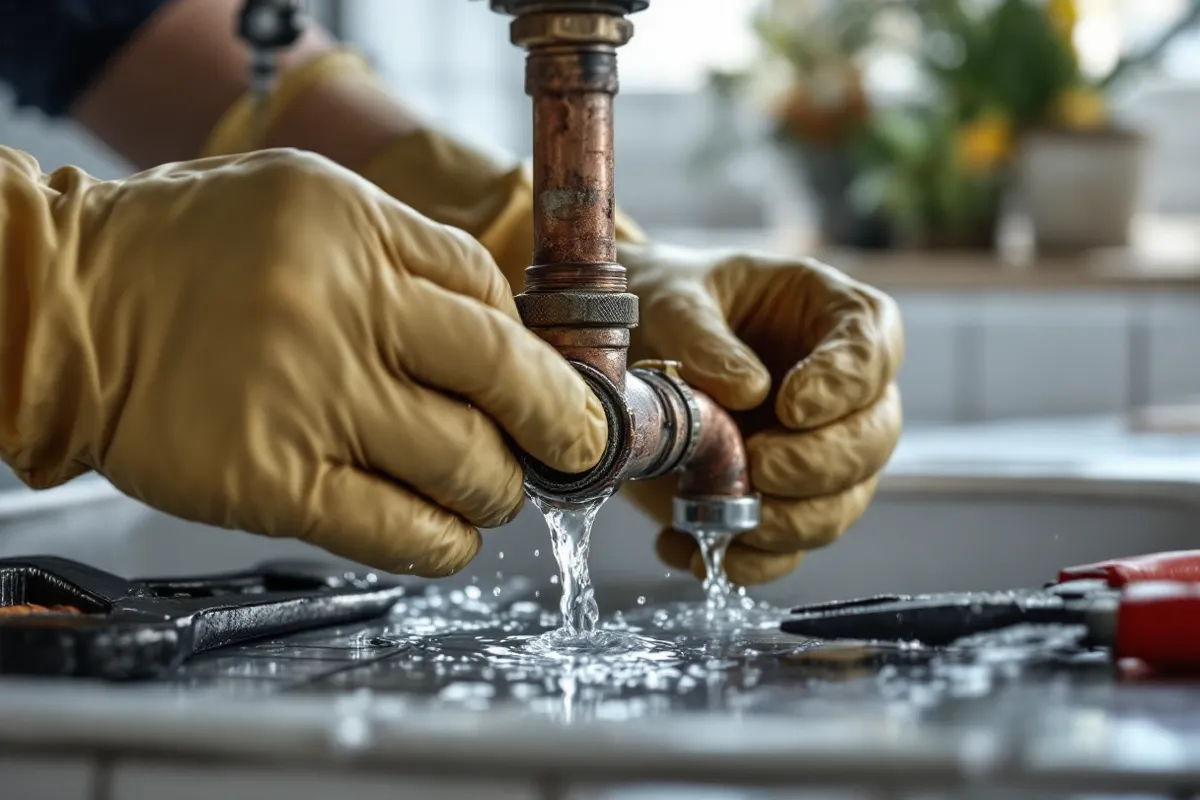
A burst pipe is one of those household emergencies where speed genuinely matters. Water damage compounds quickly — carpets, floorboards, plaster, electrical fittings and structural timbers can all be ruined within minutes. The right sequence of actions in the first half-hour can mean the difference between a minor repair bill and a major insurance claim.
Step 1: Turn off the mains water immediately
However, every adult in your household should know where the mains stopcock is before an emergency happens. In most UK homes it’s under the kitchen sink. But It can also be in an airing cupboard, under the stairs, or in a utility room. Turn it clockwise until it stops — this isolates your supply and cuts water to the burst pipe within seconds.
Additionally, if you can’t find the stopcock, or it’s seized with age, call your water company. They can turn off the supply at the boundary stopcock in the pavement outside your property.
Step 2: Turn off the central heating
Specifically, if there’s any chance the burst pipe is part of your heating system (copper pipes running to radiators, the boiler, or hot water cylinder), switch off your boiler at the main switch or the programmer. Let the system cool before you do anything else.
Step 3: Drain the system
With mains water off, open all the cold taps in the house to drain water from the pipes and reduce the pressure in the system. Flush every toilet once to empty the cisterns. This stops water continuing to drip from the burst while you assess the damage.
For example, if the hot water cylinder is involved, the hot taps will also need to run dry. This can take several minutes.
Step 4: Electricity — act with caution
As a result, water and electricity are a lethal combination. If water is dripping near any electrical fittings, sockets, consumer unit or fuse box:
- Do not touch any switches in the affected area
- Turn off the mains electricity at the consumer unit (typically a large switch at the top) if you can do so safely and if the consumer unit is away from the water
- If you’re in any doubt, stay away from the affected area and call an electrician
Step 5: Contain the water
Bucket, towels, bin liners — anything to contain the spread while you wait for help. Lift carpets away from pools if you can do so safely. Open windows to start drying the space. The faster you reduce standing water, the less secondary damage occurs.
Step 6: Document everything before clearing up
Meanwhile, before you start clearing up, take photographs and video of the damage from multiple angles. Your home insurance company will require evidence, and photographs taken immediately are far more valuable than ones taken after you’ve mopped up.
Step 7: Call an emergency plumber
Furthermore, once water is off and immediate damage is contained, call an emergency plumber. At Drains Cleared, our engineers are available 24/7 and typically arrive within 60 minutes in most UK towns and cities.
In particular, be ready to tell them:
- Where the burst is (which room, which pipe if you know)
- Whether the mains stopcock is off
- Whether there’s any involvement with electrical systems
- What material the pipes appear to be (copper, plastic, lead)
What causes pipes to burst?
Frozen pipes Consequently, are the most common cause in winter. Water expands as it freezes, creating enormous pressure inside the pipe. The burst often doesn’t happen during the freeze — it happens when the pipe thaws, and the crack that formed under pressure opens up.
Corrosion is the second most common cause. Lead pipes (still found in older UK properties, especially Victorian terraces) and old copper pipes corrode from the inside and eventually fail at their weakest point — usually at joints and bends.
High water pressure Similarly, can fatigue pipe joints over years. The legal maximum for UK domestic supply is 7 bar, but mains pressure in some older areas can be higher. A pressure-reducing valve protects your pipework if this is an issue.
Physical damage Moreover, — from DIY drilling, subsidence, or ground movement — can cause an immediate or delayed burst.
Can I repair a burst pipe myself?
Temporary repairs are possible using pipe repair clamps or push-fit emergency connectors for plastic pipes. These are available at hardware stores and can bridge a crack while you wait for a plumber, or buy time if an emergency plumber isn’t immediately available.
However, lead pipes should never be temporarily patched — they need replacement. If you have lead pipes anywhere in your property, particularly the supply pipe from the boundary, speak to your water company about their lead pipe replacement scheme.
After the repair: dry out properly
Additionally, a plumber fixes the pipe. The water damage is a separate issue. Thorough drying is critical — even a small amount of residual moisture in a floor void or behind plasterboard creates ideal conditions for mould within 48 hours.
Specifically, professional drying equipment (dehumidifiers and air movers) hired easily or arranged through your insurer. Don’t re-cover floors or re-plaster walls until moisture readings confirm the structure is dry — typically 3–7 days with equipment running.
Preventing burst pipes in winter
- Lag any pipes in unheated spaces (loft, garage, under-floor void) with foam pipe insulation
- Set your heating to come on at a low temperature (around 12°C) overnight during cold snaps, even when you’re away
- Know where your stopcock is, and test it annually — seized stopcocks are extremely common in older properties
- If going away in winter, ask a neighbour to check the house, or consider a frost thermostat
For example, a burst pipe is disruptive, but it’s rarely a disaster if you act fast and know what to do.