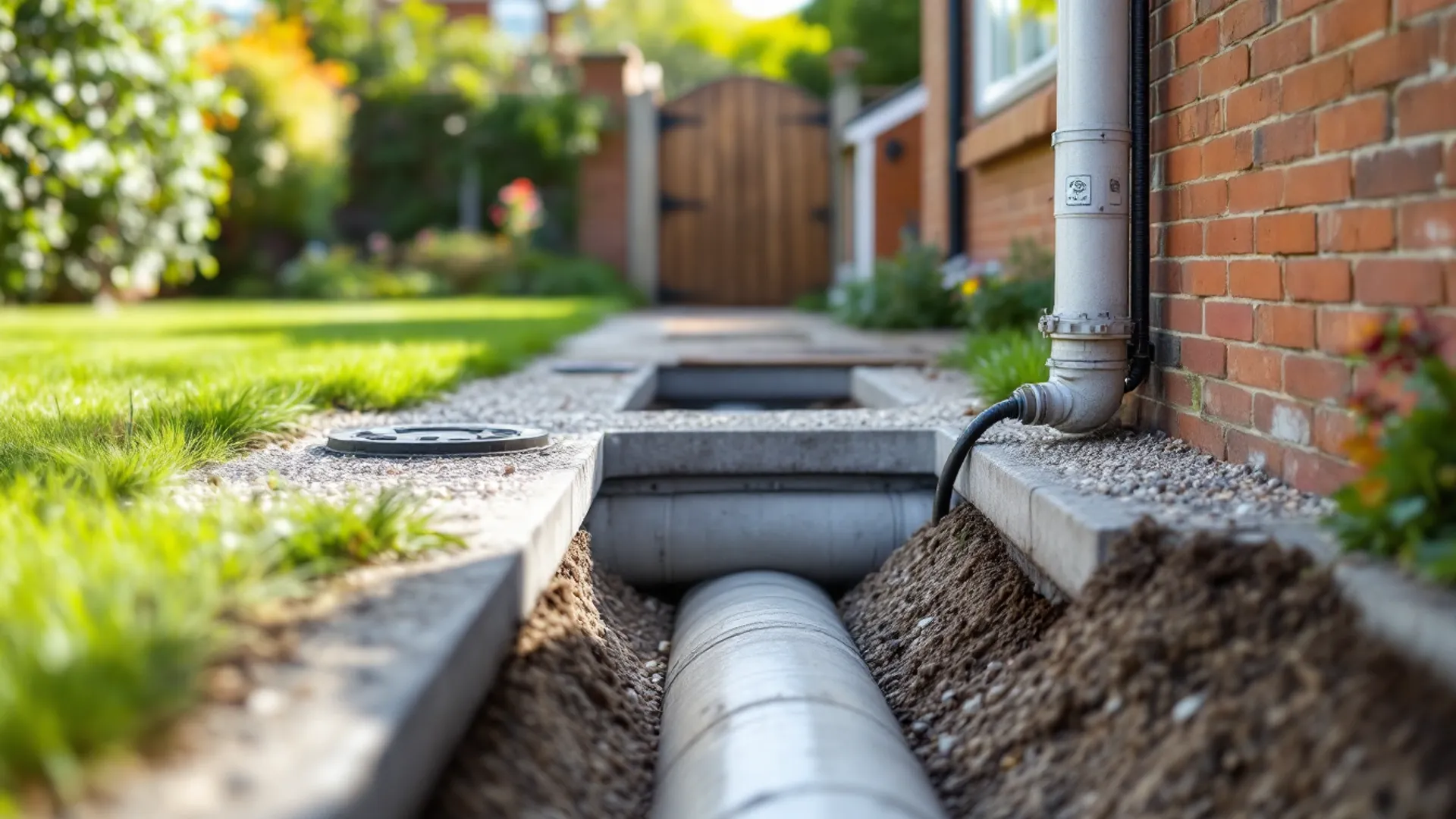
The October 2011 transfer of private sewers and lateral drains to water company ownership was one of the largest infrastructure changes in the UK’s history — but many homeowners still aren’t aware of what changed and, critically, what it means when something goes wrong with their drains.
What transferred in 2011
Before October 2011, sewers and drain connections in private curtilages were the responsibility of individual property owners or groups of owners. The 2011 transfer brought the majority of shared sewers — those serving more than one property — into water company ownership.
Lateral drains (the section of your drain that runs from your property boundary to the public sewer) also transferred to water company ownership.
What remains your responsibility
The drain within your property boundary — from your house to the boundary — remains your responsibility. This includes:
- The drain run from your internal downpipes and waste pipes to the boundary
- Any inspection chambers within your curtilage
- Your section of shared drainage if it serves only your property before leaving your land
When problems occur at a shared inspection chamber visible on OS mapping as public infrastructure, contact your water company. When problems occur within your property boundary, the responsibility is yours.
Why this still causes confusion
The 2011 transfer didn’t change the visible infrastructure — the pipes are in the same place. What changed is who is responsible. Many homeowners call their water company for a drain that’s actually within their curtilage, or assume a drain that crosses a neighbour’s land is a shared sewer (it may not be, if it only serves their property).
A proper drainage CCTV survey, referenced against the sewer records held by your water company (available via a CON29DW drainage search), resolves any ambiguity.
If in doubt, get a survey
Before paying for any repair to underground drainage, establish who owns the pipe. A CCTV survey combined with a drainage search costs far less than remedial works on a drain that’s actually the water company’s responsibility.
We carry out CCTV surveys and can help you interpret the results alongside your water company’s records.