Drains Cleared
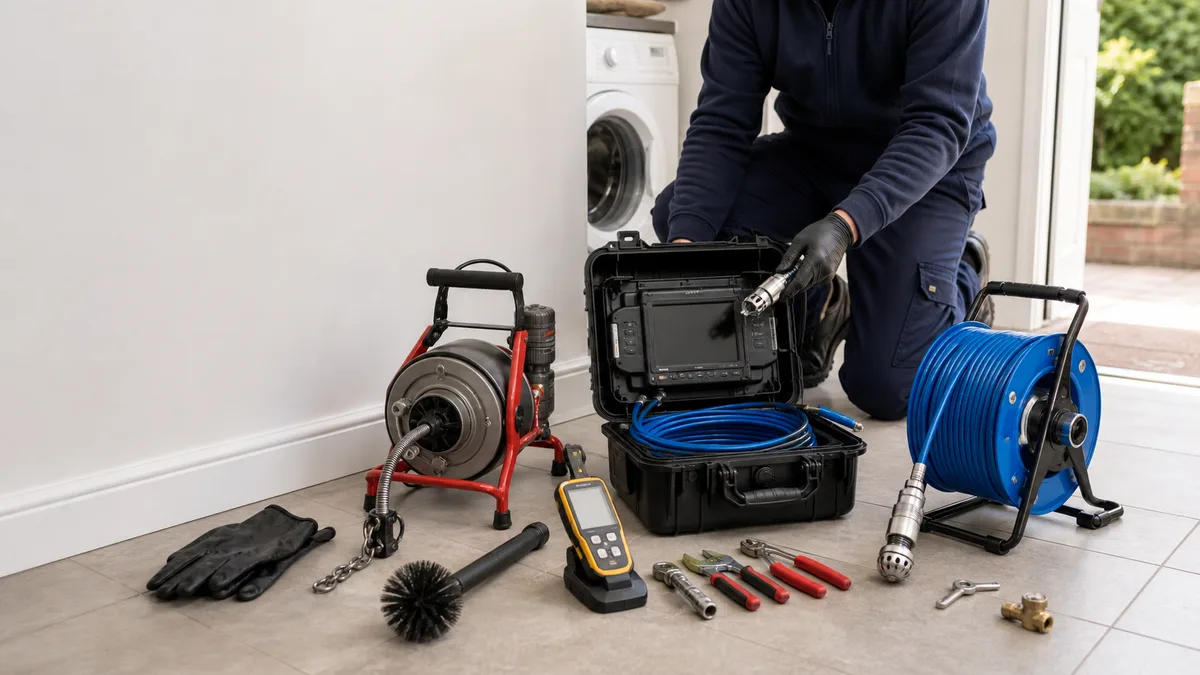
Engineer maintaining commercial drainage equipment in daylight

Drain Maintenance for Landlords and Commercial Properties in Lancaster

Our commercial contracts include a documented compliance pack — something insurers and EHOs specifically ask for, and something most drainage outfits can't supply. Serving LA1, LA2, LA3, LA4.
LA1LA2LA3LA4
We route to vetted local engineers covering LA1, LA2, LA3 and LA4 with a 60-minute response target for drain emergencies across Lancaster and the surrounding area.

Drain Jetting in Lancaster

Lancaster's dense HMO and commercial properties (restaurants, cafes, dental surgeries) in postcodes LA1–LA2 generate high daily drainage loads—up to 10× the volume of a residential home. United Utilities' hard-water supply (pH 7.8–8.0) accelerates limescale buildup in shared pipes, while Lancaster's combined sewer system frequently reaches capacity during wet weather (common in the town's high-flood-risk classification). Preventive maintenance for multi-unit properties and food businesses is not optional—it's a legal requirement and essential risk management in a town where sewer surcharge affects entire street blocks.

Drain maintenance for Lancaster's HMOs and commercial properties (LA1–LA4) is a legal requirement and risk-mitigation practice. Quarterly inspections, annual high-pressure jetting, and grease-trap management prevent combined-sewer surcharge, property damage, Environmental Agency penalties, and loss of HMO licensing—critical in a high-flood-risk town.

Drainage in Lancaster — what local engineers know

Lancaster Council and United Utilities require commercial and multi-let properties to maintain drain integrity to avoid Environment Agency penalties. The town's hard water (pH 7.8–8.0) deposits scale in pipes serving high-volume users: restaurants accumulate grease, HMOs produce combined cleaning/toilet loads, and dental surgeries discharge water-treatment chemicals. Lancaster's combined sewer network (foul + surface water) is frequently surcharged during the wet weather common to the area and the town's high-flood-risk status. LA1–LA2 postcodes, dense with multi-occupancy properties, are most vulnerable. Victorian pipework beneath commercial properties, incompatible with modern drain volumes, requires aggressive preventive treatment. Quarterly drain inspections and annual high-pressure jetting are industry standard for Lancaster's landlord and commercial sector.

  • Soft water supply reduces limescale, but slightly acidic pH can accelerate corrosion of copper fittings and lead joints in older Lancaster properties
  • Combined sewerage infrastructure — common in older parts of Lancaster — means foul and surface water share the same pipe, increasing surcharge risk during heavy rainfall
  • High flood risk in Lancaster: basement and ground-floor properties near watercourses are vulnerable to sewer backflow — non-return valve installation is strongly recommended
  • Large Victorian and Edwardian housing stock in Lancaster means clay soil pipes and brick-built inspection chambers are common — CCTV surveys frequently reveal root ingress and joint displacement

What happens when you call us in Lancaster

  1. 1 Immediate dispatch. We find the nearest available engineer covering LA1/LA2 and confirm the ETA before the call ends.
  2. 2 On-site diagnosis — no guessing. The engineer inspects using professional-grade equipment including CCTV where needed and quotes a fixed price before work starts.
  3. 3 Job complete, report issued. You receive a written completion report. All work is guaranteed — same fault returns within the guarantee period, we come back free.

Who's responsible for drains in Lancaster?

In Lancaster, responsibility for a blocked or damaged drain depends on where the fault sits. As a homeowner you are responsible for the drains within your property boundary that serve only your home. Since the 2011 private sewer transfer, United Utilities is responsible for shared sewers and lateral drains beyond your boundary — even where they run under private land. Road gullies and highway drainage are maintained by Lancaster.

This matters because it determines who pays. If our engineer's CCTV inspection shows the fault is in a shared sewer, we'll tell you — and you can report it to United Utilities rather than paying for the repair yourself. The combined sewer layout that dominates Lancaster affects where these boundaries typically fall, and our local engineers know the LA1, LA2, LA3 networks well enough to identify ownership quickly.

Drain Jetting prices in Lancaster

Every Lancaster job is quoted as a fixed price before work starts — what we quote is what you pay, with no call-out fee for providing the quote. However, the final price depends on access (an external inspection chamber is quicker than internal-only access), the pipe material and condition — significant in Lancaster, where around 26% of homes are Victorian and often run on original clay pipework — and how established the blockage or fault is. Request your free quote and we'll confirm the price and your engineer's ETA in the callback.

In summary, Drain Jetting in Lancaster is backed by a 12-month workmanship guarantee. Furthermore, every job includes a written completion report. Consequently, you have full documentation if the same fault recurs.

About drainage in Lancaster

Local facts our engineers use when they arrive.

Population
10,000
Postcode districts
LA1LA2LA3LA4
Council
Lancaster
Water authority
United Utilities
Flood risk
High — affected watercourses: River Severn, River Avon, River Tame
Property mix
Victorian 26%
Edwardian 14%
Interwar 20%
Postwar 24%
Modern 16%
Sewer type combined
Common local issues
Soft water supply reduces limescale, but slightly acidic pH can accelerate corrosion of copper fittings and lead joints in older Lancaster propertiesCombined sewerage infrastructure — common in older parts of Lancaster — means foul and surface water share the same pipe, increasing surcharge risk during heavy rainfallHigh flood risk in Lancaster: basement and ground-floor properties near watercourses are vulnerable to sewer backflow — non-return valve installation is strongly recommendedLarge Victorian and Edwardian housing stock in Lancaster means clay soil pipes and brick-built inspection chambers are common — CCTV surveys frequently reveal root ingress and joint displacement

This information helps our engineers arrive prepared.

Illustrative example of typical work

Commercial Grease Management Program for 8-Unit HMO, LA1 Lancaster

Area:
Lancaster
Service:
Drain Maintenance & Jetting

An LA1-postcode 8-unit HMO suffered recurrent drain blockages linked to accumulating grease from shared kitchen facilities. The owner faced eviction warnings from Lancaster Council over foul-water surcharges onto the street. We implemented a quarterly drain inspection regime with monthly high-pressure jetting and installed grease-trap maintenance protocols. Within six months, blockages ceased, and the property achieved full environmental compliance—critical for maintaining their HMO license.

This describes typical work performed by engineers in our network. Names and specific details have been omitted to protect customer privacy.

Drain Jetting in Lancaster — FAQs

How often should a multi-unit property in Lancaster have drain maintenance?
HMOs and commercial properties in LA1–LA4 postcodes should have quarterly drain inspections and annual high-pressure jetting. High-traffic sites (restaurants, dental surgeries) may require monthly servicing. Lancaster's hard-water supply accelerates limescale; combined-sewer surcharge risk during wet weather makes preventive maintenance legally and financially essential.
Why do landlords in Lancaster face environmental fines for sewer blockages?
Lancaster's combined sewer system is frequently surcharged during heavy rain (common in the region). Blockages in a single property can force sewage onto the street, triggering Environment Agency complaints to the property owner. Lancaster Council holds landlords responsible for drain maintenance. Quarterly inspections prevent blockages and protect your license and reputation.
How does United Utilities' hard water affect commercial drain maintenance in Lancaster?
United Utilities supplies hard water (pH 7.8–8.0) that deposits calcium and magnesium scale inside pipes serving high-volume users. Restaurants' grease combines with scale; HMOs' detergent use accelerates buildup. High-pressure jetting every 6–12 months is essential to prevent emergency blockages in LA1–LA2 commercial properties and HMOs.
How often should drains be jetted?
Domestic drains benefit from a jet every 12-24 months. High-use commercial kitchens should be jetted quarterly to stay ahead of grease build-up.
Does jetting damage pipes?
No. We match the pressure and nozzle type to the pipe material. That pressure level is safe for clay, cast iron, PVC and concrete in good condition.
What's included in a maintenance contract?
Scheduled visits, jetting of nominated runs, CCTV spot-checks, full digital reporting and priority emergency response at preferential rates.
Is this worth it for a private house?
If you've had more than one blockage in the last two years, yes. A single annual jet is usually cheaper than one reactive emergency callout.

Drain Jetting near Lancaster

We cover towns within and around Lancaster. Click a town to see local engineer availability.

Our Lancaster service area

We route to vetted local engineers covering LA1, LA2, LA3 and LA4 with a 60-minute response target for drain emergencies across Lancaster and the surrounding area. We attend callouts across the LA1, LA2, LA3, LA4 postcode districts. Nearby coverage includes Morecambe, Barrow-in-Furness, Preston, Settle, Chorley.

View Lancaster on Google Maps

Ready to book in Lancaster?

We route to vetted local engineers covering LA1, LA2, LA3 and LA4 with a 60-minute response target for drain emergencies across Lancaster and the surrounding area.

Get your free quote