Drains Cleared
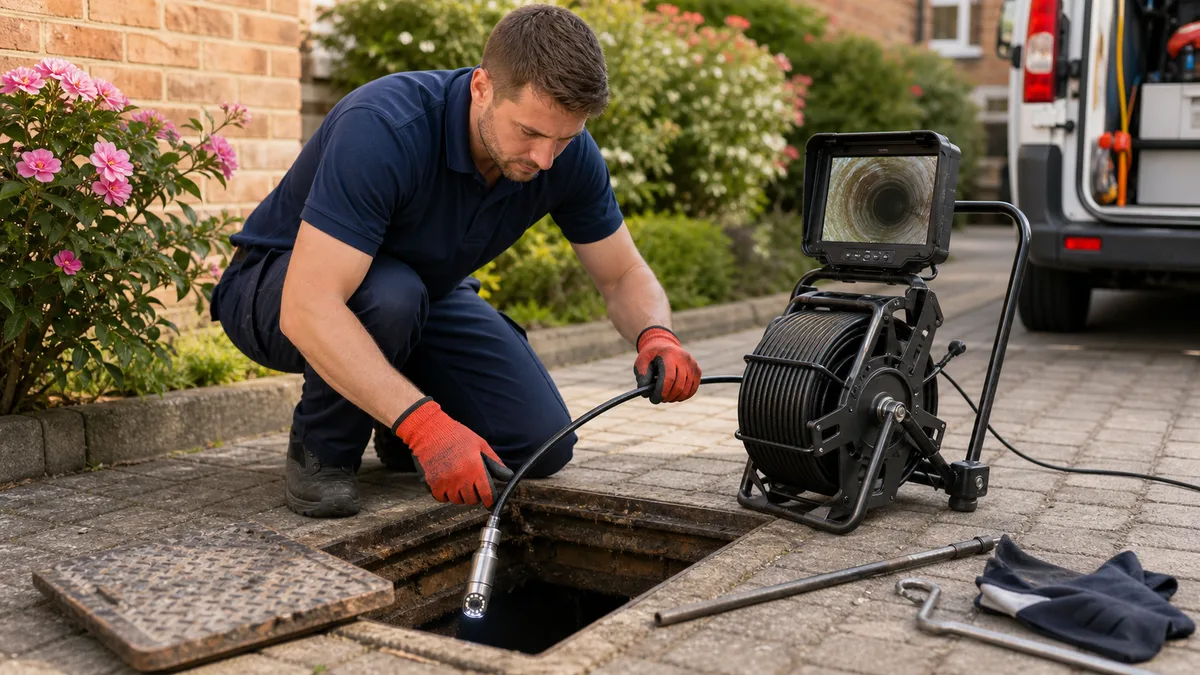
CCTV drain survey camera being fed into an inspection chamber

CCTV Drain Surveys & Diagnostics for Reigate Properties (RH2–RH5)

We produce WinCan-standard reports that banks, surveyors and insurers actually accept — not a phone video and a rough description. Serving RH2, RH3, RH4, RH5.
RH2RH3RH4RH5
0333 772 0123
We route to vetted local engineers covering RH2, RH3, RH4 and RH5 with a 60-minute response target for drain emergencies across Reigate and the surrounding area.

CCTV Survey in Reigate

Reigate's separate sewer system and hard water from Thames Water create distinct drain diagnostics: thick limescale deposits coat older clay pipes, whilst Victorian terraces (20% of stock) sink slowly into Surrey clay, offsetting drain connections and trapping solids. Reigate property buyers (particularly in RH2 and RH3 postcodes where Georgian and Victorian stock dominates) demand CCTV surveys before exchange to avoid £5,000+ repair bills post-completion. Edwardian and modern Reigate homes (14% and 16% respectively) benefit from preventive surveys to confirm misconnection-free plumbing and root-free pipes before problems manifest.

CCTV surveys in Reigate diagnose hard-water limescale buildup (Thames Water supply), subsidence-related offset drains in Victorian properties (RH2–RH3), and tree-root penetration common in Reigate's tree-lined postcodes. Pre-purchase surveys are essential for RH2–RH5 period homes to confirm clay-pipe integrity and avoid £10,000+ remedial costs.

Drainage in Reigate — what local engineers know

Thames Water supplies Reigate RH2–RH5 with moderately hard water (200–250mg/L), causing rapid limescale accumulation in drains—the opposite challenge of soft-water regions. Reigate and Banstead Council monitors the separate sewer network and enforces misconnection removal (washing machines, roof drains plumbed into foul connections trigger £500+ fines). Surrey's London Clay geology causes subsidence in older Reigate properties: Victorian terraces in RH2 frequently show 10–20mm settlement per decade, offsetting drain joints and creating infiltration points where tree roots colonise. Modern Reigate homes (post-1960) were built on pile foundations to mitigate clay movement but often lack proper drain grading, leading to standing water and slow flows.

  • Hard water supply causes limescale accumulation in boilers, radiators and soil pipe joints — powerflush and descaling demand is high across Reigate
  • Separate sewer system across most of Reigate: misconnections (e.g. washing machines plumbed into surface water drains) are a known local issue and can result in environmental enforcement action
  • Ageing infrastructure in parts of Reigate means drain blockages from grease, wipes and root ingress remain the most common call-out reasons
  • With 34% of properties built before 1920, salt-glazed clay drainage and lead-solder copper pipework are common — pipe collapse, root ingress and joint failure are recurring call-out drivers.

What happens when you call us in Reigate

  1. 1 Immediate dispatch. We find the nearest available engineer covering RH2/RH3 and confirm the ETA before the call ends.
  2. 2 On-site diagnosis — no guessing. The engineer inspects using our high-definition camera system and quotes a fixed price before work starts.
  3. 3 Job complete, report issued. You receive a written completion report. All work is guaranteed — same fault returns within the guarantee period, we come back free.

About drainage in Reigate

Local facts our engineers use when they arrive.

Population
10,000
Postcode districts
RH2RH3RH4RH5
Council
Reigate and Banstead
Water authority
Thames Water
Flood risk
Low — affected watercourses: River Thames, River Mole, River Wey
Property mix
Victorian 20%
Edwardian 14%
Interwar 26%
Postwar 24%
Modern 16%
Sewer type separate
Common local issues
Hard water supply causes limescale accumulation in boilers, radiators and soil pipe joints — powerflush and descaling demand is high across ReigateSeparate sewer system across most of Reigate: misconnections (e.g. washing machines plumbed into surface water drains) are a known local issue and can result in environmental enforcement actionAgeing infrastructure in parts of Reigate means drain blockages from grease, wipes and root ingress remain the most common call-out reasonsWith 34% of properties built before 1920, salt-glazed clay drainage and lead-solder copper pipework are common — pipe collapse, root ingress and joint failure are recurring call-out drivers.

This information helps our engineers arrive prepared.

Illustrative example of typical work

Pre-Purchase CCTV Survey Uncovers Collapsed Clay Pipe, RH3

Area:
Reigate
Service:
CCTV Drain Survey

A Victorian end-terrace in Reigate RH3 7NT was scheduled for completion when a routine CCTV survey by the buyer's solicitor revealed a 300mm section of collapsed earthenware drain beneath the rear garden—missed by the RICS survey. Thames Water's hard water had accelerated corrosion of the pipe socket; subsidence due to Surrey clay movement completed the failure. Remedial grouting and liner installation negotiated £8,000 off the asking price.

This describes typical work performed by engineers in our network. Names and specific details have been omitted to protect customer privacy.

CCTV Survey in Reigate — FAQs

Why do Reigate property buyers insist on CCTV surveys?
Reigate's Victorian stock (20% of properties) sits on unstable Surrey clay, causing slow subsidence and drain-joint offset. Hard water from Thames Water accelerates clay-pipe corrosion. A survey reveals hidden collapses, roots, and misconnections before you exchange—avoiding five-figure remedial costs.
What does hard water do to Reigate's drains?
Thames Water's hard supply (200–250mg/L) deposits thick limescale inside clay and ceramic pipes, reducing effective diameter. Combined with tree roots (common in Reigate's tree-lined roads), blockages escalate quickly. Drain descaling and jetting are routine for Reigate properties over 40 years old.
Is subsidence a risk in Reigate RH2 and RH3?
Yes—Victorian and Edwardian properties in Reigate RH2–RH3 sit on London Clay (poorly consolidated) and settle 10–20mm per decade, offsetting drain connections. Modern surveys check for subsidence signals (cracking, settlement cracks, offset drains) and recommend underpinning if risk is high.
How often should Reigate drains be surveyed?
Before purchase (mandatory for Victorian/Edwardian Reigate homes), then every 5–10 years if no issues detected. If you experience slow drains or gurgling, a CCTV survey diagnoses the cause (scale, roots, misconnection, collapse) and guides treatment—often cheaper than emergency unblocking.
How much does a CCTV drain survey cost?
A standard residential pre-purchase survey is a fixed fee that includes the footage, written report and recommendations. Larger commercial surveys are quoted per site.
Do I need a survey before buying a house?
If the property is over 30 years old, has mature trees nearby, or sits on clay pipework, a pre-purchase CCTV survey is strongly recommended and often cheaper than a single future repair.
What's in the report?
A WinCan-compliant PDF with every defect graded, a pipe-run plan, photo stills of each issue and a plain-English summary of what (if anything) needs attention.
Will it identify insurance-claimable damage?
Yes. Our reports are widely accepted by UK insurers and loss-adjusters as evidence for claims involving ingress, collapse or tree-root damage.

CCTV Survey near Reigate

We cover towns within and around Reigate. Click a town to see local engineer availability.

Ready to book in Reigate?

We route to vetted local engineers covering RH2, RH3, RH4 and RH5 with a 60-minute response target for drain emergencies across Reigate and the surrounding area.

0333 772 0123