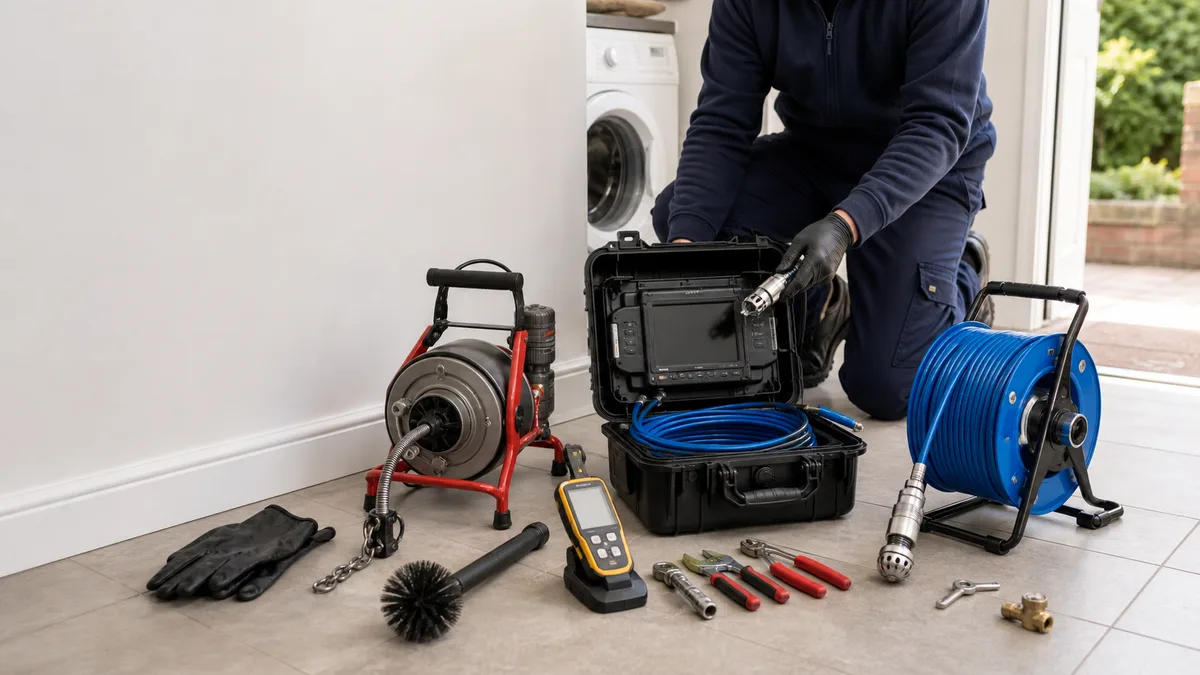
Drain Jetting in Gloucester
Gloucester's dense city centre (GL1) hosts restaurants, offices, and multiple-occupancy housing—each generating distinct drain stress. Commercial kitchens in Gloucester discharge 10–20kg grease weekly; HMO bathrooms in Gloucester see wet-wipe and hair accumulation. Hard-water supply (Anglian Water: 200–250 mg/L) compounds the problem: scale plus grease creates stubborn blockages in Gloucester commercial drains. Routine quarterly maintenance prevents expensive emergency shutdowns across Gloucester's business core.
Gloucester commercial drain maintenance requires quarterly jetting for restaurants, HMO inspections for landlords (GL1–GL3), and descaling every 6 months due to hard-water scale accumulation. Separate sewerage across Gloucester mandates grease interceptor compliance. Regular maintenance costs £150–£400 per visit but prevents £2,000–£3,000 emergency repairs and Gloucester Council licensing violations.
Drainage in Gloucester — what local engineers know
Gloucester's commercial district (GL1–GL2) includes restaurants, hotels, and office buildings served by Anglian Water's hard supply. Separate sewerage in Gloucester requires strict grease/oil separation; restaurants must maintain interceptors or face enforcement. HMOs in Gloucester (GL2–GL3) are now heavily regulated by Gloucester Council; landlords must evidence drain maintenance compliance for licensing renewal. Hard water in Gloucester accelerates scale buildup in grease interceptor outlet pipes—a hidden cost overlooked in annual budgets. Gloucester's aging commercial building stock (pre-1980) often has corroded cast-iron soil stacks; gradual collapse requires early CCTV detection before catastrophic failure. Quarterly jetting and descaling in Gloucester commercial properties costs £200–£400 but prevents £2,000+ emergency call-outs.
- Hard water supply causes limescale accumulation in boilers, radiators and soil pipe joints — powerflush and descaling demand is high across Gloucester
- Separate sewer system across most of Gloucester: misconnections (e.g. washing machines plumbed into surface water drains) are a known local issue and can result in environmental enforcement action
- Ageing infrastructure in parts of Gloucester means drain blockages from grease, wipes and root ingress remain the most common call-out reasons
- With 32% of properties built before 1920, salt-glazed clay drainage and lead-solder copper pipework are common — pipe collapse, root ingress and joint failure are recurring call-out drivers.
What happens when you call us in Gloucester
- 1 Immediate dispatch. We find the nearest available engineer covering GL1/GL2 and confirm the ETA before the call ends.
- 2 On-site diagnosis — no guessing. The engineer inspects using professional-grade equipment including CCTV where needed and quotes a fixed price before work starts.
- 3 Job complete, report issued. You receive a written completion report. All work is guaranteed — same fault returns within the guarantee period, we come back free.