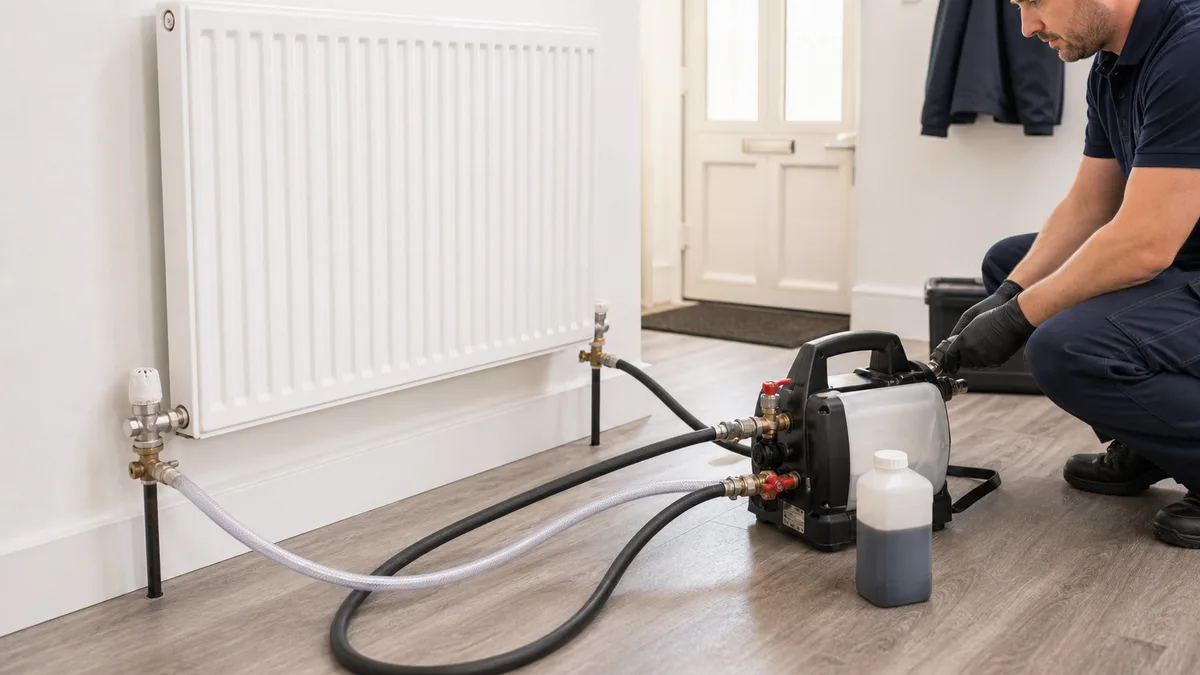
Powerflush in Rochester
Rochester's hard water doesn't just slow drains—it clogs heating systems with calcium sludge, turning your boiler into an inefficient, noisy machine. Radiators stay cold while the boiler overworks. Powerflush in Rochester removes decades of mineral accumulation, restoring heat output and cutting fuel bills. Property owners across ME2, ME3, and ME4 in Rochester face this reality: once heating becomes sluggish, a powerflush is the only solution that works.
Powerflush in Rochester removes calcium sludge from heating systems damaged by hard water, restoring boiler efficiency by 10–20%. Southern Water's hard-water supply makes powerflush essential preventative maintenance for Rochester homes with radiators over 10 years old.
Drainage in Rochester — what local engineers know
Southern Water's hard-water supply to Rochester (over 300 mg/l calcium carbonate equivalent) makes heating system sludge inevitable. Medway Council records show that Rochester's Victorian and Edwardian housing stock (32% of the total) typically has original or 1950s-era radiators still in place—decades of mineral buildup clog pipework and heat exchangers. A typical Rochester house loses 20–30% heating efficiency over 15 years without powerflush. New boilers installed in hard-water Rochester without powerflush fail prematurely, usually within 8–10 years.
- Hard water supply causes limescale accumulation in boilers, radiators and soil pipe joints — powerflush and descaling demand is high across Rochester
- Separate sewer system across most of Rochester: misconnections (e.g. washing machines plumbed into surface water drains) are a known local issue and can result in environmental enforcement action
- Moderate flood risk in parts of Rochester — drainage systems near low-lying areas can surcharge after prolonged rain, and sump pump maintenance is advisable
- Coastal salt-laden air in Rochester accelerates corrosion of external soil stacks, pipe brackets and galvanised fittings on exposed elevations
- With 32% of properties built before 1920, salt-glazed clay drainage and lead-solder copper pipework are common — pipe collapse, root ingress and joint failure are recurring call-out drivers.
What happens when you call us in Rochester
- 1 Immediate dispatch. We find the nearest available engineer covering ME1/ME2 and confirm the ETA before the call ends.
- 2 On-site diagnosis — no guessing. The engineer inspects using professional-grade equipment including CCTV where needed and quotes a fixed price before work starts.
- 3 Job complete, report issued. You receive a written completion report. All work is guaranteed — same fault returns within the guarantee period, we come back free.