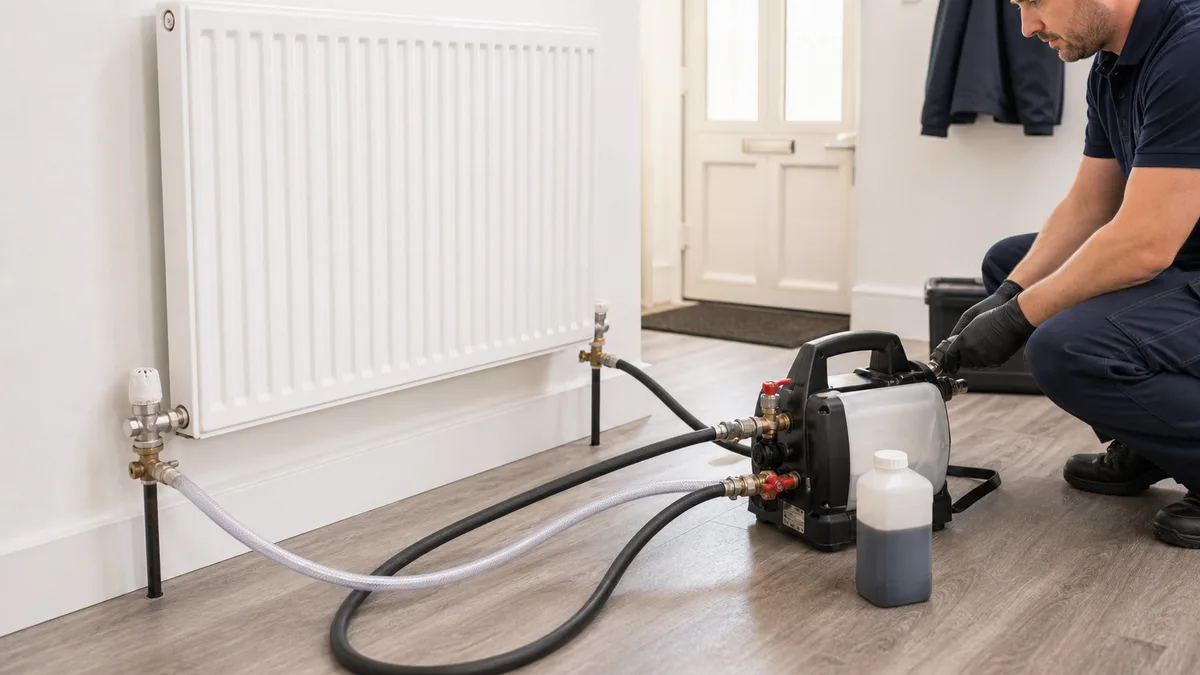
Powerflush in Stranraer
Stranraer's soft-water supply doesn't cause the thick calcium scale common in hard-water areas, but the slightly acidic pH accelerates corrosion, filling heating systems with iron-oxide sludge. Victorian and Edwardian properties across DG9 and DG10 often have decades of accumulated sludge in boilers and radiators, choking heat transfer. A powerflush in Stranraer removes this sludge, restoring heating efficiency and preventing boiler failure. Scottish Water's soft supply means Stranraer properties (especially older ones in DG11–DG12) need sludge management rather than scale prevention.
Powerflush in Stranraer removes iron-oxide sludge caused by soft water corrosion. Stranraer's acidic water supply generates corrosion byproducts that clog boiler heat exchangers. A powerflush restores efficiency 10–15%, improves heating consistency across Stranraer homes, extends boiler life.
Drainage in Stranraer — what local engineers know
Stranraer's water supply from Scottish Water is soft — a benefit for reducing limescale but a liability for heating systems. The slightly acidic pH (6.5–7.0) in Stranraer's supply causes copper and iron corrosion, generating fine metal oxide particles that settle in boiler jackets and radiator tubes. Dumfries and Galloway Council's Stranraer housing stock is heavily weighted toward older properties: 18% Victorian, 10% Edwardian. These Stranraer homes often harbour 20–30 years of sludge buildup. A powerflush clears this debris, improving boiler efficiency by 10–15% and extending boiler life. Scottish Water's mains quality is good, but the corrosion byproducts generated inside Stranraer heating systems require periodic flushing.
- Soft water supply reduces limescale, but slightly acidic pH can accelerate corrosion of copper fittings and lead joints in older Stranraer properties
- Combined sewerage infrastructure — common in older parts of Stranraer — means foul and surface water share the same pipe, increasing surcharge risk during heavy rainfall
- Moderate flood risk in parts of Stranraer — drainage systems near low-lying areas can surcharge after prolonged rain, and sump pump maintenance is advisable
- With 28% of properties built before 1920, salt-glazed clay drainage and lead-solder copper pipework are common — pipe collapse, root ingress and joint failure are recurring call-out drivers.
What happens when you call us in Stranraer
- 1 Immediate dispatch. We find the nearest available engineer covering DG9/DG10 and confirm the ETA before the call ends.
- 2 On-site diagnosis — no guessing. The engineer inspects using professional-grade equipment including CCTV where needed and quotes a fixed price before work starts.
- 3 Job complete, report issued. You receive a written completion report. All work is guaranteed — same fault returns within the guarantee period, we come back free.