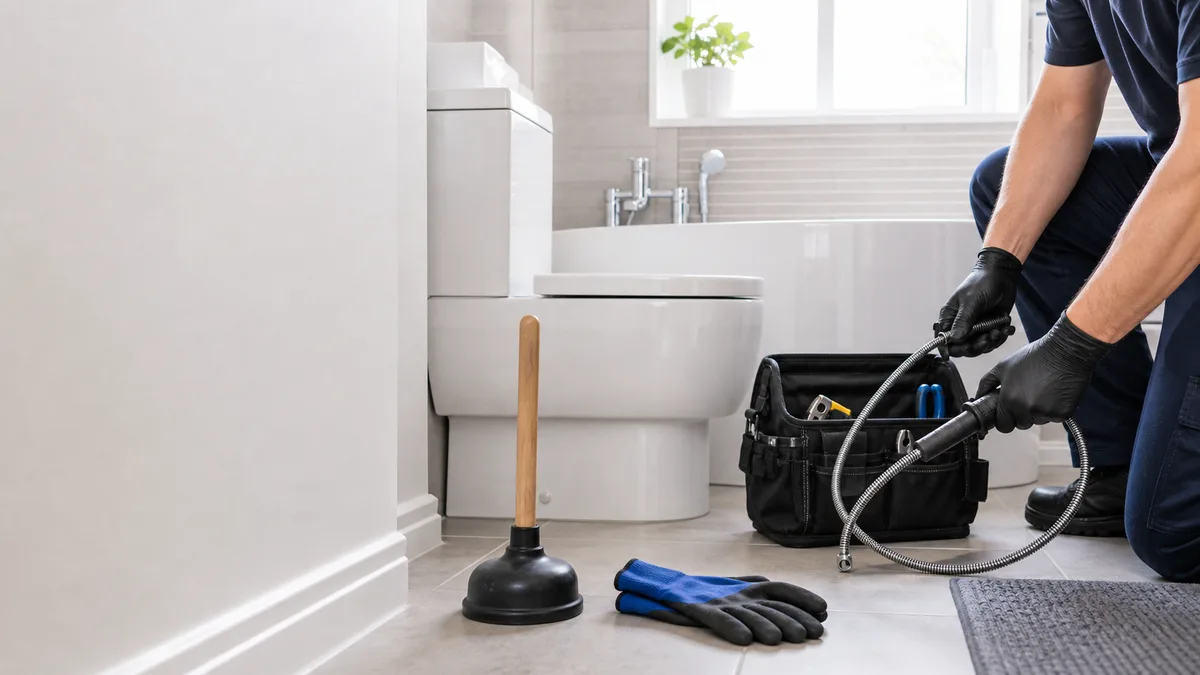
Blocked Toilets in Gateshead
Gateshead's housing stock spans 150+ years: Victorian terraces with high-level cisterns, Edwardian and 1950s properties with low-level pans, and modern flats. Each era brings different toilet challenges. High-level cast-iron or ceramic cisterns in Gateshead Victorian homes (built between 1880–1910) are now antiques requiring specialist handling; low-level cisterns from the 1950s–1990s suffer from corroded metal frames and deteriorating rubber seals. Whether you're restoring period authenticity in a Gateshead NE8 terraced home or upgrading a modern family bathroom, professional installation ensures proper water pressure, drainage alignment, and compliance with current building standards.
Gateshead's Victorian terraces (NE8, NE9) commonly have high-level cisterns; Edwardian and post-war homes have low-level suites. Soft Northumbrian Water supply means rubber seals fail faster, requiring regular maintenance. Whether restoring period authenticity or upgrading, modern toilet installation in Gateshead must comply with water efficiency standards and account for historic low-pressure systems.
Drainage in Gateshead — what local engineers know
Gateshead's diverse housing—24% Victorian, 12% Edwardian, 14% modern—means toilet installation varies significantly by property era and postcode. High-level cisterns are common in NE9 and NE8 Victorian terraces; low-level pan suites dominate NE10 and NE11 post-war developments. Gateshead's soft-water supply from Northumbrian Water means mineral buildup in fill valves is rare, but rubber seals and washers fail faster in soft water (no protective limescale coating), making regular maintenance essential. Gateshead Building Control requires modern toilets to meet water efficiency standards (≤6 litres/flush); retrofit installations in Gateshead Victorian homes must account for low-pressure systems typical of high-level cisterns.
- Soft water supply reduces limescale, but slightly acidic pH can accelerate corrosion of copper fittings and lead joints in older Gateshead properties
- Combined sewerage infrastructure — common in older parts of Gateshead — means foul and surface water share the same pipe, increasing surcharge risk during heavy rainfall
- Large Victorian and Edwardian housing stock in Gateshead means clay soil pipes and brick-built inspection chambers are common — CCTV surveys frequently reveal root ingress and joint displacement
- Coastal salt-laden air in Gateshead accelerates corrosion of external soil stacks, pipe brackets and galvanised fittings on exposed elevations
What happens when you call us in Gateshead
- 1 Immediate dispatch. We find the nearest available engineer covering NE8/NE9 and confirm the ETA before the call ends.
- 2 On-site diagnosis — no guessing. The engineer inspects using professional-grade equipment including CCTV where needed and quotes a fixed price before work starts.
- 3 Job complete, report issued. You receive a written completion report. All work is guaranteed — same fault returns within the guarantee period, we come back free.