Drains Cleared
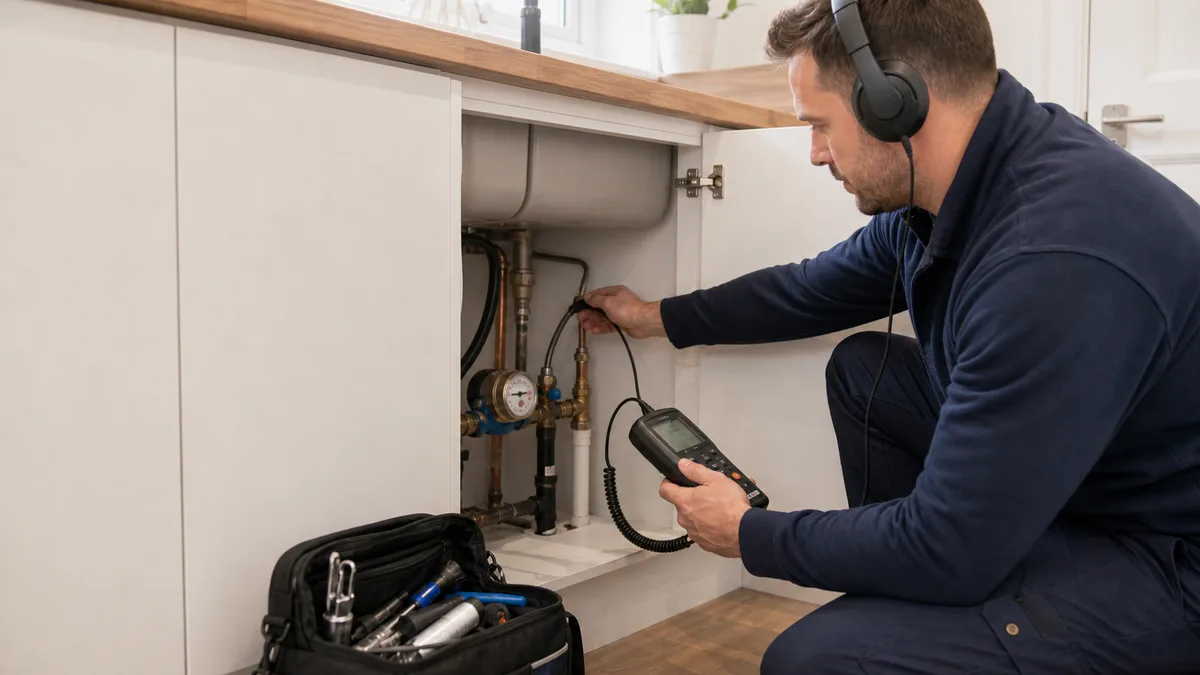
Leak detection engineer using acoustic equipment inside a home

Leak Detection in Wakefield

We detect before we destroy — our non-invasive techniques mean your walls and floors stay intact even when the leak is buried deep. Serving WF1, WF2, WF3, WF4.
WF1WF2WF3WF4
We route to vetted local engineers covering WF1, WF2, WF3 and WF4 with a 60-minute response target for drain emergencies across Wakefield and the surrounding area.

Leak Detection in Wakefield

Wakefield's variable-hardness supply combines with slightly acidic pH to accelerate pinhole corrosion in copper and lead joints—a hidden water loss problem affecting Victorian and Edwardian stock across WF1–WF4. Many Wakefield homeowners notice creeping water bills but never find the visible leak. Underground lateral pipes in older Wakefield properties are equally vulnerable, weeping water into the soil without any sign from inside. Leak detection in Wakefield uses acoustic sensors and dye tracing to pinpoint corrosion before catastrophic rupture.

Leak detection in Wakefield uses acoustic sensors to locate pinhole corrosion in copper pipes and underground laterals. Wakefield's slightly acidic water supply causes hidden water loss in Victorian properties. Detection avoids expensive digging, pinpointing exact corrosion locations in WF1–WF4.

Drainage in Wakefield — what local engineers know

Wakefield is supplied by Yorkshire Water, whose slightly acidic water chemistry promotes pinhole corrosion—a silent but widespread issue across Wakefield's Victorian housing. Wakefield council water conservation campaigns have made residents aware of hidden leaks, driving demand for leak detection services. The dense Victorian terrace stock in Wakefield (WF1–WF2) often features original cast-iron drainpipes alongside modern copper plumbing added during renovations, creating a patchwork of corrosion vulnerability. Acoustic leak detection in Wakefield pinpoints the exact location without invasive digging, saving Wakefield homeowners from expensive excavation and structural disruption.

  • Soft water supply reduces limescale, but slightly acidic pH can accelerate corrosion of copper fittings and lead joints in older Wakefield properties
  • Combined sewerage infrastructure — common in older parts of Wakefield — means foul and surface water share the same pipe, increasing surcharge risk during heavy rainfall
  • Large Victorian and Edwardian housing stock in Wakefield means clay soil pipes and brick-built inspection chambers are common — CCTV surveys frequently reveal root ingress and joint displacement
  • Wakefield has Environment Agency flood warning areas nearby along the River Calder corridor — basement and ground-floor properties can face sewer backflow during heavy rain; non-return valves are strongly recommended.

What happens when you contact us in Wakefield

  1. 1 Immediate dispatch. We find the nearest available engineer covering WF1/WF2 and confirm the ETA before the call ends.
  2. 2 On-site diagnosis — no guessing. The engineer inspects using professional-grade equipment including CCTV where needed and quotes a fixed price before work starts.
  3. 3 Job complete, report issued. You receive a written completion report. All work is guaranteed — same fault returns within the guarantee period, we come back free.

Who's responsible for drains in Wakefield?

In Wakefield, responsibility for a blocked or damaged drain depends on where the fault sits. As a homeowner you are responsible for the drains within your property boundary that serve only your home. Since the 2011 private sewer transfer, Yorkshire Water is responsible for shared sewers and lateral drains beyond your boundary — even where they run under private land. Road gullies and highway drainage are maintained by Wakefield.

This matters because it determines who pays. If our engineer's CCTV inspection shows the fault is in a shared sewer, we'll tell you — and you can report it to Yorkshire Water rather than paying for the repair yourself. The combined sewer layout that dominates Wakefield affects where these boundaries typically fall, and our local engineers know the WF1, WF2, WF3 networks well enough to identify ownership quickly.

Leak Detection prices in Wakefield

Every Wakefield job is quoted as a fixed price before work starts — what we quote is what you pay, with no call-out fee for providing the quote. However, the final price depends on access (an external inspection chamber is quicker than internal-only access), the pipe material and condition — significant in Wakefield, where many homes are Victorian and often run on original clay pipework — and how established the blockage or fault is. Request your free quote and we'll confirm the price and your engineer's ETA in the callback.

In summary, Leak Detection in Wakefield is backed by a 12-month workmanship guarantee. Furthermore, every job includes a written completion report. Consequently, you have full documentation if the same fault recurs.

About drainage in Wakefield

Local facts our engineers use when they arrive.

Population
10,000
Postcode districts
WF1WF2WF3WF4
Council
Wakefield
Water authority
Yorkshire Water
Flood risk
High — affected watercourses: River Calder, Balne Beck, Alverthorpe Beck
Property mix
Victorian Large share
Edwardian Notable share
Interwar Notable share
Postwar Notable share
Modern Notable share
Sewer type combined
Common local issues
Soft water supply reduces limescale, but slightly acidic pH can accelerate corrosion of copper fittings and lead joints in older Wakefield propertiesCombined sewerage infrastructure — common in older parts of Wakefield — means foul and surface water share the same pipe, increasing surcharge risk during heavy rainfallLarge Victorian and Edwardian housing stock in Wakefield means clay soil pipes and brick-built inspection chambers are common — CCTV surveys frequently reveal root ingress and joint displacementWakefield has Environment Agency flood warning areas nearby along the River Calder corridor — basement and ground-floor properties can face sewer backflow during heavy rain; non-return valves are strongly recommended.

This information helps our engineers arrive prepared.

Illustrative example of typical work

Wakefield: Problem Found and Fixed Before It Got Worse

Area:
Wakefield
Service:
Leak Detection

Pricing for leak detection in Wakefield varies with how easy the leak is to trace and how much pipework is affected. Request a free quote online and we'll confirm the price with you before we start — there's no call-out fee. Acoustic leak detection equipment pinpointed a pinhole corrosion site under the kitchen floorboards—typical of Wakefield's slightly acidic water attacking copper elbows. The corrosion was weeping water into the soil at ~60 litres per day, invisible from inside the property. Rerouting supply through new plastic pipework eliminated the leak and restored normal bills in Wakefield.

This describes typical work performed by engineers in our network. Names and specific details have been omitted to protect customer privacy.

Leak Detection in Wakefield — FAQs

Why is pinhole corrosion common in Wakefield?
Yorkshire Water's slightly acidic water supply in Wakefield promotes galvanic corrosion in copper pipes, especially where copper meets brass fittings or dissimilar metals. The Victorian and Edwardian plumbing in Wakefield (WF1–WF4) mixed materials freely, creating perfect conditions for electrochemical attack. Leak detection in Wakefield identifies these corrosion hot-spots before catastrophic rupture.
How does acoustic leak detection work in Wakefield?
Acoustic sensors detect the high-frequency vibrations created when water escapes under pressure from a pinhole or crack in Wakefield pipes. The sensor is moved along the pipe route above ground until the signal peaks, pinpointing the exact leak location in Wakefield. This avoids invasive digging and allows targeted, cost-effective repair in WF1–WF4 properties.
How do you find a leak without digging?
A combination of acoustic listening sticks, thermal cameras, moisture mapping and inert tracer-gas injection lets us triangulate a leak to within a few centimetres before any opening-up is needed.
Will my insurance cover the cost?
Most UK home-insurance policies include 'trace and access' cover for leak detection. We bill the insurer directly on approved claims.
What leaks can you find?
Mains supply leaks, central heating leaks, hot and cold pipework, underfloor heating, shower-tray leaks, and concealed waste-pipe leaks.
How long does a leak-detection visit take?
Typically 1-3 hours on site, followed by a written report within 48 hours suitable for insurance submission.

Leak Detection near Wakefield

We cover towns within and around Wakefield. Click a town to see local engineer availability.

Our Wakefield service area

We route to vetted local engineers covering WF1, WF2, WF3 and WF4 with a 60-minute response target for drain emergencies across Wakefield and the surrounding area. We attend callouts across the WF1, WF2, WF3, WF4 postcode districts. Nearby coverage includes Outwood, Sandal, Walton, Lofthouse, Horbury.

View Wakefield on Google Maps

Ready to book in Wakefield?

We route to vetted local engineers covering WF1, WF2, WF3 and WF4 with a 60-minute response target for drain emergencies across Wakefield and the surrounding area.

Get your free quote