Drains Cleared
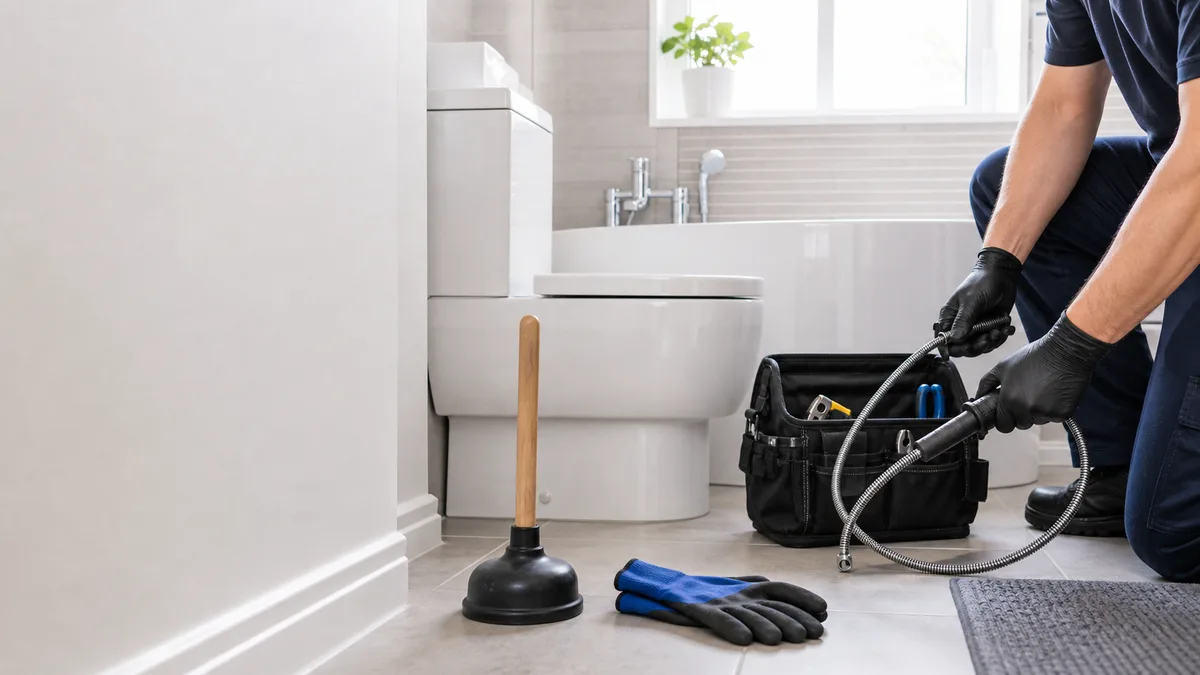
Clean bathroom drainage tools prepared for a blocked toilet callout

Toilet Installation & Repair Across Rye

We clear most blocked toilets without lifting the pan — saving the sealant, tile damage and extra labour most plumbers charge for. Serving TN31, TN32, TN33, TN34.
TN31TN32TN33TN34
We route to vetted local engineers covering TN31, TN32, TN33 and TN34 with a 60-minute response target for drain emergencies across Rye and the surrounding area.

Blocked Toilets in Rye

Rye's Victorian and Edwardian terraces often feature high-level or low-level cisterns requiring specialist knowledge to replace safely. With Rye's separate sewer system and older pipework throughout properties in TN31 and TN32, misaligned toilet connections can cause surface water issues. Our toilet installation and repair service handles everything from Victorian cast-iron soil pipe work to modern low-flush installations across Rye.

Toilet repair in Rye addresses worn flush mechanisms, faulty cisterns, and water seal leaks in Victorian and Edwardian properties. Hard water limescale and misaligned connections in Rye's separate sewer system cause blockages. Modern low-flush unit installation requires soil pipe assessment. Emergency repairs available TN31–TN34.

Drainage in Rye — what local engineers know

Rye sits within Southern Water's supply area, where limescale accumulation in soil pipe joints is a common problem due to hard water. Rother Council oversees the Town's separate sewerage system—a crucial detail because toilet misconnections directly to surface water drains can trigger environmental enforcement. Our technicians understand Rye's split drainage infrastructure and the structural constraints of converting Victorian urinal blocks to modern WC suites. We also advise on water efficiency upgrades in properties built before 1980, where cisterns can consume up to 13 litres per flush.

  • Hard water supply causes limescale accumulation in boilers, radiators and soil pipe joints — powerflush and descaling demand is high across Rye
  • Separate sewer system across most of Rye: misconnections (e.g. washing machines plumbed into surface water drains) are a known local issue and can result in environmental enforcement action
  • Coastal salt-laden air in Rye accelerates corrosion of external soil stacks, pipe brackets and galvanised fittings on exposed elevations
  • With a significant share of properties built before 1920, salt-glazed clay drainage and lead-solder copper pipework are common — pipe collapse, root ingress and joint failure are recurring call-out drivers.
  • Parts of the Rye area fall within Environment Agency flood alert areas along the River Rother corridor — sewer surcharge during prolonged rainfall is a known risk; non-return valves are worth considering.

What happens when you contact us in Rye

  1. 1 Immediate dispatch. We find the nearest available engineer covering TN31/TN32 and confirm the ETA before the call ends.
  2. 2 On-site diagnosis — no guessing. The engineer inspects using professional-grade equipment including CCTV where needed and quotes a fixed price before work starts.
  3. 3 Job complete, report issued. You receive a written completion report. All work is guaranteed — same fault returns within the guarantee period, we come back free.

Who's responsible for drains in Rye?

In Rye, responsibility for a blocked or damaged drain depends on where the fault sits. As a homeowner you are responsible for the drains within your property boundary that serve only your home. Since the 2011 private sewer transfer, Southern Water is responsible for shared sewers and lateral drains beyond your boundary — even where they run under private land. Road gullies and highway drainage are maintained by Rother.

This matters because it determines who pays. If our engineer's CCTV inspection shows the fault is in a shared sewer, we'll tell you — and you can report it to Southern Water rather than paying for the repair yourself. The separate sewer layout that dominates Rye affects where these boundaries typically fall, and our local engineers know the TN31, TN32, TN33 networks well enough to identify ownership quickly.

Blocked Toilets prices in Rye

Every Rye job is quoted as a fixed price before work starts — what we quote is what you pay, with no call-out fee for providing the quote. However, the final price depends on access (an external inspection chamber is quicker than internal-only access), the pipe material and condition , and how established the blockage or fault is. Request your free quote and we'll confirm the price and your engineer's ETA in the callback.

In summary, Blocked Toilets in Rye is backed by a 12-month workmanship guarantee. Furthermore, every job includes a written completion report. Consequently, you have full documentation if the same fault recurs.

About drainage in Rye

Local facts our engineers use when they arrive.

Population
10,000
Postcode districts
TN31TN32TN33TN34
Council
Rother
Water authority
Southern Water
Flood risk
Medium — affected watercourses: River Rother, English Channel, River Brede
Property mix
Victorian Notable share
Edwardian Notable share
Interwar Notable share
Postwar Large share
Modern Notable share
Sewer type separate
Common local issues
Hard water supply causes limescale accumulation in boilers, radiators and soil pipe joints — powerflush and descaling demand is high across RyeSeparate sewer system across most of Rye: misconnections (e.g. washing machines plumbed into surface water drains) are a known local issue and can result in environmental enforcement actionCoastal salt-laden air in Rye accelerates corrosion of external soil stacks, pipe brackets and galvanised fittings on exposed elevationsWith a significant share of properties built before 1920, salt-glazed clay drainage and lead-solder copper pipework are common — pipe collapse, root ingress and joint failure are recurring call-out drivers.Parts of the Rye area fall within Environment Agency flood alert areas along the River Rother corridor — sewer surcharge during prolonged rainfall is a known risk; non-return valves are worth considering.

This information helps our engineers arrive prepared.

Illustrative example of typical work

TN32 Victorian Terrace: High-Level Cistern Restoration & Modern WC Upgrade

Area:
Rye
Service:
Blocked Toilets

A Grade II-listed cottage in TN32 had an original cast-iron high-level cistern with outdated pipework that blocked quarterly. We carefully dismantled the Victorian setup without compromising the property's heritage status, then installed a modern low-flush unit with a concealed cistern. The challenge was rerouting the soil pipe to avoid the separate surface water drain running under the garden—a misrouting that could have cost the homeowner enforcement action from Rother Council. The job revealed a blocked stone drain beneath the kitchen, which we cleared as part of the remedial work.

This describes typical work performed by engineers in our network. Names and specific details have been omitted to protect customer privacy.

Blocked Toilets in Rye — FAQs

What's the difference between high-level and low-level cisterns in Rye?
High-level cisterns are mounted on walls above the toilet pan, common in Victorian and Edwardian properties across Rye (TN31–TN34). Low-level cisterns sit directly behind the pan—a transition that occurred from the 1920s onwards. Rye has significant numbers of both. High-level systems can fail at the elbows and joints where soft copper tubing feeds the pan, especially in areas with hard water limescale. We replace both types and can advise on which modernisation suits your Rye property's age and drainage setup.
Why do separate sewer systems in Rye increase the risk of cistern misconnections?
Rye's separate sewerage means foul drains (from toilets) and surface water drains (from rainwater) are independent. Builders sometimes incorrectly plumb toilet overflows or bidet feeds into the surface water pipe—a violation under Rother Council rules. We identify these during inspections and correct them before they trigger enforcement. Victorian properties in TN31 and TN32 are especially prone to this because the original plumbing predates modern separation standards.
Why does my toilet keep blocking?
The three most common causes are non-flushable wipes, excessive paper use, and partial blockages downstream in the soil pipe that need jetting rather than plunging.
Can you fix a Saniflo or macerator?
Yes. We service and repair all major macerator brands including Saniflo, Sanivite and Grundfos, and carry common replacement parts on the van.
Will I have to remove the toilet?
Almost never. We use closet augers and micro-jetting heads that clear the vast majority of blockages through the pan itself.
Is a blocked toilet dangerous?
It can be. Overflowing waste water carries bacterial contaminants, so a prolonged blockage should always be treated as urgent, especially in commercial premises.

Blocked Toilets near Rye

We cover towns within and around Rye. Click a town to see local engineer availability.

Our Rye service area

We route to vetted local engineers covering TN31, TN32, TN33 and TN34 with a 60-minute response target for drain emergencies across Rye and the surrounding area. We attend callouts across the TN31, TN32, TN33, TN34 postcode districts. Nearby coverage includes Tenterden, Hastings, Hawkhurst, Battle, Bexhill-on-Sea.

View Rye on Google Maps

Ready to book in Rye?

We route to vetted local engineers covering TN31, TN32, TN33 and TN34 with a 60-minute response target for drain emergencies across Rye and the surrounding area.

Get your free quote