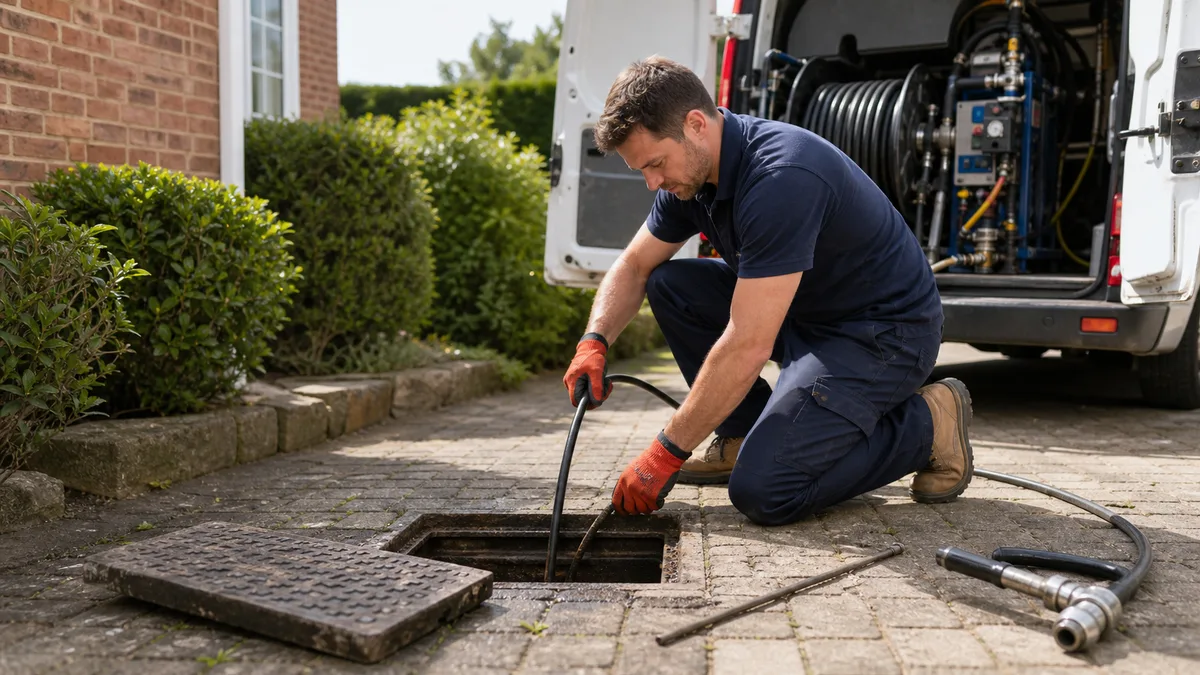
Blocked Drains in Canterbury
Canterbury's separate sewer system and mix of older clay pipes and mid-20th century properties create specific blockage patterns. Hard water from Southern Water's supply accelerates limescale buildup in soil pipes, while misconnections — washing machines plumbed into surface drains — are a recurring issue in the CT1 to CT4 postcodes. Root ingress and joint collapse are common in pre-1920 properties across the council area.
Canterbury's separate sewer system makes misconnections common—washing machines plumbed into surface drains cause blockages quickly. Hard water limescale and root ingress in properties with pre-1920 clay pipes are also frequent causes. We serve all postcodes CT1-CT4 with fast diagnosis and clearance.
Drainage in Canterbury — what local engineers know
Canterbury has a High flood risk designation from the Environment Agency — Kent, with properties near the River Medway, River Stour and River Darent particularly vulnerable to sewer backflow during heavy rain. Southern Water's separate sewer infrastructure means blockages often stem from misconnected appliances or fats accumulating in main lines, rather than external root damage alone. The council area has 32% of properties built before 1920, many with salt-glazed clay drainage that can collapse or develop root ingress after decades of settlement and tree growth. Hard water supply causes additional limescale accumulation in radiator systems and joint connections, creating secondary blockage risks.
- Hard water supply causes limescale accumulation in boilers, radiators and soil pipe joints — powerflush and descaling demand is high across Canterbury
- Separate sewer system across most of Canterbury: misconnections (e.g. washing machines plumbed into surface water drains) are a known local issue and can result in environmental enforcement action
- High flood risk in Canterbury: basement and ground-floor properties near watercourses are vulnerable to sewer backflow — non-return valve installation is strongly recommended
- Coastal salt-laden air in Canterbury accelerates corrosion of external soil stacks, pipe brackets and galvanised fittings on exposed elevations
- With 32% of properties built before 1920, salt-glazed clay drainage and lead-solder copper pipework are common — pipe collapse, root ingress and joint failure are recurring call-out drivers.
What happens when you call us in Canterbury
- 1 Immediate dispatch. We find the nearest available engineer covering CT1/CT2 and confirm the ETA before the call ends.
- 2 On-site diagnosis — no guessing. The engineer inspects using professional-grade equipment including CCTV where needed and quotes a fixed price before work starts.
- 3 Job complete, report issued. You receive a written completion report. All work is guaranteed — same fault returns within the guarantee period, we come back free.