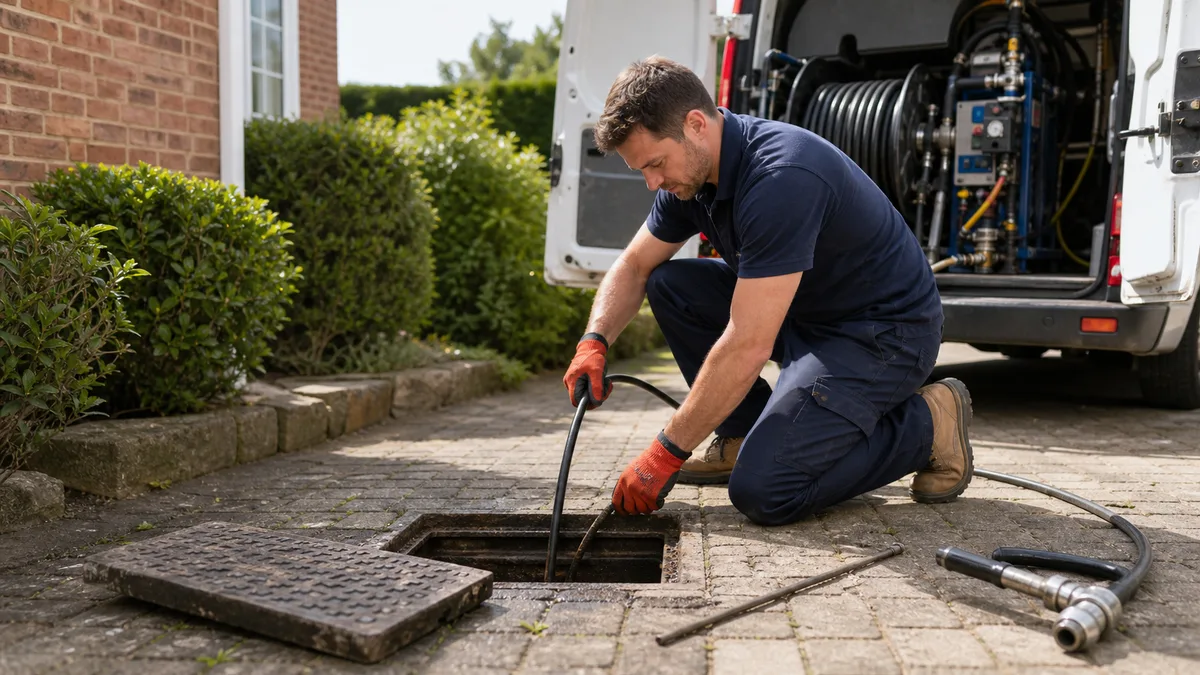
Blocked Drains in Cromer
Cromer's drainage infrastructure presents unique challenges rooted in the town's separate sewer system and Victorian-dominated housing stock. Surface water drains run independently from foul sewers throughout Cromer, which means misconnections — washing machines or kitchen sinks plumbed into surface drains — cause blockages and environmental enforcement from North Norfolk Council. Understanding Cromer's split-sewer layout is essential to diagnosing where your blockage actually occurs.
Blocked drains in Cromer most often result from misconnections (kitchen/washing machine waste routed into surface drains), tree root infiltration into Victorian clay pipes, or mineral scale accumulation in aging pipework. Cromer's separate sewer system makes diagnosis critical — CCTV survey reveals blockage location so repair can be targeted.
Drainage in Cromer — what local engineers know
The majority of Cromer operates under a separate sewer system maintained by Southern Water, with surface water drains carrying rainfall and foul sewers carrying toilet and kitchen waste. This separation improves flood resilience in Cromer but increases misconnection risk, especially in Victorian properties where original plumbing has been informally modified. North Norfolk Council enforces environmental regulations around misconnected drains in Cromer, and property owners face penalties. Cromer's older housing stock (20% Victorian, 12% Edwardian) adds complexity from subsidence, tree root infiltration, and clay pipe deterioration.
- Hard water supply causes limescale accumulation in boilers, radiators and soil pipe joints — powerflush and descaling demand is high across Cromer
- Separate sewer system across most of Cromer: misconnections (e.g. washing machines plumbed into surface water drains) are a known local issue and can result in environmental enforcement action
- Coastal salt-laden air in Cromer accelerates corrosion of external soil stacks, pipe brackets and galvanised fittings on exposed elevations
- With 32% of properties built before 1920, salt-glazed clay drainage and lead-solder copper pipework are common — pipe collapse, root ingress and joint failure are recurring call-out drivers.
What happens when you call us in Cromer
- 1 Immediate dispatch. We find the nearest available engineer covering NR27/NR28 and confirm the ETA before the call ends.
- 2 On-site diagnosis — no guessing. The engineer inspects using professional-grade equipment including CCTV where needed and quotes a fixed price before work starts.
- 3 Job complete, report issued. You receive a written completion report. All work is guaranteed — same fault returns within the guarantee period, we come back free.