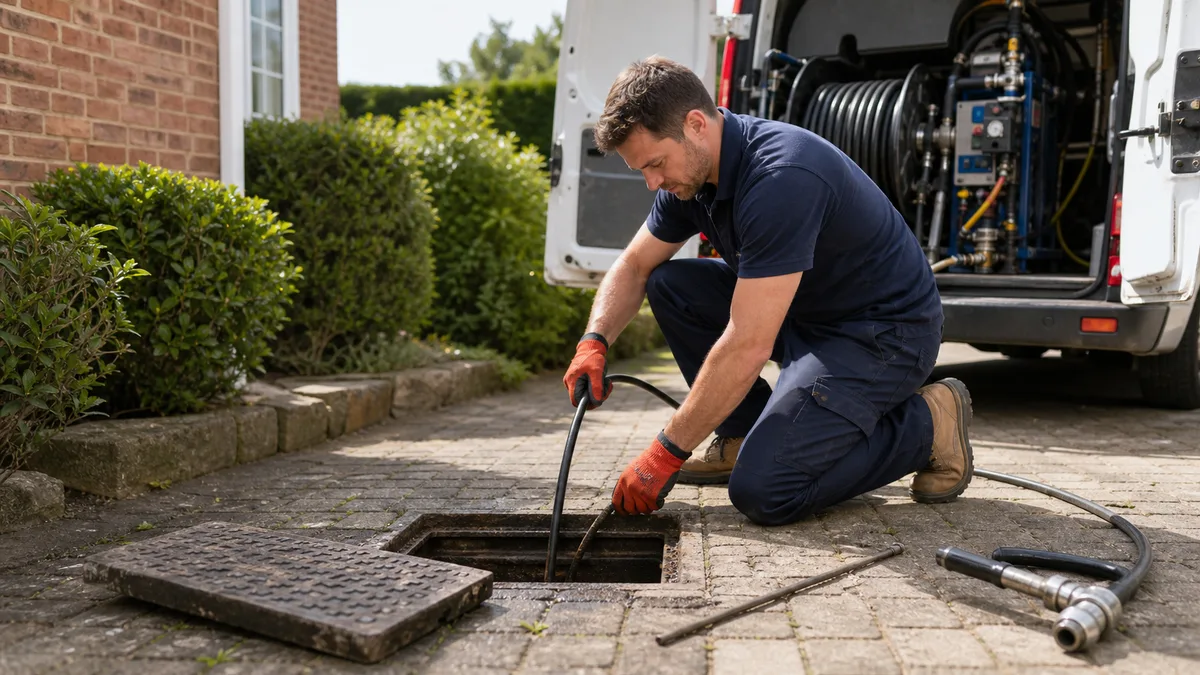
Blocked Drains in Lofthouse
Lofthouse's separate sewer system—which runs foul waste to one drain and surface water to another—makes blockage diagnosis more complex than in combined-sewer towns. A blockage in the foul drain in WF3, WF4 or WF5 affects toilets and sinks; a surface-water blockage may not be obvious until heavy rain. Victorian and Edwardian properties, which make up nearly one-third of Lofthouse's stock, often have clay or earthenware pipes prone to root ingress, settling and collapse.
Blocked drains in Lofthouse are diagnosed using CCTV surveys to identify the specific blockage location in the foul or surface-water system. Victorian clay pipes are common sources of blockage due to root ingress and pipe settlement. The separate sewer design means surface-water blockages may only become apparent during heavy rain. Root removal, jetting and, in severe cases, pipe replacement are standard remedies for Lofthouse's WF postcode areas.
Drainage in Lofthouse — what local engineers know
Leeds City Council and Yorkshire Water oversee Lofthouse's drainage infrastructure. The town's high flood risk—a known concern in Council emergency-planning documents—is partly driven by the separate sewer system's vulnerability to blockage. Surface-water drains are particularly susceptible: misconnections (washing machines, gutter downpipes) inadvertently installed into surface drains create partial blockages that manifest only during heavy rainfall or spring melt. Clay pipes common in Victorian Lofthouse properties (WF3–WF4) are also prone to tree-root penetration, especially in properties near older gardens or public green spaces. Yorkshire Water publishes a Lofthouse section-7 register identifying problem drains.
- Soft water supply reduces limescale, but slightly acidic pH can accelerate corrosion of copper fittings and lead joints in older Lofthouse properties
- Separate sewer system across most of Lofthouse: misconnections (e.g. washing machines plumbed into surface water drains) are a known local issue and can result in environmental enforcement action
- High flood risk in Lofthouse: basement and ground-floor properties near watercourses are vulnerable to sewer backflow — non-return valve installation is strongly recommended
- With 32% of properties built before 1920, salt-glazed clay drainage and lead-solder copper pipework are common — pipe collapse, root ingress and joint failure are recurring call-out drivers.
What happens when you call us in Lofthouse
- 1 Immediate dispatch. We find the nearest available engineer covering WF3/WF4 and confirm the ETA before the call ends.
- 2 On-site diagnosis — no guessing. The engineer inspects using professional-grade equipment including CCTV where needed and quotes a fixed price before work starts.
- 3 Job complete, report issued. You receive a written completion report. All work is guaranteed — same fault returns within the guarantee period, we come back free.