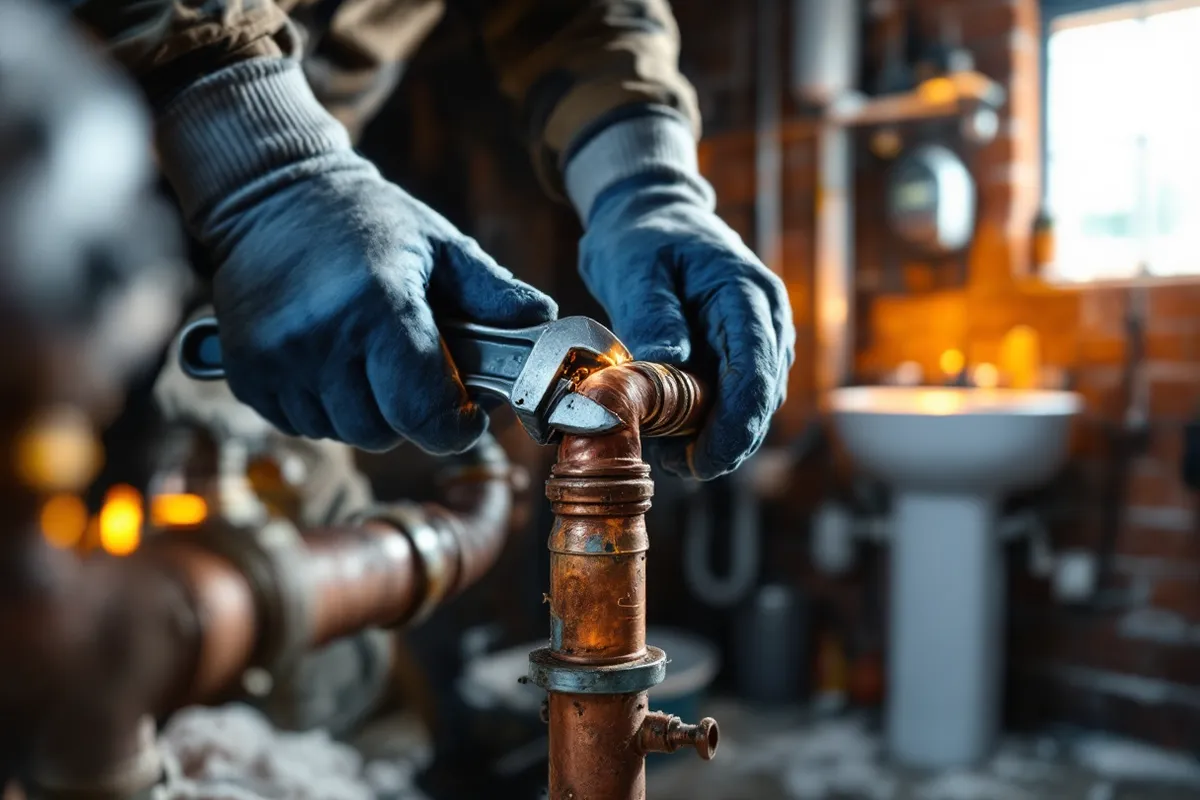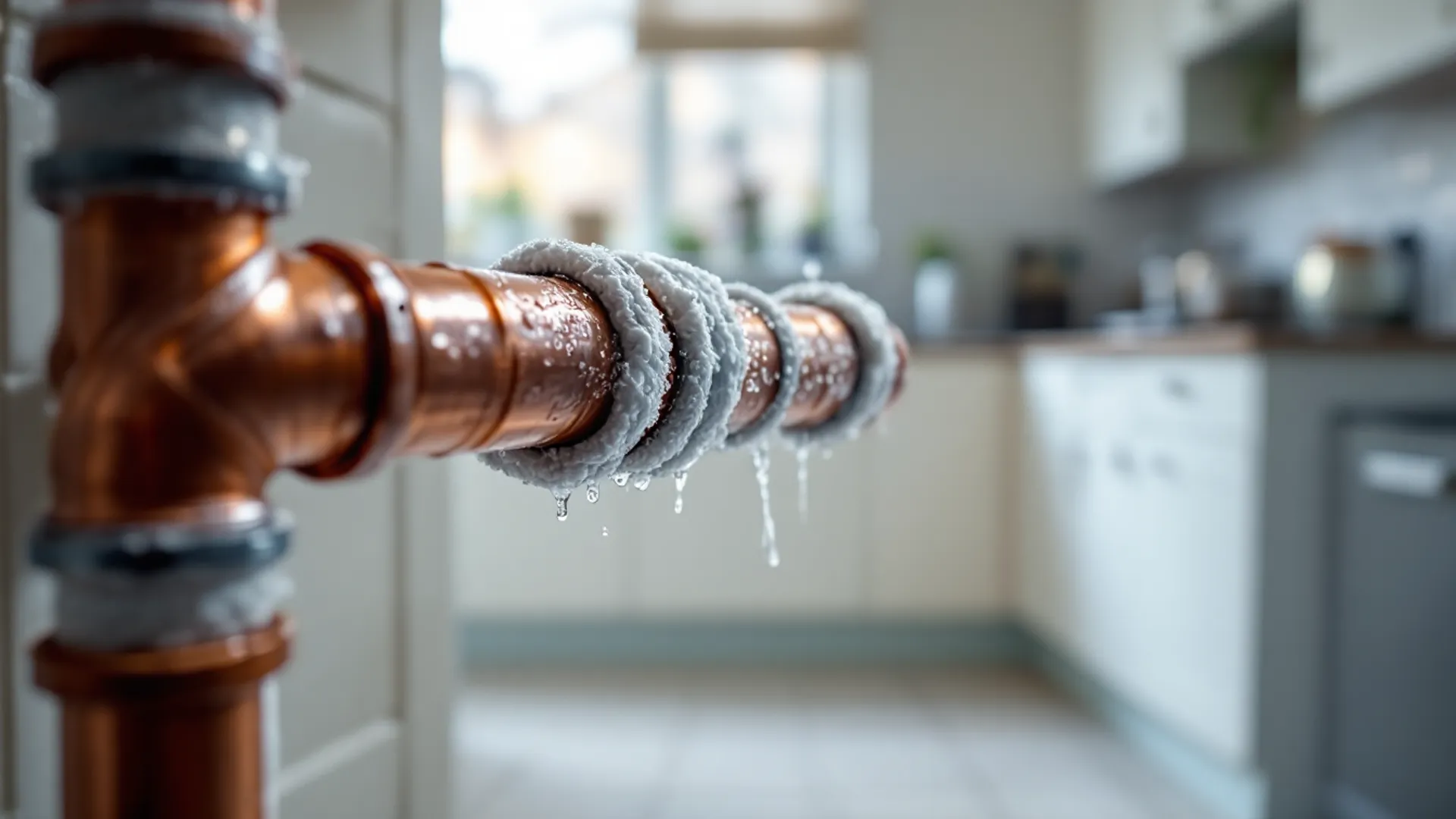
Frozen pipes are a cold-weather emergency that catches many homeowners off guard. The pipe itself may not burst while it’s frozen. It’s when the ice melts and the crack formed under pressure opens up that the flood comes. Understanding what happens and acting fast gives you the best chance of avoiding water damage.
Why pipes freeze and burst
However, water expands by about 9% when it freezes. In a rigid pipe, that expansion has nowhere to go. The ice creates enormous internal pressure — enough to split copper, fracture plastic, and blow apart push-fit joints. But the actual burst often doesn’t happen at the frozen section: the pressure buildup can crack the pipe downstream, where unfrozen water can escape.
Additionally, this is why pipes often appear to burst “for no reason” on a cold morning. The vulnerable section is at the freeze point, but the water comes out somewhere else.
Most vulnerable pipes: Specifically, - Pipes in unheated loft spaces
- Supply pipes in external walls (particularly north-facing)
- Pipes in garages, outbuildings, and under floors above unheated crawl spaces
- External taps and garden hose connections
- The supply pipe from the boundary to the property if laid shallow (less than 750mm depth)
How to prevent pipes freezing
Insulate exposed pipes. For example, foam pipe lagging is cheap, easy to fit, and effective. Wrap any pipes in unheated spaces: loft, garage, under the kitchen sink against external walls. Pay particular attention to any pipes that run in external wall cavities.
Keep the heat on low when away. As a result, a common mistake is turning the heating completely off when going on holiday in winter. Set the programmer to a minimum temperature of 12–15°C (a “frost setting” on many programmers). This is much cheaper than dealing with water damage on return.
Service your boiler before winter. Meanwhile, a boiler that breaks down on the coldest night of the year is an emergency scenario. Annual boiler servicing (typically in autumn) identifies faults before the worst-case timing.
Lag the outdoor tap. Furthermore, external tap covers (insulated foam covers) are inexpensive and widely available. For long periods away, isolate the outdoor tap at its internal service valve (usually a small lever valve under the kitchen sink or in the utility room) and leave the tap itself open so any residual water can drain out.
Know your stopcock. In particular, if a pipe does freeze and then burst, turning off the mains immediately limits the damage. Locate your stopcock now, test it, and make sure it turns freely. Seized stopcocks in an emergency are a serious problem.
What to do if a pipe freezes
Don’t panic and don’t apply high heat. Consequently, the instinct is to grab a blowtorch or a heat gun — don’t. High heat applied to a frozen pipe can cause thermal shock, vaporise water trapped in a section and create a steam explosion in the pipe, or simply ignite nearby materials.
What to do instead:
- Turn off the mains water at the stopcock. If the pipe thaws and there’s a crack, water will flow — stopping the supply first means the flood doesn’t start.
- Find the frozen section. Feel the pipes in cold areas — the frozen section feels solid rather than hollow. Frost on the pipe surface is a giveaway.
- Thaw gently. Options include:
- A hairdryer on low setting, worked slowly along the pipe from the tap end back towards the freeze point
- Warm (not hot) water in a cloth or flexible hot water bottle wrapped around the pipe
- A room heater set up to warm the space around the pipe gradually
- Keep taps open. Run the nearest cold tap to create an escape path for water as the ice melts. This also reduces pressure in the pipe.
- Watch for drips. As the ice melts, inspect every joint, bend and straight run within and downstream of the frozen section. Hairline cracks will appear as drips once pressure returns.
Signs of a crack after thawing
Similarly, even if thawing goes smoothly with no obvious burst, inspect carefully:
- Water stains on ceiling plaster below the pipe run
- Damp patches on walls
- Dripping sounds in a void
- The smell of damp wood or plaster
- Your water meter ticking with all taps closed
Moreover, a crack can be so small that it drips slowly for hours before becoming obvious. Check the area around the pipe in the 48 hours after a freeze event.
After a burst: what to do
However, see our burst pipe guide for the full step-by-step process. The short version: stop the water, stop the electricity if at risk, document the damage, call an emergency plumber.
When to call a plumber rather than thaw yourself
Additionally, call an emergency plumber if:
- You can’t locate the frozen section
- The frozen pipe is in an inaccessible location (inside a wall, under a floor, in a void)
- The pipe is lead (thawing lead safely requires specialist knowledge)
- You’ve found a crack or burst
- Thawing attempts have been unsuccessful after 30–40 minutes
Insurance and frozen pipes
Most home insurance policies cover damage caused by burst pipes, including damage from frozen pipes that burst on thawing. However, insurers may decline claims if they judge that the damage was preventable. For example, if the property was left unheated in winter without adequate frost protection.
Specifically, keep records of the temperature settings you leave properties at, and document any insulation or frost protection measures. This evidence protects your claim.
For example, some insurers provide assistance lines that can help arrange emergency contractors — check whether your policy includes this before you need it.